Understanding the types of contract drafting in India is one of the first practical skills every law student and young professional needs, since drafting is rarely one uniform exercise. A vendor agreement, an employment contract, and a shareholders agreement each demand a different structure, tone, and level of risk allocation, even though all of them ultimately rest on the same statutory foundation, the Indian Contract Act, 1872.
Legal Foundation of Contract Drafting
Every contract drafted in India, regardless of its category, must satisfy the essentials of a valid contract under Section 10 of the Indian Contract Act, 1872, which requires free consent, lawful consideration, a lawful object, and competent parties. Section 2(h) defines a contract as an agreement enforceable by law, while Sections 73 to 75 govern compensation and damages when a contract is breached. These provisions form the backbone against which every drafted clause is tested.
Types of Contracts by Subject Matter
Contract drafting varies significantly depending on the transaction involved.
- Commercial Contracts: Vendor agreements, supply contracts, and distribution agreements, focused on deliverables, pricing, and commercial risk.
- Employment Contracts: Offer letters, employment agreements, and consultancy agreements, governed alongside the Indian Contract Act by labour statutes such as the Code on Wages, 2019.
- Real Estate Contracts: Sale deeds, lease agreements, and rent agreements, which additionally require compliance with the Registration Act, 1908 and the Indian Stamp Act, 1899.
- Intellectual Property Contracts: Licensing agreements and assignment deeds, drafted with reference to the Copyright Act, 1957 or the Trade Marks Act, 1999 depending on the subject matter.
- Corporate and M&A Contracts: Shareholders agreements and share purchase agreements, which must align with the Companies Act, 2013.
- Loan and Security Contracts: Loan agreements and guarantee deeds, which draw on the Indian Contract Act’s provisions on guarantee and indemnity, specifically Sections 124 to 147.
Types of Contracts by Drafting Approach
Beyond subject matter, drafting style itself varies by approach.
| Approach | Description | Typical Use Case |
|---|---|---|
| Bespoke Drafting | Fully customised, clause by clause drafting | High value or unique transactions like M&A |
| Template Based Drafting | Standard template with variable fields | Routine agreements like NDAs |
| Boilerplate Drafting | Standard clauses reused across contract types | Force majeure, jurisdiction, arbitration clauses |
Rights and Obligations Under a Drafted Contract
Once validly executed, a contract creates enforceable rights and obligations for both parties. The party performing its obligations has the right to seek remedies if the other party breaches the agreement, while both parties are obligated to perform their promises unless the contract is validly discharged, rescinded, or excused under the Indian Contract Act.
Stamping and Registration: Practical Requirements
Not every contract requires registration, but many require stamping to be admissible as evidence in court. Real estate related contracts and certain long term lease agreements typically require compulsory registration under the Registration Act, 1908, while most commercial and employment contracts require only proper stamping under the Indian Stamp Act, 1899, with duty varying by state and document type.
Exceptions and Special Categories
Certain agreements are not enforceable regardless of how carefully drafted. Agreements without lawful consideration, agreements in restraint of trade under Section 27 of the Indian Contract Act, and wagering agreements under Section 30 are void, meaning no amount of skilled drafting can make them legally binding. Electronic contracts, increasingly common today, are recognised under the Information Technology Act, 2000, particularly Sections 10A and 4, which give legal validity to electronic records and digital signatures.
Frequently Asked Questions
The Indian Contract Act, 1872 forms the foundational law, though sector specific statutes apply depending on the contract type.
No, only specific categories like certain real estate and long term lease agreements require compulsory registration under the Registration Act, 1908.
An improperly stamped contract may not be admissible as evidence in court, even if it is otherwise valid between the parties.
Yes, under the Information Technology Act, 2000, electronic contracts and digital signatures carry legal validity similar to physical signed documents.
Bespoke drafting is fully customised for a specific transaction, while template based drafting uses a standard format with variable details filled in.
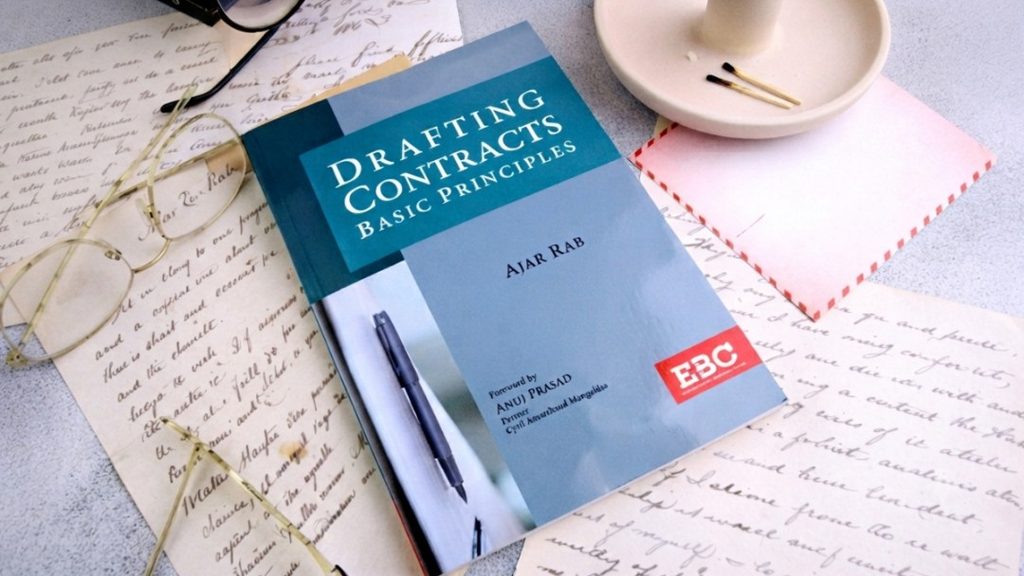
Want the deeper dive? Grab the reference book.