


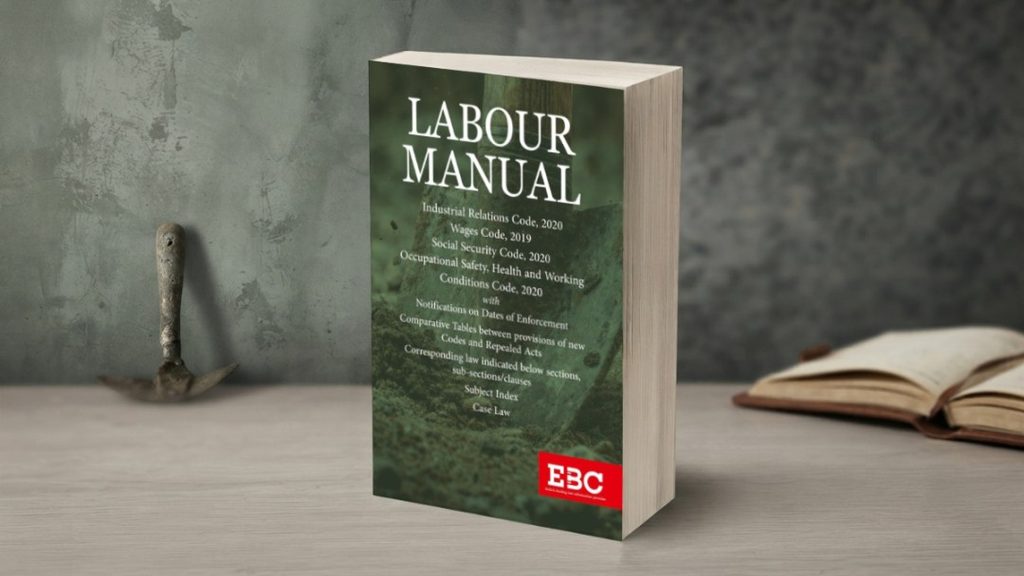
If your payslip recently changed shape, higher basic pay, bigger PF deduction, slightly lower take home, you are likely seeing the effect of the new labour code salary structure rules. India’s four new Labour Codes, notified to come into force from November 21, 2025, consolidate 29 older labour laws and introduce one uniform definition of wages that applies across the board. The centrepiece of this change is a rule requiring basic pay to form at least half of an employee’s total compensation, a shift that is currently reshaping how companies design salary packages nationwide.
Why the Definition of Wages Changed
Before these codes, employers often kept basic pay artificially low, sometimes as little as 30 to 40 percent of total cost to company (CTC), while loading the rest into allowances like special pay, HRA, and conveyance. Since statutory contributions such as provident fund and gratuity are calculated on basic pay, this practice reduced employer liability but also reduced the long term retirement savings employees actually accumulated. The new codes were designed to close this gap.
Key Legal Provisions
- Code on Wages, 2019, Section 2(88): Defines wages uniformly across all purposes and introduces the core rule that excluded components (allowances) cannot exceed 50 percent of total remuneration.
- Code on Social Security, 2020: Governs how the revised wage definition affects provident fund contributions and gratuity calculations.
- Employees Provident Funds and Miscellaneous Provisions Act, 1952 (as read with the new wage definition): PF contributions must now be calculated on the higher, restructured basic pay.
- Payment of Gratuity Act, 1972 (as read with the Code on Social Security, 2020): Since gratuity is calculated on last drawn basic salary, a higher basic pay increases the final gratuity payout.
- Employees State Insurance Act, 1948: The definition of wages for ESI eligibility now includes basic pay, dearness allowance, and retaining allowance, which may bring more employees within ESI coverage than before.
The 50 Percent Rule Explained
In simple terms, basic pay, dearness allowance, and retaining allowance together must equal at least 50 percent of an employee’s total CTC. If allowances like HRA, conveyance, overtime, and bonuses exceed the remaining 50 percent, the excess amount is added back into wages for the purpose of statutory calculations, regardless of what the payslip formally labels it.
Old vs New Salary Structure: Quick Comparison
| Component | Old Common Practice | New Labour Code Requirement |
|---|---|---|
| Basic Pay | Often 30 to 40 percent of CTC | Must be at least 50 percent of CTC |
| Allowances | Could exceed 60 percent of CTC | Capped effectively at 50 percent, excess added back to wages |
| PF Contribution Base | Calculated on lower basic pay | Calculated on higher, restructured basic pay |
| Gratuity Base | Based on lower last drawn basic | Based on higher last drawn basic, increasing payout |
| Claim Limitation Period | 12 months under Payment of Wages Act | 3 years under Code on Wages, 2019 |
Rights, Obligations, and Procedure
Employers are obligated to review and restructure existing salary components, update payroll and HRMS systems, and recalculate PF, ESI, and gratuity on the revised wage base. Employees have the right to receive a compliant payslip reflecting the correct wage definition, and to claim any shortfall in statutory dues within the extended three year limitation period under the Code on Wages, 2019.
Exceptions and Practical Notes
Employer contributions to provident fund itself remain excluded from the wage definition even though PF is calculated on the new higher basic pay. Similarly, certain conveyance and specific reimbursement type allowances retain limited exclusions depending on how they are structured, so employers should review each component individually rather than applying a blanket approach.
Penalties for Non-Compliance
The Code on Wages, 2019 sets out offences and penalties under Sections 52 to 56. Paying wages below the prescribed rate or delaying payment can attract a fine of up to fifty thousand rupees for a first offence. Repeat violations within five years can lead to imprisonment of up to three months, a fine of up to one lakh rupees, or both. Employers are generally given an opportunity to correct non-compliance before prosecution begins, through an Inspector cum Facilitator, and many offences can be compounded by paying fifty percent of the maximum prescribed fine.
Frequently Asked Questions
Because the law now requires basic pay to be at least 50 percent of your total CTC, employers must restructure packages that previously kept basic pay lower.
Often yes, in the short term, since higher basic pay means higher PF deduction, though this also means larger retirement savings and gratuity over time.
The Code on Wages, 2019, specifically Section 2(88), along with related provisions in the Code on Social Security, 2020.
Yes, the wage definition under the Code applies uniformly, including supervisory, managerial, and administrative employees, without a wage ceiling.
Three years from when the amount became due, under the Code on Wages, 2019, compared to twelve months under the earlier Payment of Wages Act.
Want the deeper dive? Grab the reference book.

PF Withdrawal Rules in India: Full Guide for 2026
[…] of PF withdrawal rules, including eligibility conditions and withdrawal limits, are laid out in the Employees’ Provident Fund Scheme, 1952, framed under this Act. The Employees’ Pension Scheme (EPS), 1995 governs the separate […]