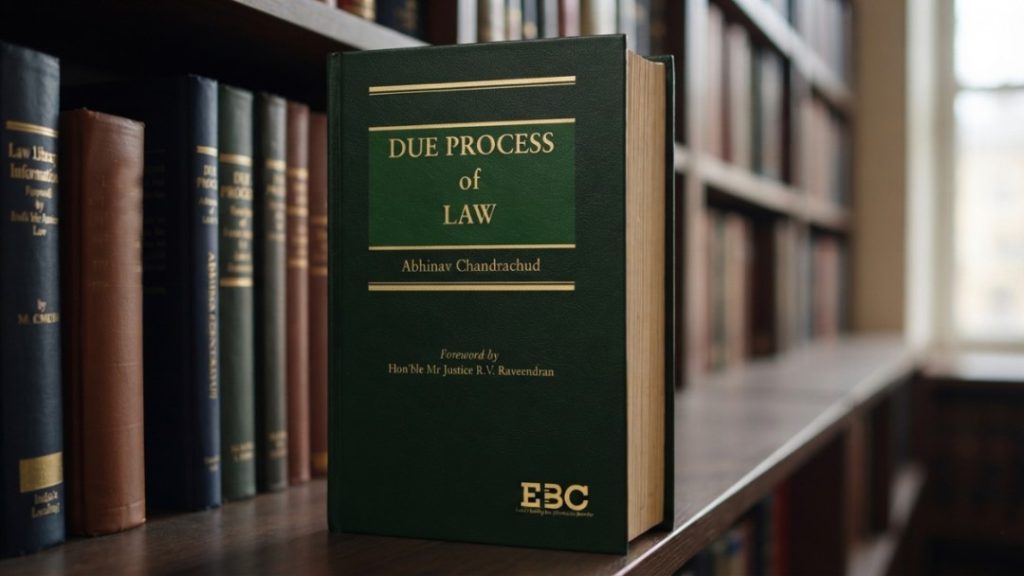
What Is Procedural Due Process in India?
Procedural due process in India refers to the principle that the State must follow a legally authorised, fair and constitutionally valid procedure before depriving a person of life or personal liberty. The expression “due process” is not the exact wording used in Article 21 of the Indian Constitution. Instead, Article 21 states that no person shall be deprived of life or personal liberty except according to procedure established by law.
This distinction is important because India adopted the expression “procedure established by law”, rather than the American constitutional phrase “due process of law”.
Origin and Meaning of Procedural Due Process
The broader idea of due process has historical roots in constitutional traditions that sought to prevent arbitrary deprivation of liberty. The Magna Carta of 1215 is commonly associated with the early development of the principle that lawful authority and established legal procedure should govern the deprivation of liberty.
The concept developed more explicitly in the United States through the Fifth and Fourteenth Amendments to the US Constitution. The American model distinguishes between procedural due process, which concerns fairness of the process followed, and substantive due process, which examines whether the law itself impermissibly interferes with protected rights.
India adopted a different textual formulation in Article 21. However, the Indian constitutional framework does not permit arbitrary State action. Article 14 guarantees equality before law and equal protection of laws, while Article 21 protects life and personal liberty.
Procedure Established by Law vs Due Process
| Aspect | Procedure Established by Law | Due Process of Law |
|---|
| Constitutional expression in India | Article 21 | Not the exact constitutional wording |
| Main concern | Existence and application of valid legal procedure | Fairness of law and procedure |
| Relevant constitutional safeguards | Articles 14, 21 and 22 | Primarily associated with US constitutional law |
| Practical focus | Lawful authority, fair procedure and safeguards | Procedural and substantive fairness |
Constitutional Provisions Supporting Procedural Due Process
Article 14: Equality Before Law
Article 14 provides that the State shall not deny any person equality before the law or equal protection of laws. This acts as an important safeguard against arbitrary or discriminatory State action.
Article 21: Life and Personal Liberty
Article 21 is the central constitutional provision. It requires deprivation of life or personal liberty to occur according to a legally established procedure. In practical terms, government authorities cannot simply exercise unrestricted power over an individual’s liberty without legal authority and prescribed safeguards.
Article 22: Protection Against Arrest and Detention
Article 22 provides specific safeguards relating to arrest and detention. An arrested person must generally be informed of the grounds of arrest and cannot be denied the right to consult and be defended by a legal practitioner of choice. It also contains safeguards concerning production before a Magistrate and detention beyond the constitutionally prescribed period.
Article 20: Protection in Criminal Proceedings
Article 20 protects individuals against ex-post-facto criminal laws, double jeopardy and compelled self-incrimination. These safeguards strengthen procedural fairness in criminal administration.
Articles 32 and 226: Constitutional Remedies
Article 32 enables individuals to approach the Supreme Court for enforcement of Fundamental Rights. Article 226 gives High Courts wider writ jurisdiction for enforcement of Fundamental Rights and other legal rights. These provisions provide important remedies where State action violates constitutional or statutory safeguards.
Article 39A: Equal Justice and Free Legal Aid
Article 39A directs the State to promote equal justice and provide free legal aid so that economic or other disabilities do not prevent access to justice.
Frequently Asked Questions
Not in those exact words. Article 21 uses the expression “procedure established by law”. Related safeguards arise from Articles 14, 20, 21 and 22.
Due process is a broader concept associated with fairness of both law and procedure. India’s constitutional text specifically uses “procedure established by law”, supplemented by other Fundamental Rights.
No. Article 21 protects “no person”, making its protection applicable to citizens as well as non-citizens.
No. Legal safeguards can operate before, during and after arrest. For example, BNSS Section 35 regulates circumstances in which arrest without warrant is permitted and provides for notices where arrest is unnecessary.
Yes, but only in circumstances authorised by law. BNSS Section 35 specifies circumstances in which arrest without warrant is permitted and also provides safeguards where arrest is not required.
Want the deeper dive? Grab the reference book.