The expression charitable purpose under Income Tax Act is important for determining whether a trust or institution can receive tax benefits available to charitable organisations. Under the Income-tax Act, 1961, Section 2(15) defines “charitable purpose” and includes activities such as relief of the poor, education, yoga, medical relief, environmental preservation, heritage preservation and the advancement of any other object of general public utility.
However, charitable status does not automatically mean that every income-generating activity is tax-exempt. The law places specific restrictions on commercial activities, particularly where the organisation claims to promote general public utility.
What Is Charitable Purpose Under Income Tax Act?
Under Section 2(15) of the Income-tax Act, 1961, charitable purpose includes:
- Relief of the poor
- Education
- Yoga
- Medical relief
- Preservation of the environment, including watersheds, forests and wildlife
- Preservation of monuments or places or objects of artistic or historic interest
- Advancement of any other object of general public utility
The definition is inclusive, meaning these categories are specifically recognised, but the concept is not confined to a narrow list.
What Does “General Public Utility” Mean?
General public utility, commonly abbreviated as GPU, covers activities intended to benefit the public or a sufficiently broad section of the public. Examples can include activities promoting public welfare, professional interests, civic development or other community-oriented objectives.
The important point is that an organisation cannot simply describe a commercial activity as “public welfare” and automatically obtain charitable status. The nature and manner of its activities matter.
The Business Proviso Under Section 2(15)
The most significant restriction under the earlier Section 2(15) concerned organisations pursuing the advancement of any other object of general public utility.
The proviso states that such an organisation will not be regarded as having a charitable purpose where it carries on an activity in the nature of trade, commerce or business, or provides services connected with trade, commerce or business for a fee, cess or other consideration, unless specified conditions are satisfied.
The 20% Test
The commercial activity can remain within the charitable framework where:
- The activity is undertaken in the course of actually carrying out the organisation’s general public utility objective; and
- The aggregate receipts from such activities do not exceed 20% of the total receipts of the trust or institution for that previous year.
This means the 20% threshold is not a general licence to operate a business. The activity must also be connected with the actual advancement of the charitable objective.
Does Earning Income Destroy Charitable Status?
No. A charitable organisation may receive income. The important question is how that income is generated and whether the statutory conditions are satisfied.
For example, an organisation working for environmental protection may conduct a paid programme directly connected with its environmental objectives. Such activity may be permissible if it satisfies the statutory requirements.
The position is also different for the first three limbs of the older Section 2(15), namely relief of the poor, education and medical relief. CBDT has clarified that the commercial-activity restriction specifically targets the fourth limb, advancement of general public utility.
Tax Exemption and Compliance
Being “charitable” under Section 2(15) does not by itself guarantee complete tax exemption. Under the 1961 Act, Sections 11, 12, 12A, 12AA and 12AB, along with Section 13, govern the availability and conditions of exemption for charitable or religious trusts and institutions.
Broadly, organisations seeking tax benefits must:
- Obtain the applicable registration or approval.
- Apply income towards eligible charitable purposes.
- Maintain proper books and records.
- Follow applicable audit and return-filing requirements.
- Avoid prohibited or excessive commercial activities.
- Comply with conditions relating to investments, specified persons and application of income.
What Changed Under the Income-tax Act, 2025?
The new Income-tax Act, 2025 retains the definition of charitable purpose but moves it from Section 2(15) to Section 2(23). The seven categories remain substantially the same.
More importantly, the commercial restriction has been moved from the proviso to Section 2(15) into Section 346.
Under Section 346, a registered non-profit organisation pursuing general public utility cannot undertake commercial activity unless:
- The activity is undertaken while actually carrying out its public utility objective;
- Commercial receipts do not exceed 20% of total receipts for the relevant tax year; and
- Separate books of account are maintained for those activities.
Registration and Remedies
Under the 2025 Act, Section 332 provides for registration of eligible non-profit organisations. The Income Tax Department currently provides electronic procedures for registration through the prescribed forms. Regular registration under Section 332 and related approval processes use Form 105 under the Income-tax Rules, 2026.
Non-compliance can have tax consequences. Section 353 provides that certain violations, including contravention of Section 346, can result in the organisation’s relevant income becoming taxable for that tax year.
A significant 2026 amendment also changed the treatment of commercial-activity violations. The Finance Act, 2026 removed such a violation from the category of “specified violation” that could lead to cancellation of registration. Consequently, the consequence is primarily year-specific denial or restriction of tax exemption rather than automatic cancellation of registration.
Frequently Asked Questions
It includes relief of the poor, education, yoga, medical relief, environmental preservation, heritage preservation and advancement of other objects of general public utility.
Section 2(15) belongs to the Income-tax Act, 1961. From 1 April 2026, the corresponding definition is contained in Section 2(23) of the Income-tax Act, 2025.
For GPU organisations, commercial receipts must generally remain within 20% of total receipts, subject to the other statutory conditions.
It may undertake certain income-generating or commercial activities where the applicable statutory conditions are satisfied. For GPU organisations, Section 346 of the 2025 Act specifically regulates such activities.
Not necessarily. The nature of the activity, its connection with the charitable objective and the applicable statutory threshold must be considered.
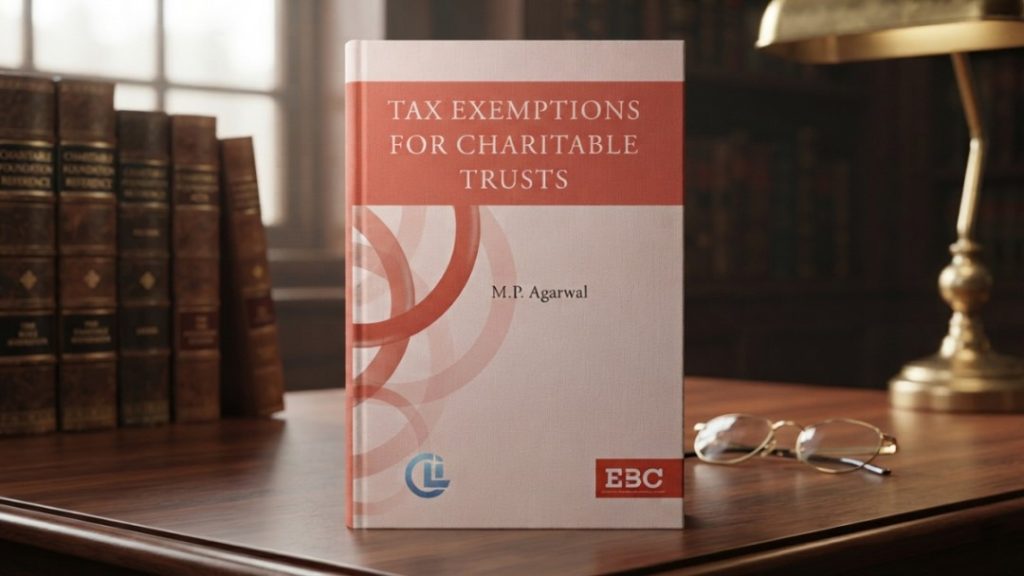
Want the deeper dive? Grab the reference book.