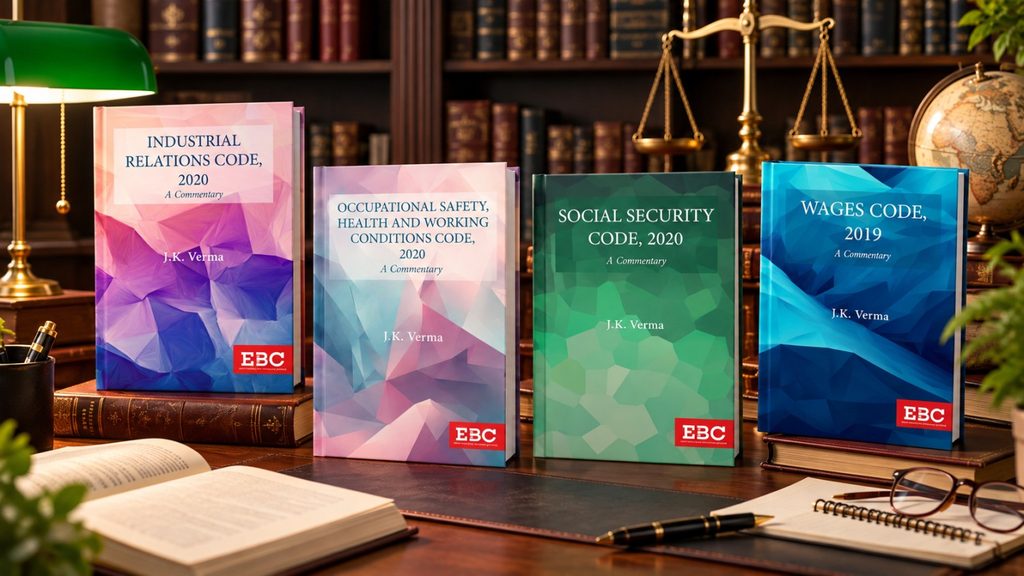
India’s labour law landscape has changed. Four new labour codes, the Code on Wages, 2019, the Industrial Relations Code, 2020, the Code on Social Security, 2020, and the Occupational Safety, Health and Working Conditions Code, 2020, bring together 29 central labour laws into a single framework. For employers, HR teams, lawyers and law students, the change raises practical questions about definitions, compliance and rights. To help with this, J.K. Verma has written a separate commentary on each code. This post introduces all four books and explains what each one covers.
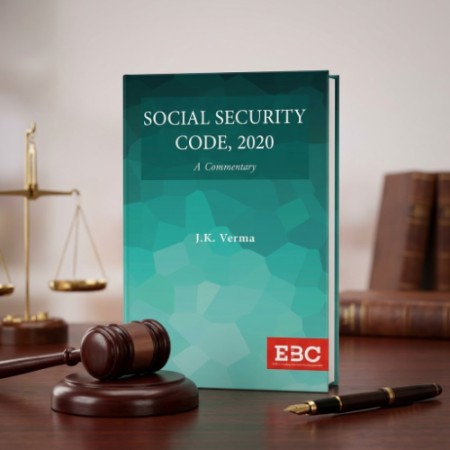
Social Security Code, 2020: A Commentary by J K Verma
- Nine laws, one Code: It consolidates nine Central social security enactments, including the Employees’ Compensation Act, the ESI Act, the EPF Act, the Maternity Benefit Act and the Payment of Gratuity Act.
- Repeal by Section 164: All nine earlier enactments stand repealed by Section 164 of the Code.
- Comparative table: It sets the new provisions against the corresponding provisions of the repealed laws.
- Notifications and Rules: Relevant notifications appear at the appropriate place, and the book covers the Social Security (Central) Rules, 2026.
- Who it’s for: Labour law practitioners, employers, employees and academics.
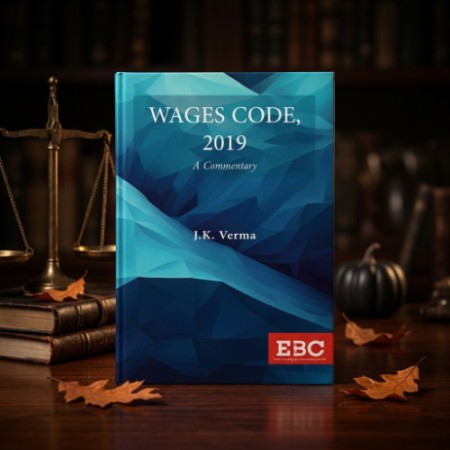
Code on Wages, 2019: A Commentary by Dr. J.K. Verma
- Four laws, one Code: It consolidates four Central wage enactments: the Payment of Wages Act, 1936, the Minimum Wages Act, 1948, the Payment of Bonus Act, 1965 and the Equal Remuneration Act, 1976.
- Repeal by Section 69: All four earlier enactments stand repealed by Section 69 of the Code.
- Comparative table: It sets the new provisions against the corresponding provisions of the repealed laws.
- Notifications and Rules: Relevant notifications appear at the appropriate place, and the book covers the Wages (Central) Rules, 2026.
- Who it’s for: Labour law practitioners, employers, employees and academics.
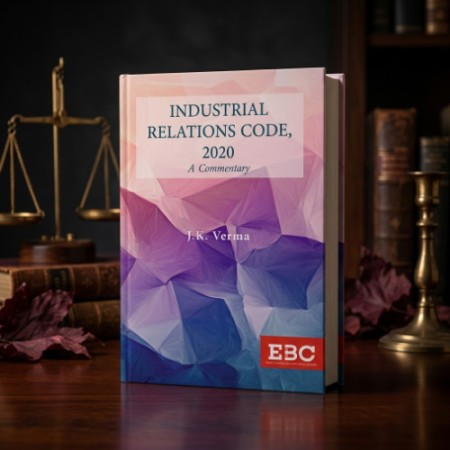
Industrial Relations Code, 2020: A Commentary by Dr. J.K. Verma
- Three laws, one Code: It consolidates three Central labour enactments: the Trade Unions Act, 1926, the Industrial Employment (Standing Orders) Act, 1946 and the Industrial Disputes Act, 1947.
- Repeal by Section 104: All three earlier enactments stand repealed by Section 104 of the Code.
- Comparative table: It sets the new provisions against the corresponding provisions of the repealed laws.
- Notifications and Rules: Relevant notifications appear at the appropriate place, and the book includes the Industrial Relations (Central) Rules, 2026.
- Who it’s for: Labour law practitioners, employers, employees and academics.
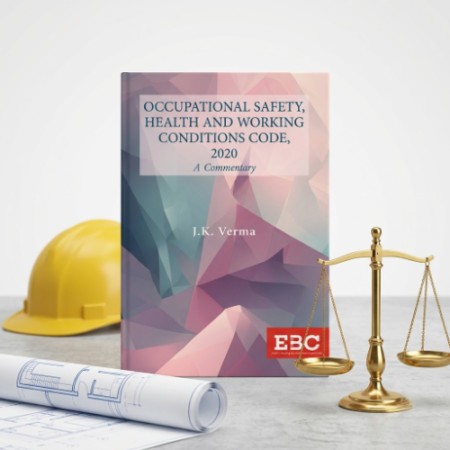
Occupational Safety, Health and Working Conditions Code, 2020: A Commentary by Dr. J.K. Verma
- Thirteen laws, one Code: It consolidates 13 Central enactments, including the Factories Act, 1948, the Mines Act, 1952, the Contract Labour (Regulation and Abolition) Act, 1970 and the Building and Other Construction Workers Act, 1996.
- Repeal by Section 143: All 13 earlier enactments stand repealed by Section 143 of the Code.
- Comparative table: It sets the new provisions against the corresponding provisions of the repealed laws.
- Notifications and Rules: Relevant notifications appear at the appropriate place, and the book covers the Occupational Safety, Health and Working Conditions (Central) Rules, 2026.
- Who it’s for: Labour law practitioners, employers, employees and academics.