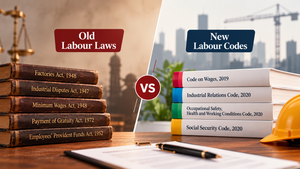
Maternity benefit under the Code on Social Security, 2020 now governs paid maternity leave for working women in India. The Code came into force on 21 November 2025 and replaced the Maternity Benefit Act, 1961, along with 28 other central laws. This guide is for working women, HR teams and law students, and explains legal terms in plain language.
The Maternity Benefit Act, 1961 gave women paid leave around childbirth. The 2017 amendment raised leave to 26 weeks. The Code on Social Security, 2020 (the Social Security Code) carries these protections into Chapter VI. Central Rules were notified on 8 May 2026, and states are still issuing theirs, so check which “appropriate government” (the Central or State Government regulating your workplace) applies to you.
Related Statutes
- Code on Social Security, 2020: Chapter VI covers maternity benefit, leave, bonus, nursing breaks and protection from dismissal.
- Social Security (Central) Rules, 2026: set procedures and forms for establishments under central regulation.
- Maternity Benefit Act, 1961: repealed, but its framework continues in the Code.
- Employees’ State Insurance (ESI) scheme: the Social Security Code absorbed the ESI Act, 1948. Women insured under ESI usually receive maternity benefit from ESIC (Employees’ State Insurance Corporation).
- Constitution of India: Article 42 directs the State to ensure just conditions of work and maternity relief.
Eligibility
A woman is eligible if she has worked for at least 80 days in the 12 months before her expected delivery date. The Code applies to establishments such as factories, mines, plantations, shops and others, as specified. Both permanent and contract women can qualify, subject to the 80-day rule.
Leave Entitlement
| Situation | Leave |
|---|---|
| First or second child | 26 weeks (up to 8 weeks before delivery) |
| Third child onwards | 12 weeks (up to 6 weeks before delivery) |
| Adopting a child under 3 months | 12 weeks |
| Commissioning mother (surrogacy) | 12 weeks |
| Miscarriage or medical termination | 6 weeks |
| Tubectomy | 2 weeks |
| Illness arising from pregnancy | Up to 1 month |
Process Chart
Give written notice to employer
|
Employer verifies 80 days of work
|
Leave begins (up to 8 weeks before delivery)
|
Maternity benefit paid for leave period
|
Return to work, or work from home by agreement
|
Nursing breaks and crèche access
Rights of the Woman
- Paid leave: employers cannot refuse or reduce it for eligible women.
- Medical bonus: if the employer does not provide pre-natal and post-natal care free, she gets a prescribed bonus (it was Rs 3,500 under the earlier Act, so confirm the current amount).
- Work from home: after maternity leave, women in suitable jobs can agree on this with the employer.
- Nursing breaks: two breaks a day until the child is about 15 months old, in addition to normal rest.
- Crèche: establishments with 50 or more employees must provide this facility, with permitted visits during the day.
- Job security: an employer cannot dismiss or discharge her, or reduce her wages, because of pregnancy or leave.
Employer Obligations
- Give maternity benefit on time and keep records.
- Inform women of their rights in writing at appointment.
- Provide the crèche where applicable.
- Not assign hard or hazardous work during late pregnancy if she requests relief.
FAQs
26 weeks for the first two children and 12 weeks from the third.
No. The Social Security Code repealed it.
A woman who worked at least 80 days in the 12 months before delivery.
Yes, 12 weeks when the child is under 3 months old.
Yes, if the job allows it and you and your employer agree.
For a deeper understanding, you can refer to these resource: