India’s legal history has been shaped not only by landmark judgments and constitutional developments, but also by individuals whose lives reflect a deep commitment to justice, public service, and legal scholarship. Among such distinguished figures stands Justice M. N. Rao, a jurist whose contribution to the Indian law and justice system spans multiple institutions, disciplines, and decades of public life.
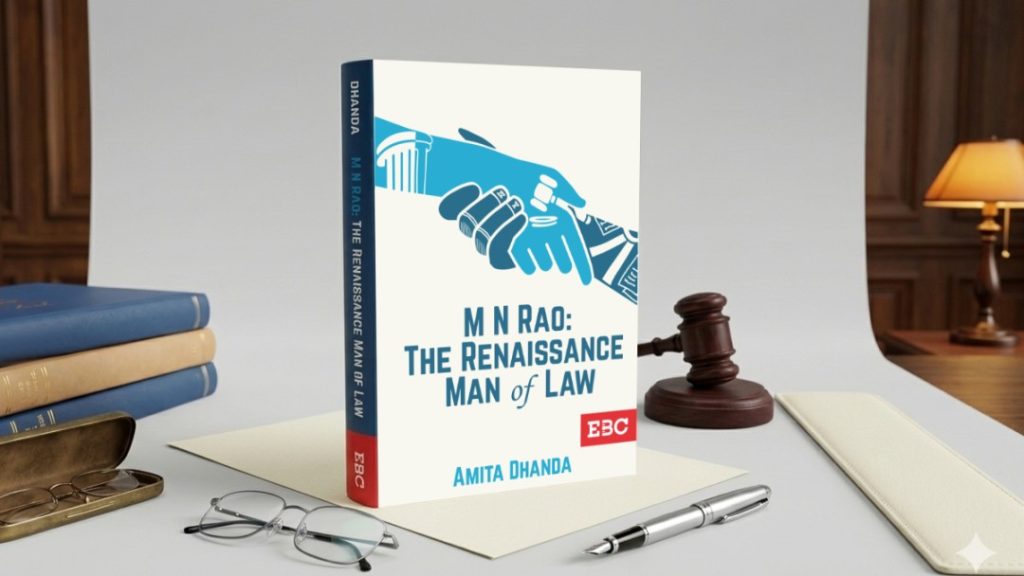
The book M N Rao: The Renaissance Man of Law by Amita Dhanda offers a thoughtful and deeply researched exploration of this remarkable legal journey. More than a conventional biography, the work presents Justice M. N. Rao as a rare legal mind who successfully navigated the worlds of judicial administration, constitutional governance, advocacy, social justice, and public intellectual discourse.
A Legal Career Defined by Versatility and Integrity
Justice M. N. Rao’s career reflects an uncommon breadth of legal experience. Over the years, he served in several important capacities, including:
- Law Secretary
- Judge
- Senior Advocate
- Chairperson of the Backward Classes Commission
- Public intellectual
- Philanthropist
What makes his journey particularly compelling is the manner in which he evolved as a self-made legal professional in a system often influenced by privilege, institutional access, and legacy Executive Lawmaking and Constitutional Governance. His professional life demonstrates how scholarship, integrity, and commitment to public duty can shape an enduring legacy within Indian law.
Understanding Justice M N Rao’s Contribution to Indian Law
One of the major strengths of the book lies in its examination of Justice Rao’s contribution across different branches of the legal system.
Executive Lawmaking and Constitutional Governance
As Law Secretary, Justice Rao engaged closely with executive lawmaking and governmental decision-making. The book offers valuable insight into how legal policy is shaped behind the scenes and how constitutional governance depends not only on courts but also on administrative legal processes.
This aspect makes the work particularly relevant for readers interested in:
- Constitutional law
- Public administration
- Legislative drafting
- Governance studies
- Legal institutions in India
Judicial Reasoning and the Role of a Judge
The book also studies Justice Rao’s judicial work and the range of legal matters handled during his tenure on the bench. Through discussions on judicial reasoning and adjudication, readers gain a deeper understanding of the intellectual and ethical responsibilities carried by judges within the Indian judiciary.
Importantly, the annexures detailing the subject range of his judicial docket reveal the diversity of cases he encountered, reflecting the complexity and interdisciplinary nature of Indian legal practice.
A Distinguished Senior Advocate and Public Intellectual
After his judicial career, Justice Rao continued contributing to the legal system as a Senior Advocate. His appearances before the Supreme Court and involvement in significant legal matters demonstrate not only advocacy skills but also a continuing engagement with the development of law and justice in India.
At the same time, Justice Rao emerged as a respected public intellectual whose reflections extended beyond courtroom litigation into broader questions of ethics, governance, education, and social responsibility.
The book captures this dimension effectively, showing how legal professionals can contribute meaningfully to public discourse outside formal institutions.
Commitment to Social Justice and Public Service
An important part of Justice Rao’s legacy lies in his work as Chairperson of the Backward Classes Commission. Through this role, he engaged directly with questions of equality, representation, and social justice, themes that remain central to Indian constitutional democracy.
The discussion in the book highlights the practical challenges involved in balancing constitutional ideals with administrative realities. In doing so, it offers readers a nuanced perspective on affirmative action, social welfare, and governance in India.
Why This Book Matters
M N Rao: The Renaissance Man of Law is not merely the story of one legal career. It is also a reflection on:
- the evolution of the Indian legal system,
- the responsibilities of public institutions,
- the ethics of legal practice,
- and the relationship between law and society.
Amita Dhanda combines legal scholarship with biographical reflection in a manner that remains accessible, engaging, and intellectually rich. Drawing inspiration from Justice Rao’s autobiographical work, Glimpses from the recital of my Life, the book presents a layered portrait of a legal professional whose influence extended far beyond courtrooms.
Who Should Read This Book?
This book will be valuable for:
- Law students
- Judges and advocates
- Legal scholars and academicians
- Researchers of Indian legal history
- Readers interested in constitutional governance and public institutions
It is particularly useful for young legal professionals seeking to understand how integrity, versatility, and public service can coexist within a long and meaningful legal career.
For further reading and detailed analysis, refer to this resource.