Corporate personality is one of the first concepts every law student encounters when studying company law, and for good reason. It explains why a company can own property, sue and be sued, and enter contracts entirely in its own name, separate from the people who run it. Understanding corporate personality is essential not only for law students and practicing lawyers advising businesses, but also for entrepreneurs and company directors who need to know exactly where their personal liability ends and the company’s begins. This article breaks down the statutory basis of corporate personality under Indian law, its practical implications, and the situations where courts and regulators can look past this separate identity.
What Is Corporate Personality
Corporate personality refers to the legal principle that a company, once incorporated, becomes a distinct legal entity separate from its shareholders, directors, and promoters. This means the company can hold assets, incur debts, and be held legally responsible in its own name. The people who own or manage the company are, in most situations, shielded from personal liability for the company’s obligations. This concept is often called the doctrine of separate legal entity.
Statutory Basis Under the Companies Act, 2013
The Companies Act, 2013 is the primary statute governing corporate personality in India. Several provisions establish and reinforce this doctrine:
- Section 2(20) defines a “company” as one incorporated under this Act or any previous company law.
- Section 9 states that from the date of incorporation, the subscribers to the memorandum and all other persons become a body corporate, capable of exercising all functions of an incorporated company, including the ability to own property, enter contracts, and sue or be sued in its own name.
- Section 34 clarifies that shareholders’ liability is generally limited to the amount unpaid on their shares, reinforcing the separation between company debts and personal assets.
- Section 7 lays down the incorporation procedure, including filing the memorandum, articles, and declaration of compliance, which culminates in the issuance of a Certificate of Incorporation.
Perpetual Succession and Common Seal
Two features flow directly from corporate personality:
- Perpetual succession, meaning the company continues to exist regardless of changes in shareholding or the death, resignation, or insolvency of any member or director.
- Capacity to hold property, meaning company assets belong to the company itself, not to individual shareholders, even if one person holds all the shares.
The Incorporation Process and Acquisition of Personality
| Stage | Requirement | Governing Provision |
|---|---|---|
| Name reservation | Application through the RUN or SPICe+ system | Section 4, Companies Act, 2013 |
| Filing incorporation documents | Memorandum of Association, Articles of Association, declaration | Section 7 |
| Verification by Registrar | Registrar of Companies examines documents | Section 7(2) |
| Certificate of Incorporation issued | Company becomes a body corporate | Section 9 |
| PAN and TAN allotment | Issued alongside incorporation certificate | Income Tax Act, 1961 read with Companies Act rules |
Comparison: Legal Personality Across Business Structures
| Feature | Company | Partnership Firm | LLP |
|---|---|---|---|
| Separate legal entity | Yes | No | Yes |
| Governing statute | Companies Act, 2013 | Indian Partnership Act, 1932 | LLP Act, 2008 |
| Liability of owners | Limited to shares held | Unlimited, joint and several | Limited to agreed contribution |
| Perpetual succession | Yes | No | Yes |
When Corporate Personality Can Be Disregarded
While corporate personality is a strong legal shield, Indian statutes allow it to be pierced or lifted in specific circumstances, generally referred to as lifting the corporate veil:
- Section 7(7) allows the Tribunal to pass orders, including personal liability without limitation, if incorporation was obtained through fraud or false information.
- Section 251 deals with liability for fraudulent applications made for removal of a company’s name from the register.
- Section 339 of the Companies Act (applicable in winding up proceedings, read with the Insolvency and Bankruptcy Code, 2016 in insolvency contexts) allows courts to hold persons personally liable if business was carried on with intent to defraud creditors.
These provisions exist to prevent the misuse of separate legal personality as a tool for fraud, tax evasion, or evading legal obligations.
Rights and Obligations Flowing from Corporate Personality
Rights:
- Right to own, purchase, and sell property in its own name
- Right to enter contracts independently of shareholders
- Right to sue for breach of contract or tort
Obligations:
- Liability for its own debts and statutory dues
- Compliance with filing and disclosure requirements under the Companies Act
- Accountability for actions taken by its authorized officers
Frequently Asked Questions
Yes. Corporate personality begins only upon issuance of the Certificate of Incorporation under Section 9.
Yes. Even a One Person Company under Section 2(62) enjoys a distinct legal identity separate from its sole member.
No. Under the Indian Partnership Act, 1932, a partnership firm has no separate legal identity apart from its partners.
Nothing changes for the company. Due to perpetual succession, company assets remain unaffected by changes in shareholding.
Yes, in cases of fraud, improper incorporation, or where the corporate structure is used to evade legal obligations, through the doctrine of lifting the corporate veil.
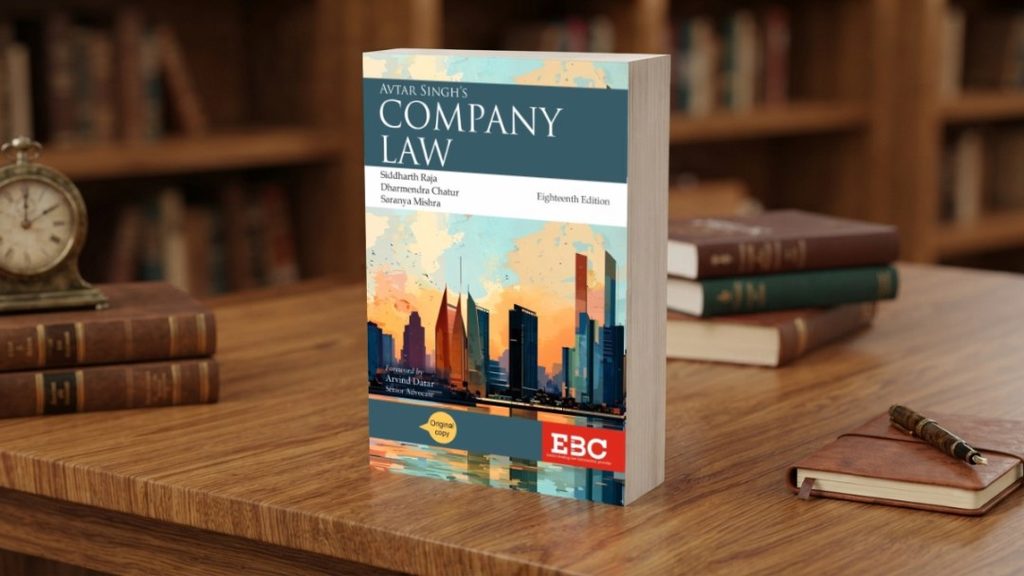
Want the deeper dive? Grab the reference book.