Why India Has a Dual GST Structure
India adopted GST through the Constitution (101st Amendment) Act, 2016, which inserted Article 246A giving both Parliament and State Legislatures the power to make laws on goods and services tax. Since India is a federal country, both the Centre and the States needed the ability to levy tax on the same transaction, and this is why GST operates as a “dual” system rather than a single unified tax.
The Three Components Explained
CGST (Central Goods and Services Tax): Levied by the Central Government under the Central Goods and Services Tax Act, 2017, on intra-state supplies, meaning transactions within the same state.
SGST (State Goods and Services Tax): Levied by individual State Governments under their respective State GST Acts, again on intra-state supplies, and collected alongside CGST on the same transaction.
IGST (Integrated Goods and Services Tax): Levied by the Central Government under the Integrated Goods and Services Tax Act, 2017, on inter-state supplies, meaning transactions between two different states, or on imports.
In simple terms, when goods or services move within a state, CGST and SGST apply together. When they move across state borders, IGST applies instead.
Key Legal Provisions Governing IGST vs CGST vs SGST
- Article 246A of the Constitution: Grants concurrent power to Centre and States to legislate on GST.
- Article 269A of the Constitution: Provides that IGST on inter-state trade is levied and collected by the Government of India, and apportioned between the Centre and States as per Parliament’s law.
- Section 9, CGST Act, 2017: The charging section for CGST, levied on intra-state supply of goods and services.
- Section 9, respective State GST Acts: Mirror provision for SGST.
- Section 5, IGST Act, 2017: The charging section for IGST, levied on inter-state supply and imports.
- Section 7 and Section 8, IGST Act, 2017: Define what qualifies as inter-state supply and intra-state supply respectively.
- Sections 10 to 13, IGST Act, 2017: Determine the place of supply, which decides whether a transaction is intra-state or inter-state.
- Union Territory Goods and Services Tax Act, 2017 (UTGST): Applies SGST-equivalent tax in Union Territories without a legislature.
How Tax Flows: A Simple Structure
- Intra-state supply (within the same state): Seller charges CGST plus SGST → Buyer pays both → CGST goes to Central Government, SGST goes to State Government.
- Inter-state supply (across states, or imports): Seller charges IGST → Buyer pays IGST → Central Government collects it, then apportions the State’s share to the destination state as per Article 269A.
Comparison Table: CGST vs SGST vs IGST
| Aspect | CGST | SGST | IGST |
|---|---|---|---|
| Governing statute | CGST Act, 2017 | State GST Acts | IGST Act, 2017 |
| Applicable on | Intra-state supply | Intra-state supply | Inter-state supply and imports |
| Levied by | Central Government | State Government | Central Government |
| Revenue goes to | Centre | State | Shared between Centre and destination State |
| Charging section | Section 9 | Section 9 (State Act) | Section 5 |
Frequently Asked Questions
Because both the Centre and States have independent constitutional authority to levy tax under Article 246A, and the revenue must be tracked and apportioned separately.
No. The IGST rate is generally equal to the combined CGST and SGST rate for that good or service, so the overall tax burden remains the same.
No. SGST credit is state-specific and can only be utilized against SGST or IGST liability within that same state’s GST registration.
The place of supply rules under Sections 10 to 13 of the IGST Act, which look at the location of the supplier and the recipient.
Yes. Imports are treated as inter-state supply under Section 7 of the IGST Act, and IGST is levied in addition to customs duty.
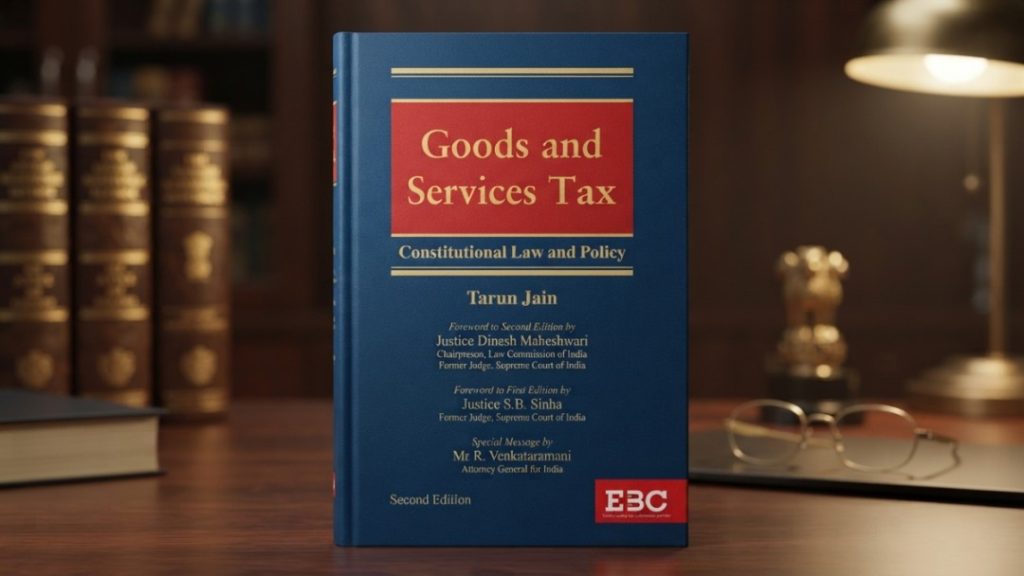
Want a deeper dive? Grab the reference book.