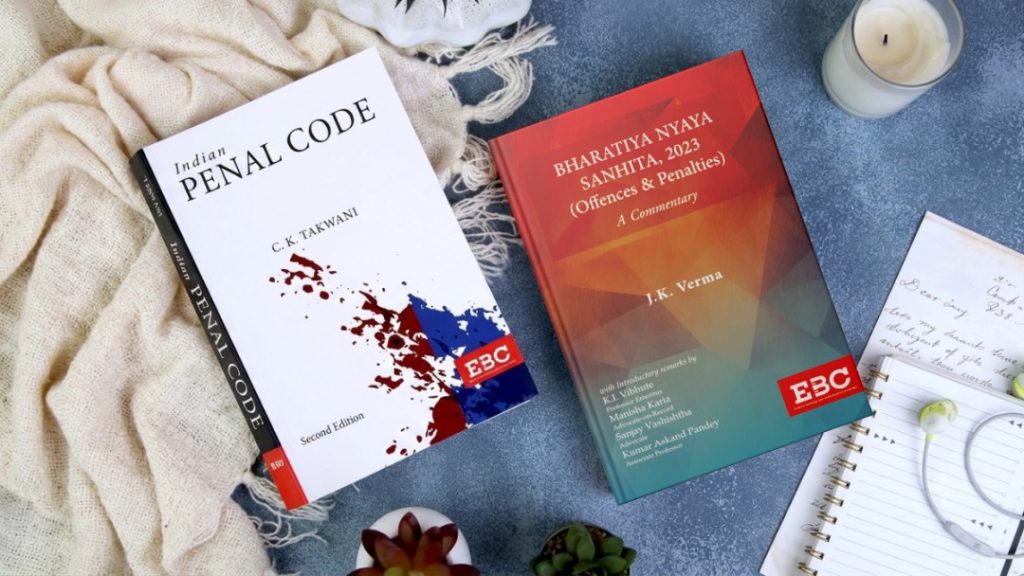
India’s criminal law just had its biggest makeover in over 160 years. On July 1, 2024, the Bharatiya Nyaya Sanhita, 2023 (BNS) replaced the Indian Penal Code, 1860 — a law drafted by the British, for a colonial administration, in a completely different world. The change was not just about renaming. It was, in many ways, a fundamental rethink of how India defines crime, assigns punishment, and delivers justice.
But what exactly changed? And what stayed the same? This blog breaks it all down — clearly, section by section, without the legal jargon.
A Brief History: Why Was the IPC Replaced?
The Indian Penal Code, 1860 was drafted by Lord Thomas Babington Macaulay and came into force during British rule. While it served as the backbone of India’s criminal justice system for decades and was periodically amended, it carried the DNA of colonial control — designed to govern a subject population, not to serve free citizens.
The IPC had become outdated, verbose, and disconnected from the contemporary socio-legal landscape. In an era marked by digital crimes, rising crimes against women, and demands for victim-centric justice, India needed a modern, indigenous, and citizen-centric criminal code
In 2020, the Ministry of Home Affairs constituted a committee to recommend reforms. After extensive deliberation, three new criminal laws were passed by Parliament in December 2023 and came into force on July 1, 2024:
- Bharatiya Nyaya Sanhita, 2023 (BNS) — replaces the IPC, 1860
- Bharatiya Nagarik Suraksha Sanhita, 2023 (BNSS) — replaces the Code of Criminal Procedure, 1973
- Bharatiya Sakshya Adhiniyam, 2023 (BSA) — replaces the Indian Evidence Act, 1872
This blog focuses on the BNS and what it actually changed compared to the IPC.
The Big Picture: Structure and Numbers
One of the first things that changed is the sheer structure of the law. The IPC had 511 sections, many of which were overlapping or obsolete. The BNS consolidates and rationalises these into 358 sections, eliminating redundancy and streamlining the law for greater clarity and efficiency.
In the BNS, 20 new offences have been added and 19 provisions in the repealed IPC have been dropped. The punishment of imprisonment has been increased for 33 offences, and fines have been increased for 83 offences. A mandatory minimum punishment has been introduced for 23 offences. A sentence of community service has been introduced for six offences.
The BNS also uses more accessible, Indianised language compared to the archaic legal English of the IPC, making it more comprehensible to ordinary citizens and practitioners alike.
1. Sedition Is Gone — But Not Entirely
Perhaps the most talked-about change is the removal of sedition. Section 124A of the IPC — the sedition law — was one of the most controversial provisions in India’s legal history, frequently criticised for being used to silence dissent and political opposition.
The BNS removes sedition as an offence. Instead, there is a new offence for acts endangering the sovereignty, unity and integrity of India. It penalises exciting or attempting to excite secession, armed rebellion, or subversive activities, encouraging feelings of separatist activities, or endangering the sovereignty or unity and integrity of India. These offences may involve exchange of words or signs, electronic communication, or use of financial means.
So while the word “sedition” is gone, a broadly worded replacement under Section 152 of the BNS now covers much of the same ground. Critics have pointed out that the new provision may carry its own risks of misuse, given its expansive language.
2. Terrorism and Organised Crime Now in the Main Criminal Code
Under the IPC, terrorism was dealt with under the Unlawful Activities (Prevention) Act (UAPA) — a special law. Organised crime was covered by state-level laws like the Maharashtra Control of Organised Crime Act (MCOCA). The BNS brings both into the general criminal code for the first time.
The BNS adds terrorism as an offence. It is defined as an act that intends to threaten the unity, integrity, and security of the country, intimidate the general public or disturb public order. Organised crime has been added as an offence. It includes crimes such as kidnapping, extortion and cyber-crime committed on behalf of a crime syndicate. Petty organised crime is also an offence now.
So while the word “sedition” is gone, a broadly worded replacement under Section 152 of the BNS now covers much of the same ground. Critics have pointed out that the new provision may carry its own risks of misuse, given its expansive language.
2. Terrorism and Organised Crime Now in the Main Criminal Code
Under the IPC, terrorism was dealt with under the Unlawful Activities (Prevention) Act (UAPA) — a special law. Organised crime was covered by state-level laws like the Maharashtra Control of Organised Crime Act (MCOCA). The BNS brings both into the general criminal code for the first time.
The BNS adds terrorism as an offence. It is defined as an act that intends to threaten the unity, integrity, and security of the country, intimidate the general public or disturb public order. Organised crime has been added as an offence. It includes crimes such as kidnapping, extortion and cyber-crime committed on behalf of a crime syndicate. Petty organised crime is also an offence now.
Attempting or committing organised crime is punishable with death or life imprisonment and a fine of Rs 10 lakh, if it results in the death of a person, or imprisonment between five years and life, and a fine of at least five lakh rupees.
The inclusion of these offences in the main penal code ensures that states which previously lacked organised crime legislation now have a central law to fall back on.
3. Mob Lynching Gets a Dedicated Provision
For the first time, mob lynching has been explicitly recognised and penalised in India’s primary criminal statute. The BNS criminalises murder committed by a group of five or more persons based on grounds of race, caste, community, sex, place of birth, language, personal belief, or any other similar ground, with punishment of life imprisonment or death.
This is a significant step in acknowledging a social problem that had been prosecuted under ordinary murder provisions, without the aggravated recognition that group violence on identity grounds deserves.
4. Hit-and-Run: Stricter Punishment for Fleeing the Scene
Road accidents and hit-and-run cases have been a serious concern in India. The BNS directly addresses this. Whoever causes death by rash or negligent driving of a vehicle, and thereafter escapes from the scene of incident without reporting to the police or a magistrate, will be punished with a maximum of ten years’ imprisonment and shall also be liable to fine.
Under the old IPC, causing death by negligence attracted a maximum of only two years. The BNS raises this to five years, and for hit-and-run cases involving fleeing the scene, up to ten years — a sharp and deliberate escalation.
5. Community Service Introduced as Punishment
This is one of the most progressive additions in the BNS — one that signals a shift from purely punitive justice toward reformative justice.
For the first time, community service has been introduced as one of the punishments. It has been specifically provided for six petty offences, including non-appearance in response to a proclamation, attempt to commit suicide to compel or restrain exercise of lawful power by a public servant, petty theft on return of theft money, misconduct in public by a drunken person, and defamation
Community service as punishment avoids the stigma and collateral damage of imprisonment for minor offences, and represents an important philosophical shift in how India’s criminal law thinks about punishment.
Frequently Asked Questions (FAQs)
The BNS came into force on July 1, 2024. All criminal cases registered from this date onwards are governed by the BNS. Cases registered before this date continue to be tried under the IPC.
The word “sedition” and Section 124A of the IPC no longer exist. However, Section 152 of the BNS introduces a replacement offence covering acts that endanger the sovereignty, unity, and integrity of India — which critics argue carries similar scope and risks of misuse.
The IPC had 511 sections. The BNS has 358 sections — a reduction achieved by consolidating overlapping provisions, removing obsolete ones, and reorganising the structure.
The general offence of attempt to commit suicide has been removed from the BNS, recognising it as a mental health issue rather than a crime. However, attempting suicide specifically to coerce a public servant from performing their duty remains a punishable offence.
Community service is a new, non-custodial form of punishment introduced under the BNS for six specified petty offences. It is an alternative to imprisonment and reflects the reformative approach to justice. The exact nature and manner of community service is defined under the BNSS.
For a more detailed explanation, see the resource linked below.