What Is a Foreign Arbitral Award
A foreign arbitral award is a decision passed by an arbitral tribunal seated outside India in a dispute considered “commercial” under Indian law. For it to be enforceable in India, the country where the award was made must be a “reciprocating territory,” meaning the Central Government has officially notified it under the Arbitration and Conciliation Act, 1996.
The Governing Legal Framework
The enforcement of foreign arbitral awards in India is primarily governed by Part II of the Arbitration and Conciliation Act, 1996. This Part is split into two chapters based on which international convention applies.
- New York Convention awards (Sections 44 to 52): Covers awards from countries that are signatories to the 1958 New York Convention on the Recognition and Enforcement of Foreign Arbitral Awards, and which India has notified as reciprocating territories.
- Geneva Convention awards (Sections 53 to 60): Covers a smaller, older category of awards under the 1927 Geneva Convention, relevant only for a limited list of countries.
Other statutes that interact with this process include:
- Code of Civil Procedure, 1908: The enforcing court follows CPC procedures for execution once an award is treated as a decree, though CPC’s Section 44A (execution of foreign court decrees) is a separate mechanism and does not apply to arbitral awards directly.
- Foreign Exchange Management Act, 1999 (FEMA): Governs cross border remittance once the award amount is realised, especially where payment involves foreign currency.
- Insolvency and Bankruptcy Code, 2016: Relevant if the judgment debtor is undergoing insolvency proceedings, since enforcement claims may need to be routed through the resolution process.
- Companies Act, 2013: Applicable where enforcement is sought against corporate assets or involves questions of corporate liability.
Conditions for Enforcement Under Section 44
For an award to qualify as a foreign award under Section 44, three conditions must be met:
- The award must be in writing and made in pursuance of an arbitration agreement.
- The dispute must arise from a legal relationship considered commercial under Indian law.
- The award must be made in a territory notified by the Central Government as a reciprocating territory.
Step-by-Step Enforcement Process
- Filing an application before the jurisdictional High Court, along with the original award, the arbitration agreement, and evidence proving it is a foreign award.
- The court examines enforceability under Section 47 (evidence) and Section 48 (grounds for refusal).
- If no grounds for refusal apply, the court treats the award as a decree of that court under Section 49.
- Execution proceedings follow as they would for any civil decree, allowing attachment or sale of assets.
Grounds for Refusal of Enforcement
Section 48 lists the limited grounds on which a court can refuse enforcement, including incapacity of a party, invalid arbitration agreement, lack of proper notice, the award dealing with matters beyond the arbitration agreement’s scope, improper composition of the tribunal, or the award being contrary to India’s public policy. The Geneva Convention track has a parallel provision under Section 57.
Frequently Asked Questions
Only if it comes from a country notified as a reciprocating territory and satisfies the definition under Section 44 or Section 53.
The relevant High Court having jurisdiction over the assets or the party against whom enforcement is sought.
No. Once the court finds no grounds for refusal exist, the award itself is treated as a decree without a fresh suit.
Enforcement becomes practically difficult, since execution can only proceed against assets located within Indian jurisdiction.
No. Refusal is limited strictly to the grounds under Section 48 or Section 57, not general disagreement with the foreign legal system.
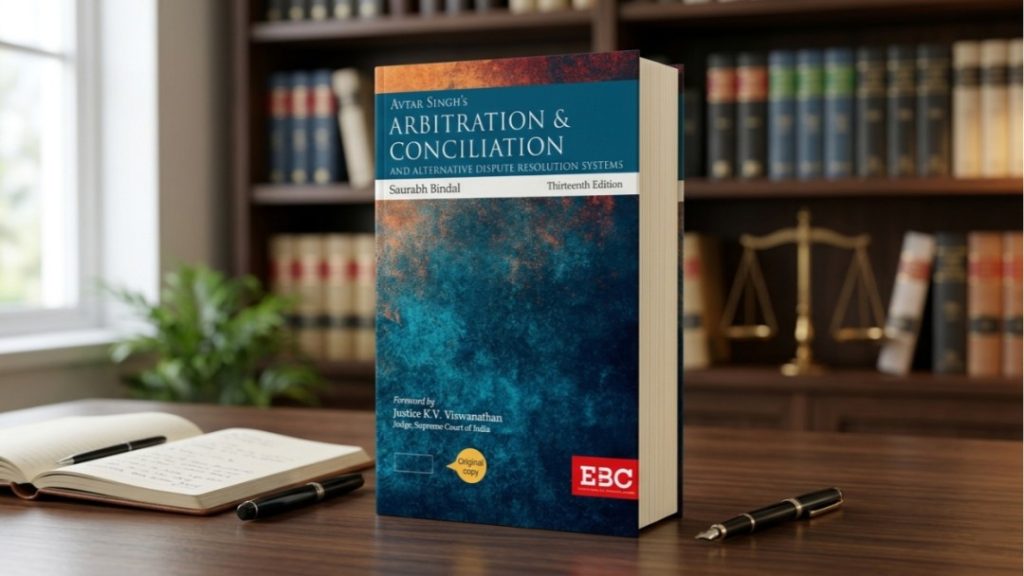
Want the deeper dive? Grab the reference book.