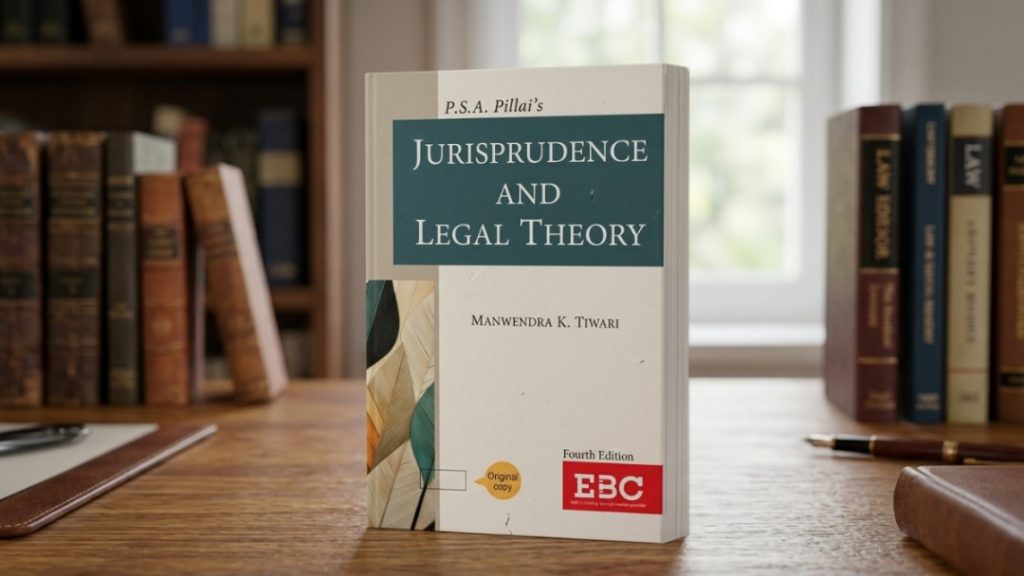
Law does not come from thin air. Every rule that governs how we live, work, contract, and resolve disputes has an origin — a source from which it draws its authority and legitimacy. For law students, legal practitioners, and anyone curious about how the legal system works, understanding the sources of law is the most fundamental starting point.
Broadly speaking, law in any modern legal system flows from three primary sources: legislation, custom, and judicial precedent. Each of these has its own character, history, and place in the legal order. Together, they form the complete picture of how law is made, recognised, and applied.
What Are Sources of Law?
In legal theory, a “source of law” refers to the origin from which legal rules derive their force and validity. It answers a simple but profound question: why is this rule law, and not just a suggestion?
Jurists have classified sources of law in different ways. John Salmond, one of the most cited legal theorists, distinguished between formal sources (which give law its legal validity, such as legislation and precedent) and material sources (which supply the substance of law, such as custom, morality, and professional opinion). For practical purposes, however, the three sources discussed here — legislation, custom, and judicial precedent — cover the core of how law is created and recognised in most legal systems, including India.
1. Legislation: The Most Dominant Source of Law
What Is Legislation?
Legislation is law made by a competent authority — typically a parliament or legislature — through a formal, deliberate process. It is the most visible and widely recognised source of law in modern democratic systems. When the Indian Parliament enacts the Indian Contract Act, or when a State Legislature passes a tenancy law, that is legislation at work.
Legislation is also called enacted law or statute law. It is expressed in written form, is systematically organised, and carries the direct authority of the sovereign.
Why Legislation Is the Most Important Source
Several features make legislation the dominant source of law today:
Certainty and clarity. Because legislation is written and published, everyone can, in principle, know what the law says. This gives it a significant advantage over unwritten sources.
Democratic legitimacy. In a democracy, legislation is made by elected representatives, which gives it a political mandate that no other source of law carries.
Ability to make new law. Unlike judicial precedent, which can only develop law incrementally through decided cases, legislation can create entirely new rules, abolish old ones, or bring about sweeping legal reform quickly.
Supremacy over other sources. In most legal systems, legislation overrides inconsistent custom or judicial decisions. In India, for example, a statute passed by Parliament will override a conflicting customary rule, subject to constitutional limitations.
Types of Legislation
Legislation operates at different levels:
Supreme or Constitutional Legislation sits at the top. The Constitution of India is the supreme law of the land. All other laws must conform to it. Any legislation that violates the Constitution can be struck down by courts.
Ordinary Legislation refers to Acts passed by Parliament or State Legislatures within their constitutional competence. Examples include the Indian Penal Code, the Code of Civil Procedure, the Companies Act, and the Consumer Protection Act.
Delegated or Subordinate Legislation is law made by bodies other than the legislature — such as Ministers, local authorities, or statutory bodies — under authority granted by a parent Act. Rules, regulations, bye-laws, and notifications all fall in this category. SEBI regulations, for instance, are a form of delegated legislation.
Legislation in the Indian Context
India follows a federal structure with a Union List, State List, and Concurrent List under the Seventh Schedule of the Constitution. Parliament has exclusive legislative power over Union List subjects, while State Legislatures cover State List subjects. Both can legislate on Concurrent List subjects, with Parliamentary law prevailing in case of conflict.
2. Custom: The Oldest Source of Law
What Is Custom?
Long before parliaments existed, communities lived by customs — practices and usages that people followed habitually and considered binding. Custom is the oldest source of law. It represents the spontaneous, organic development of rules from the lived experience of a community, rather than a top-down command from the state.
A custom becomes legally recognised when courts or legislatures accept it as having the force of law. Not every habit or practice qualifies — legal custom must meet specific requirements.
Requirements for a Valid Legal Custom
For a custom to be recognised as a source of law, it must generally satisfy the following conditions:
Antiquity. The custom must have existed for a long time. In English common law, the traditional test was that the custom must have existed since “time immemorial” — fixed at 1189 AD. Indian courts apply a more flexible standard, requiring that the custom be ancient and well-established.
Continuity. The custom must have been practised continuously without major interruption. A custom that was followed for a while, then abandoned, and then revived would not qualify.
Peaceable enjoyment. The custom must have been enjoyed without dispute or opposition. If a practice has been constantly contested, it weakens its claim to legal recognition.
Reasonableness. A custom must not be unreasonable or contrary to public policy. Courts will not recognise a custom that shocks the conscience or produces absurd results.
Certainty. The nature and scope of the custom must be clear and defined. A vague or uncertain practice cannot serve as a legal rule.
Consistency. The custom must not conflict with other established customs or with statutory law.
Obligatory character. The community must have observed the custom out of a sense of legal obligation, not merely as a matter of convenience or social habit. This is what jurists call opinio juris — the belief that the practice is legally binding.
Custom in Indian Law
Custom plays a particularly significant role in personal laws in India. Matters of marriage, succession, inheritance, and family relations among Hindus, Muslims, Christians, and other communities have historically been governed by customs specific to those communities, castes, or regions.
The Hindu Marriage Act, 1955 and the Hindu Succession Act, 1956 explicitly recognise custom as a source of rights. Courts have consistently held that a custom, if proved to exist and satisfy the necessary conditions, can override the general provisions of personal law statutes.
In customary international law, the principle is similar — widespread and consistent state practice, followed out of a sense of legal obligation, becomes binding international law.
3. Judicial Precedent: Law Made in the Courtroom
What Is Judicial Precedent?
Judicial precedent — also called case law or judge-made law — refers to the body of law that emerges from court decisions. When a court decides a case, its reasoning on a point of law becomes a precedent that guides future courts deciding similar questions.
The doctrine of precedent rests on a Latin principle: stare decisis et non quieta movere — “stand by what has been decided and do not disturb settled matters.” The idea is that like cases should be decided alike, ensuring consistency, predictability, and fairness.
The Ratio Decidendi and Obiter Dicta
Not every word in a judgment is binding. The doctrine of precedent draws a crucial distinction between two parts of a judgment:
Ratio decidendi is the binding part. It refers to the legal reasoning that was essential to the decision — the rule of law on which the outcome of the case actually rested. Future courts are bound by the ratio of a decision.
Obiter dicta are observations made by the judge that were not essential to the decision — comments made in passing, hypothetical scenarios considered, or opinions expressed on points that did not directly arise. Obiter statements are persuasive but not binding.
Binding and Persuasive Precedent
Precedents are classified based on their binding force:
Binding precedent must be followed by lower courts. In India, the decisions of the Supreme Court of India are binding on all courts in the country under Article 141 of the Constitution, which expressly states that the law declared by the Supreme Court shall be binding on all courts within the territory of India.
Persuasive precedent is not binding but may be considered by a court for guidance. Decisions of foreign courts — such as the UK Supreme Court, US Supreme Court, or Australian High Court — and judgments of coordinate benches are persuasive. Even Supreme Court decisions can be persuasive for other Supreme Court benches of the same strength.
The Hierarchy of Courts in India and Precedent
India follows a clear judicial hierarchy that determines the operation of precedent:
The Supreme Court sits at the apex. Its decisions under Article 141 bind all courts in India. When a larger bench of the Supreme Court overrules a smaller bench, the larger bench’s decision prevails.
High Courts bind all subordinate courts within their respective states. A decision of the Allahabad High Court, for instance, is binding on all district courts and trial courts in Uttar Pradesh but is only persuasive for other High Courts.
District Courts and Trial Courts are bound by the decisions of the High Court of their state and the Supreme Court, but their own decisions do not bind each other.
Judicial Precedent as a Creative Force
Judicial precedent is not merely a mechanical process of following old cases. Courts — particularly the Supreme Court — have used the precedent doctrine to develop, expand, and sometimes revolutionise the law.
The recognition of the right to privacy as a fundamental right in Justice K.S. Puttaswamy v. Union of India (2017), the expansion of Article 21 to include the right to livelihood, education, health, and a clean environment, and the evolution of public interest litigation (PIL) as a tool of constitutional adjudication are all examples of judicial law-making through precedent.
In these instances, the Supreme Court did not merely apply existing law — it created new law, filling gaps that the legislature had not addressed.
How These Three Sources Interact
In practice, legislation, custom, and judicial precedent do not operate in isolation — they constantly interact and influence each other.
Legislation codifies custom. Much of what began as customary practice has been absorbed into statute over time. The rules of Hindu succession, for instance, were largely customary before being codified in the Hindu Succession Act.
Judicial precedent interprets legislation. Once a statute is enacted, its meaning and scope are worked out through court decisions. The interpretation placed by the Supreme Court on a provision of the Constitution or a statute becomes, in effect, part of the law itself.
Custom fills gaps in legislation. Where a statute is silent or ambiguous, and a relevant custom can be proved, courts may apply that custom to fill the gap.
Precedent recognises custom. A custom does not automatically become law — it becomes law when a court accepts and applies it. In this sense, judicial precedent is also the mechanism through which custom is officially recognised.
Frequently Asked Questions (FAQs)
Legislation is generally considered the most important source of law in India, with the Constitution of India being the supreme law of the land. All other laws — whether statutory, customary, or judge-made — must conform to the Constitution.
Generally, no. A statute passed by a competent legislature will override a conflicting custom. However, some personal law statutes in India expressly preserve the operation of custom in specific matters such as marriage, succession, and adoption, allowing recognised customs to operate even alongside the statute.
The ratio decidendi is the binding part of a judgment — the legal principle essential to the decision. Obiter dicta are incidental observations not essential to the outcome. Only the ratio binds lower courts; obiter statements are merely persuasive.
No. Decisions of foreign courts are not binding in India. They may be cited as persuasive authority, particularly decisions of courts from common law jurisdictions such as the United Kingdom, Australia, or Canada, especially on common law principles or constitutional questions.
Article 141 states that the law declared by the Supreme Court of India shall be binding on all courts within the territory of India. This gives Supreme Court decisions their binding character as a source of law throughout the country.
For further reading and detailed analysis, refer to this resource.