


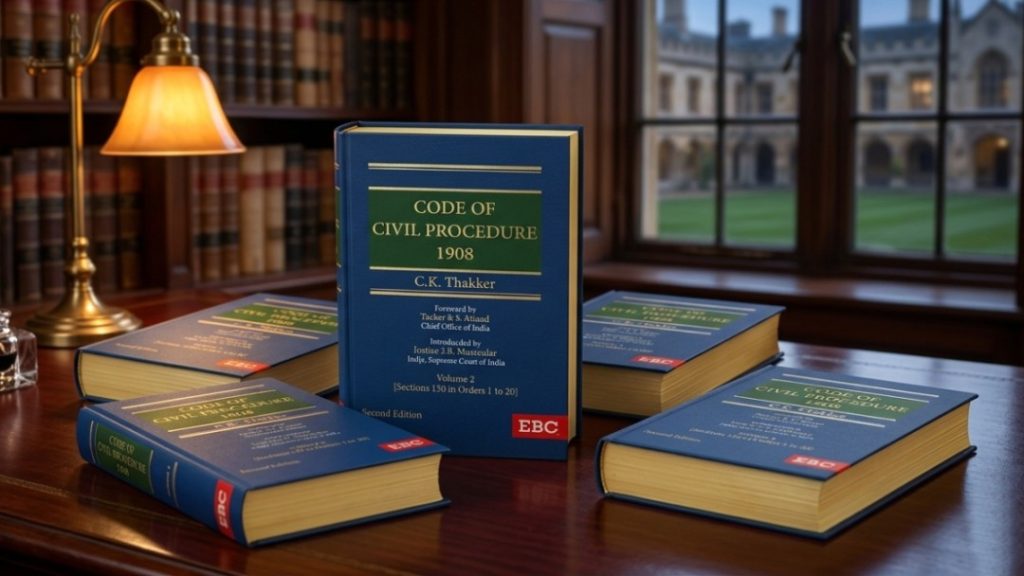
A Timeless Authority on Civil Procedure
Few legal commentaries enjoy the stature, respect, and longevity of Justice C.K. Thakker’s Code of Civil Procedure. For generations, this monumental work has been regarded as one of the most authoritative commentaries on the Code of Civil Procedure, 1908. Known for its depth of research, analytical clarity, and practical utility, the work has guided judges, practitioners, academicians, and students through the complexities of procedural law.
The latest edition of this celebrated five-volume treatise continues this rich legacy while incorporating the most significant legislative and judicial developments that have shaped civil litigation in recent years.
Why This Work Continues to Be a Benchmark
Civil procedure forms the backbone of the justice delivery system. While substantive laws determine rights and liabilities, procedural laws govern the manner in which those rights are enforced. Justice Thakker’s work has long been valued for its ability to explain not only the letter of the law but also its practical application in courts.
What distinguishes this commentary is its comprehensive treatment of the Code, its lucid language, and its detailed examination of judicial precedents. The work addresses numerous procedural complexities and grey areas, making it a trusted reference for both experienced practitioners and newcomers to the legal profession.
Thoroughly Updated for Contemporary Civil Litigation
The new edition incorporates all major legislative developments that have transformed civil procedure over the years, including:
- CPC (Amendment) Act, 1999
- CPC (Amendment) Act, 2002
- Commercial Courts Act, 2015
- Factoring Regulation Act, 2011
- Mediation Act, 2023
- Updated State Amendments
- Updated High Court Amendments
By integrating these developments into the commentary, the work ensures that readers have access to the current legal framework governing civil proceedings in India.
Structured Across Five Comprehensive Volumes
The work is meticulously organized across five volumes, allowing readers to navigate the Code systematically.
Volume 1 and Volume 2
These volumes primarily deal with the substantive provisions of the Code, covering Sections 1 to 158 and explaining the foundational principles governing civil proceedings.
Volumes 2 to 5
These volumes provide an extensive discussion on the First Schedule of the Code, including the various Orders and Rules that govern procedural aspects of civil litigation.
The arrangement follows the structure of the Code itself, enabling readers to easily locate and understand specific provisions.
In-Depth Analysis of Landmark Judicial Decisions
A hallmark of this commentary is its rigorous analysis of judicial precedents. The present edition examines all significant and recent decisions of the Supreme Court and various High Courts.
Practical Guidance Beyond Theory
The value of this work extends far beyond doctrinal analysis. Recognising the practical needs of lawyers and litigants, the commentary includes model formats and drafting aids for:
- Plaints
- Written Statements
- Framing of Issues
- Appeals
- Revisions
- Other important pleadings and procedural documents
These practical tools make the work particularly useful for litigating lawyers and young professionals entering civil practice.
A Thoughtful Contribution to Procedural Reform
Justice Thakker’s commentary does not merely explain existing law. It also critically examines provisions that may require legislative reconsideration and offers constructive suggestions for reform.
This analytical approach makes the work valuable not only as a reference book but also as a contribution to the continuing evolution of civil procedural law in India.
Who Should Read This Book?
This comprehensive work is an indispensable resource for:
- Judges and members of the judiciary
- Civil litigation practitioners
- Senior and junior advocates
- Law professors and researchers
- Judicial service aspirants
- Law students
- Legal administrators and policymakers
Whether one seeks a quick procedural clarification or an in-depth understanding of complex legal issues, this commentary serves as a reliable companion.
For further reading and detailed analysis, refer to this resource.


Moot Court vs Mock Trial: Key Differences Explained
[…] mock trials, the procedural aspects simulated within a mock trial are typically drawn from the Code of Civil Procedure, 1908 for civil matters, or the Bharatiya Nagarik Suraksha Sanhita, 2023 for criminal matters, since […]