What Is a Uniform Civil Code?
A Uniform Civil Code (UCC) is the idea that all citizens of India should follow the same personal laws, regardless of religion or community.
Personal laws include:
- marriage
- divorce
- adoption
- inheritance
- succession (who gets property after someone dies)
Right now, these topics are governed by different laws for different communities.
For example:
- Hindus follow Hindu Marriage Act
- Muslims follow Muslim Personal Law
- Christians follow Christian Marriage Act
- Parsis follow Parsi Marriage and Divorce Act
A UCC would replace these separate systems with one unified law for everyone.
Why Was the UCC Idea Introduced?
Constitutional Vision (Article 44)
The idea comes from Article 44 of the Constitution, which says:
“The State shall endeavour to secure a Uniform Civil Code for the citizens throughout the territory of India.”
This shows that:
- UCC is not mandatory
- It is a Directive Principle — a goal the government should try to achieve
- It reflects the hope for equality, fairness, and national unity
Reasons for introducing UCC:
- Equality before law → same rules for all citizens
- Gender justice → correcting inequalities in some personal laws, especially affecting women
- Legal clarity → removes confusion caused by different laws for different communities
- Unity and integration → common laws help strengthen national identity
- Modernisation → updating old and colonial-era laws
Why Is the UCC Important?
- It aims to ensure equal civil rights for all citizens
- It supports women’s rights in marriage, divorce, and inheritance
- It reduces discrimination based on religion
- It simplifies the legal system
History and Timeline
1947–1950
Debate in the Constituent Assembly.
Eventually, the UCC was placed as a Directive Principle (Article 44).
1985 – Shah Bano Case
Supreme Court strongly highlighted the need for a common civil law to protect women’s rights.
2016–2018
The 21st Law Commission of India studied the UCC.
In 2018, it reported that a UCC is “neither necessary nor desirable at this stage.”
However, it recommended reforming individual personal laws to bring equality.
2023
The 22nd Law Commission restarted consultations and invited public views on UCC.
Most Recent Updates
Uttarakhand Passes India’s First Uniform Civil Code (2024)
- In February 2024, the Uttarakhand Legislative Assembly passed the Uttarakhand Uniform Civil Code, 2024.
- This is the first state-level UCC in India.
- The law applies to all residents of the state, except some tribal groups.
Key features:
- Common rules for marriage, divorce, inheritance, maintenance
- Mandatory registration of live-in relationships
- Equal inheritance rights for men and women
- Ban on bigamy and polygamy (women protected under uniform marriage rules)
This is a state-level UCC, not national.
Other States Considering UCC
These updates are real and confirmed:
- Assam (2023–2024)
- Announced intention to introduce UCC-like reforms
- Already banned polygamy through a separate law
- Gujarat (2023)
- Formed a committee to examine UCC
- Goa
- Has a common civil code since Portuguese rule (not the same as UCC, but often cited as an example)
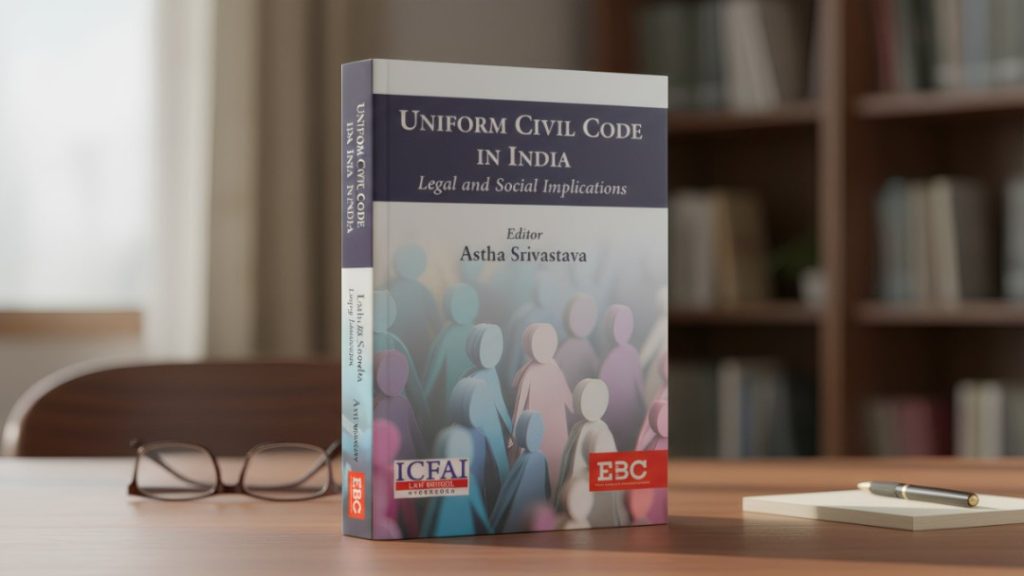
For a more in-depth understanding of the Uniform Civil Code, consider reading this well-researched book by Asha Srivastava.