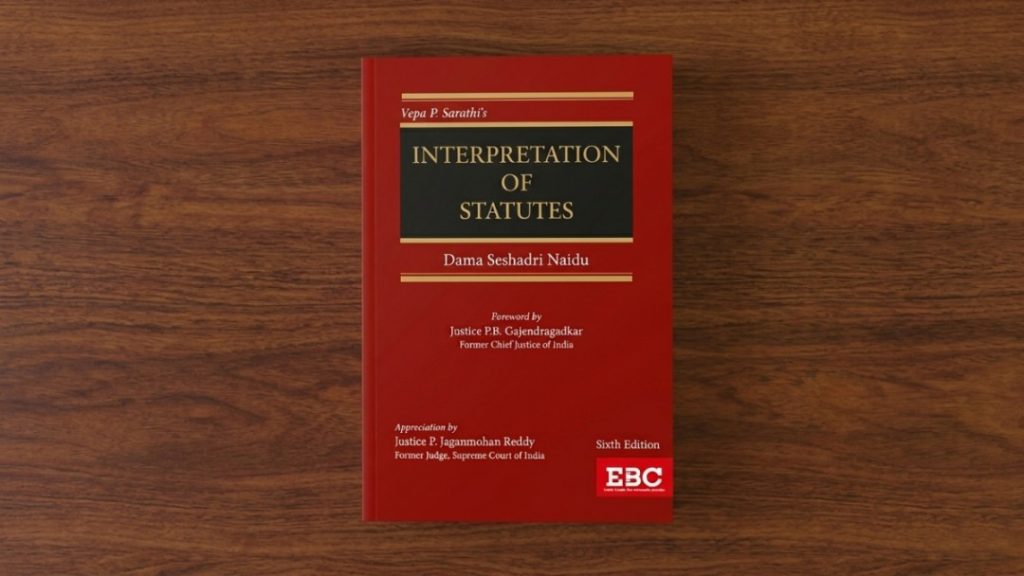
Laws are written in words, but words can sometimes be unclear, broad, or capable of more than one meaning. This is where statutory interpretation becomes important. Statutory interpretation refers to the process by which courts interpret and apply legislation passed by the legislature. Over the years, courts have developed several principles to determine the true meaning and purpose of statutory provisions.
Among the most important principles of statutory interpretation are the Literal Rule, Golden Rule, and Mischief Rule. These rules help judges resolve ambiguities and ensure that laws are applied fairly and effectively. Understanding these rules is essential for law students, legal professionals, and anyone interested in how courts interpret legislation.
What Is Statutory Interpretation?
Statutory interpretation is the process of understanding and explaining the meaning of a statute or legislative provision. Courts rely on interpretation when the wording of a law is unclear, ambiguous, or leads to unexpected outcomes.
The primary objective of statutory interpretation is to give effect to the intention of the legislature while ensuring that the law is applied in a practical and just manner.
Why Is Statutory Interpretation Necessary?
Statutory interpretation is necessary because:
- Language can be ambiguous or imprecise.
- Legislators cannot foresee every possible situation.
- Social and technological changes may create new legal challenges.
- Different interpretations of a provision may lead to different legal outcomes.
- Courts must resolve disputes consistently and fairly.
To address these challenges, courts use established rules of interpretation.
The Literal Rule
The Literal Rule is the oldest and most fundamental rule of statutory interpretation. According to this rule, words used in a statute must be given their ordinary, natural, and grammatical meaning.
Under the Literal Rule, judges do not look beyond the words of the statute unless the language is unclear. If the wording is plain and unambiguous, the court must apply the law as written, even if the result appears harsh or inconvenient.
Key Features of the Literal Rule
- Focuses on the exact wording of the statute.
- Gives words their ordinary dictionary meaning.
- Limits judicial discretion.
- Promotes certainty and predictability in law.
Example of the Literal Rule
Suppose a law states that “vehicles are prohibited in a public park.” Applying the Literal Rule, a court would interpret the term “vehicle” according to its ordinary meaning and may include cars, motorcycles, and bicycles if they fit within that meaning.
Advantages of the Literal Rule
- Respects parliamentary sovereignty.
- Provides legal certainty.
- Prevents judges from making or altering laws.
Criticisms of the Literal Rule
- May produce unjust or absurd outcomes.
- Ignores the broader purpose of legislation.
- Can lead to overly rigid interpretations.
The Golden Rule
The Golden Rule serves as a modification of the Literal Rule. It allows courts to depart from the ordinary meaning of words when a literal interpretation would lead to an absurd, unreasonable, or inconsistent result.
The purpose of the Golden Rule is to avoid outcomes that the legislature could not have intended.
Key Features of the Golden Rule
- Starts with the literal meaning of words.
- Permits modification where the literal meaning creates absurdity.
- Helps achieve a more reasonable interpretation.
Example of the Golden Rule
Imagine a law stating that no person shall “marry their widow’s sister.” A literal interpretation may create confusion because a deceased person cannot marry anyone. Using the Golden Rule, the court would interpret the provision in a way that avoids such an absurd result.
Advantages of the Golden Rule
- Prevents irrational outcomes.
- Preserves the legislative intent.
- Provides flexibility where needed.
Criticisms of the Golden Rule
- The concept of “absurdity” can be subjective.
- May give judges wider discretion.
- Does not clearly define when deviation from literal meaning is appropriate.
The Mischief Rule
The Mischief Rule focuses on the problem or “mischief” that the legislation was intended to remedy. It is one of the oldest principles of statutory interpretation and originated from Heydon’s Case (1584).
Under this rule, courts examine the law before the statute was enacted, identify the defect or problem that existed, and interpret the statute in a way that suppresses the mischief and advances the remedy.
Key Features of the Mischief Rule
- Focuses on legislative purpose.
- Considers the social problem addressed by the statute.
- Encourages a purposive interpretation.
- Helps adapt laws to changing circumstances.
The Four Questions from Heydon’s Case
When applying the Mischief Rule, courts consider:
- What was the law before the statute was enacted?
- What defect or mischief existed in that law?
- What remedy did the legislature provide?
- What is the true reason for that remedy?
Example of the Mischief Rule
Suppose a statute is enacted to prevent online financial fraud. If a new type of digital scam emerges that was not specifically mentioned in the statute, a court may interpret the law broadly to address the mischief that the legislation was designed to prevent.
Advantages of the Mischief Rule
- Promotes the purpose of legislation.
- Helps address modern legal challenges.
- Leads to practical and effective outcomes.
Criticisms of the Mischief Rule
- May reduce certainty in law.
- Gives judges significant interpretative power.
- Can sometimes go beyond the actual wording of the statute.
Difference Between Literal Rule, Golden Rule, and Mischief Rule
| Aspect | Literal Rule | Golden Rule | Mischief Rule |
|---|---|---|---|
| Focus | Ordinary meaning of words | Avoiding absurdity | Legislative purpose |
| Judicial Discretion | Limited | Moderate | Greater |
| Approach | Strict interpretation | Flexible interpretation | Purposive interpretation |
| Objective | Apply the law as written | Prevent unreasonable results | Remedy the defect in law |
| Consideration of Purpose | Minimal | Limited | Extensive |
Which Rule Do Courts Prefer Today?
Modern courts often adopt a purposive approach, particularly when dealing with complex legislation, social welfare laws, consumer protection laws, and constitutional matters. However, the Literal Rule remains the starting point of interpretation. Courts generally move to the Golden Rule or Mischief Rule only when a literal interpretation creates difficulties or fails to reflect the legislative purpose.
Therefore, these rules should not be viewed as competing principles but as complementary tools that help courts interpret statutes fairly and effectively.
Importance of Statutory Interpretation in Modern Law
Statutory interpretation plays a crucial role in the legal system because it:
- Ensures effective implementation of legislation.
- Protects the rights of individuals.
- Promotes consistency in judicial decisions.
- Helps courts adapt legal principles to modern circumstances.
- Bridges the gap between legislative drafting and practical application.
As legislation becomes increasingly detailed and complex, the importance of interpretation continues to grow.
Frequently Asked Questions (FAQs)
Statutory interpretation is the process by which courts determine the meaning and application of legislative provisions to resolve legal disputes.
The Literal Rule requires courts to give statutory words their ordinary and grammatical meaning, even if the outcome appears harsh or inconvenient.
The Golden Rule allows courts to modify the literal meaning of words when a strict interpretation would lead to an absurd or unreasonable result.
The Mischief Rule focuses on identifying the problem that a statute was intended to address and interpreting the law in a way that remedies that problem.
The Mischief Rule originated from the historic legal decision in Heydon’s Case.
Want to dive deeper? Check out this resource for more insights.