Legal writing for law students is one of those skills nobody formally teaches in a single sitting, yet it decides how your first draft, moot memorial, or case comment is judged. Unlike ordinary writing, legal writing demands precision, a specific vocabulary, and an understanding of how words translate into enforceable rights. This guide walks through where to start, what the Bar Council of India expects from you, and how each writing skill builds on the last.
Why Legal Writing for Law Students Matters
Legal writing is not decorative. A poorly drafted plaint can be rejected, a badly worded contract clause can be challenged, and an unclear case comment fails to communicate the point of law it was meant to explain. For law students, developing legal writing early affects internships, moot court performance, and eventually professional credibility.
The Bar Council of India Rules of Legal Education, 2008, framed under the Advocates Act, 1961, require law schools to include practical training components such as drafting, pleading, and moot court exercises as part of the mandatory curriculum. This is why legal writing is not optional for anyone pursuing an LLB or integrated law degree in India; it is a regulatory requirement built into how legal education is structured.
Building Blocks: Vocabulary and Word Formation
Legal vocabulary often borrows from Latin, French, and Old English, producing words like “estoppel,” “mesne profits,” or “res judicata” that carry precise technical meaning. Before attempting complex drafting, students benefit from:
- Learning root words and prefixes common in legal terms (for example, “de jure” versus “de facto”)
- Building a working glossary of frequently used legal terminology
- Reading judgments and statutes actively, noting unfamiliar terms and their contextual meaning
This stage, sometimes called word building, is foundational because legal terminology forms the backbone of every pleading, opinion, and argument that follows.
Communication Skills and How to Acquire Them
Strong legal writing rests on strong communication skills, both written and oral. These are typically developed through:
- Participating in moot court competitions, which sharpen argument structure
- Practicing client counseling and legal aid clinic work, often mandated under BCI rules
- Regularly writing short legal notes or case summaries to build clarity and brevity
Core Forms of Legal Writing Every Student Should Practice
| Type of Writing | Purpose | Typical Length | Key Skill Tested |
|---|---|---|---|
| Case Comment | Analyze and critique a judgment | 1500 to 2500 words | Legal reasoning, concise summary |
| Law Review Article | In depth research on a legal issue | 5000 to 10000 words | Research depth, original argument |
| Legal Drafting | Prepare contracts, pleadings, notices | Varies by document | Precision, statutory compliance |
| Moot Memorial | Present arguments for a hypothetical case | 2500 to 3000 words per side | Persuasive structure, citation accuracy |
| Legal Opinion | Advise on a specific legal question | 1000 to 2000 words | Clear conclusion, applied reasoning |
Legal Terminology, Maxims, and Phrases
Legal maxims, short Latin phrases expressing established legal principles, appear frequently in judgments and academic writing. Examples include “audi alteram partem” (hear the other side) and “ignorantia juris non excusat” (ignorance of law is no excuse). Students should build familiarity with these gradually, understanding both the literal translation and the legal principle behind each phrase, rather than memorizing them without context.
How Legal Drafting Connects to Procedural Law
Legal drafting is not just a writing exercise; it has real procedural consequences under Indian law:
- Under Order VI Rule 15 of the Code of Civil Procedure, 1908, pleadings must be verified and drafted with material facts stated clearly.
- Under Order VII Rule 11 of the Code of Civil Procedure, 1908, a plaint can be rejected if it does not disclose a cause of action or is otherwise defective in drafting.
- Under the Indian Contract Act, 1872, ambiguous contract clauses can lead to disputes over interpretation, making precise drafting essential.
- Under the Right to Information Act, 2005, poorly drafted RTI applications are frequently rejected for lacking specificity.
This is why legal drafting, one of the most practical branches of legal writing, is treated seriously in law school curriculam and bar examinations alike.
Rights and Obligations of Law Students in Skill Building
| Rights | Obligations |
|---|---|
| Access to moot court and legal aid clinic training under BCI mandated curriculum | Complete practical training components required for degree recognition |
| Guidance from faculty on drafting and case analysis | Submit original, plagiarism free written work |
| Exposure to law journals and law reports for research | Cite sources and statutory provisions accurately |
| Opportunities to publish case comments and articles | Maintain professional tone and precision in academic submissions |
Common Mistakes and How to Avoid Them
- Overusing complex words instead of choosing the clearest available term
- Copying judgment language without understanding its application
- Ignoring structure in case comments, leading to unclear analysis
- Treating legal drafting as a formality rather than a precise, consequence bearing document
Recent Developments in Legal Education
Law schools and the Bar Council of India have increasingly emphasized practical drafting exposure through the All India Bar Examination, which tests basic drafting and procedural knowledge before a law graduate can practice. There is also a growing focus on integrating technology assisted legal research and writing tools into law school training, reflecting how legal practice itself is evolving.
Frequently Asked Questions
Start with vocabulary and legal terminology, then move to short case comments before attempting longer law review articles or drafting exercises.
A case comment focuses on analyzing a specific judgment concisely, while a law review article involves deeper research on a broader legal issue with original argument.
Often yes. Legal writing usually covers case comments and articles, while legal drafting focuses specifically on pleadings, contracts, and notices, though both rely on the same core skills.
Under Order VII Rule 11 of the Code of Civil Procedure, 1908, a plaint lacking a clear cause of action or containing serious defects can be rejected at the threshold stage.
Legal maxims help students understand foundational legal principles quickly, but they should be learned with context rather than memorized as isolated phrases.
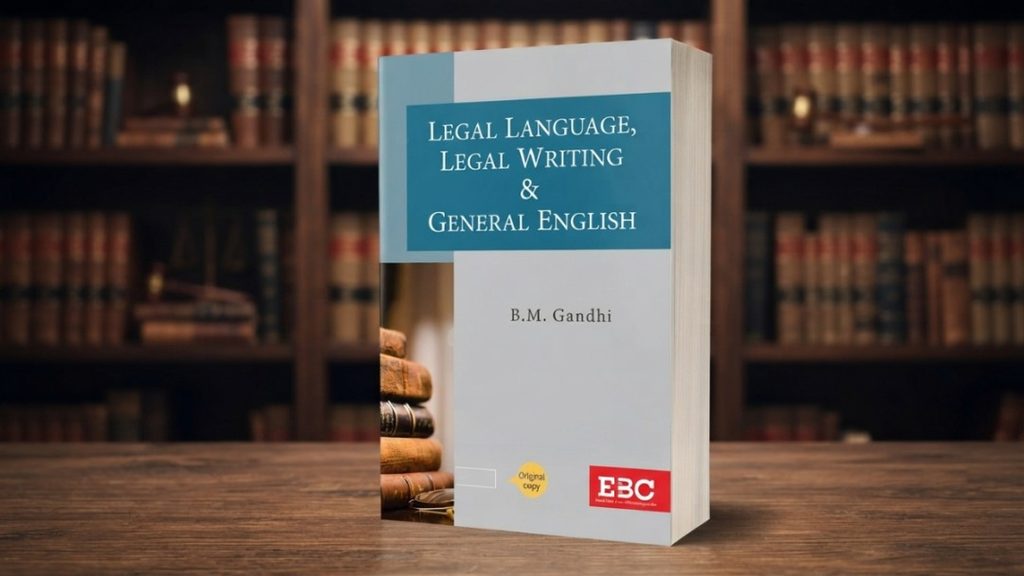
Want the deeper dive? Grab the reference book.