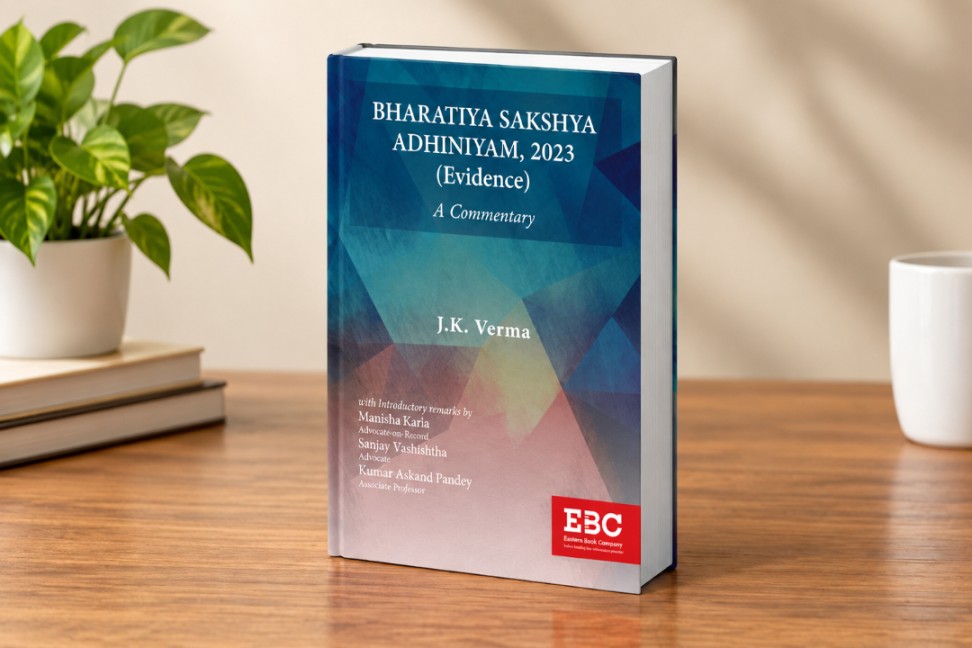
Mastering the AIBE 22 BSA important sections is essential for candidates preparing for the Bar Council of India qualification exam. With the Law of Evidence carrying a dedicated weightage of 8 questions out of 100, candidates must understand how the Bharatiya Sakshya Adhiniyam, 2023 (BSA) restructures, modernizes, and renumbers the evidentiary principles traditionally governed by the Indian Evidence Act, 1872 (IEA).
Background and Statutory Framework
The Bharatiya Sakshya Adhiniyam, 2023 (BSA) replaced the Indian Evidence Act, 1872 (IEA) to align evidentiary standards with contemporary digital realties. Enacted alongside new criminal statutes, the BSA retains foundational evidentiary rules while expanding definitions to treat electronic records as primary documentary evidence, establishing explicit conditions for digital data admissibility.
For AIBE 22 candidates, developing a quick comparative recall between the old IEA sections and the new BSA chapters is crucial when using Bare Acts under exam conditions.
Key BSA Sections for AIBE 22
Understanding specific chapters and sections within the BSA helps streamline Bare Act navigation:
1. Preliminary and Core Definitions (Sections 1–2)
- Section 2: Defines foundational concepts. Key entries include Fact, Document (which now explicitly covers electronic records, server logs, and smartphone messages), Evidence (including statements given electronically), and the standards for Proved, Disproved, and Not Proved.
2. Relevancy of Facts (Sections 3–50)
- Section 4 (Old Section 6 IEA): Governs the doctrine of Res Gestae, making facts relevant if they form part of the same transaction, whether occurring at the same time and place or at different times and places.
- Section 15 (Old Section 21 IEA): Defines Admissions (statements suggesting inferences about facts in issue) and outlines when admissions may be proved by or on behalf of the person making them.
- Section 22 (Old Sections 24–29 IEA): Covers Confessions (voluntary admissions of guilt by an accused). It explicitly states that confessions caused by inducement, threat, or promise remain inadmissible.
- Section 26 (Old Section 32 IEA): Details cases where statements by deceased or unlocatable persons are relevant, including Dying Declarations made regarding the cause of death.
- Section 39 (Old Section 45 IEA): Expands Expert Opinion provisions to include specialized fields like digital forensics and cyber security.
3. Proof of Oral and Documentary Evidence (Sections 51–93)
- Section 55 (Old Section 59 IEA): Rules on oral evidence, requiring all facts except the contents of documents or electronic records to be proved by direct oral testimony.
- Section 57 (Old Section 61 IEA): Outlines proof of contents of documents via Primary Evidence (the original document itself) or Secondary Evidence (certified copies or counterparts).
- Section 61 (Old Section 65B IEA): Sets specific requirements for the admissibility of electronic records, establishing that electronic information printed, stored, or copied into media carries equivalent legal weight if verified by an accompanying certificate.
4. Burden of Proof and Estoppel (Sections 104–127)
- Section 104 (Old Section 101 IEA): Establishes the Burden of Proof, stating that whoever desires a court to give judgment as to any legal right or liability dependent on facts must prove those facts exist.
- Section 121 (Old Section 115 IEA): Defines Estoppel, preventing a person who intentionally caused another to believe a thing to be true from denying it in subsequent legal proceedings.
5. Examination of Witnesses (Sections 140–165)
- Section 142 (Old Section 137 IEA): Defines the order of witness examination: Examination-in-chief (by the calling party), Cross-examination (by the adverse party), and Re-examination.
- Section 148 (Old Section 143 IEA): Regulates Leading Questions (questions suggesting the desired answer) during examination phases.
Comparative Overview: IEA vs. BSA Key Sections
| Key Evidentiary Concept | IEA Section (1872) | BSA Section (2023) | Strategic Exam Context |
| Definitions (Document/Evidence) | Section 3 | Section 2 | Broadened to cover electronic records |
| Res Gestae | Section 6 | Section 4 | Relevance of facts in same transaction |
| Confessions under Inducement | Section 24 | Section 22 | Inadmissibility of coerced statements |
| Dying Declarations | Section 32(1) | Section 26(a) | Statements regarding cause of death |
| Expert Opinion | Section 45 | Section 39 | Extended to digital/technical fields |
| Electronic Record Admissibility | Section 65B | Section 61 | Electronic evidence verification rules |
| Burden of Proof | Section 101 | Section 104 | Obligation to prove facts in court |
| Estoppel | Section 115 | Section 121 | Rule against contradicting prior statements |
Frequently Asked Questions (FAQs)
The Bar Council of India syllabus assigns 8 questions out of 100 to the Law of Evidence (BSA).
Yes. Section 2 of the BSA explicitly incorporates electronic and digital records into the definition of documents and documentary evidence.
Section 61 of the BSA governs the admissibility of electronic records, replacing the framework under Section 65B of the IEA.
Yes. The doctrine is preserved under Section 4 of the BSA, corresponding to Section 6 of the old Indian Evidence Act.
Dying Declarations are governed under Section 26(a) of the BSA, corresponding to Section 32(1) of the old Act.
Ready to go beyond this? Reference book, right here.