Mastering the AIBE 22 BNSS important sections is crucial for candidates aiming to clear the Bar Council of India’s qualification exam. With criminal procedure carrying significant weightage in the exam pattern (accounting for roughly 10 out of 100 questions), law graduates must understand how the Bharatiya Nagarik Suraksha Sanhita, 2023 (BNSS) restructures procedural criminal law previously governed by the Code of Criminal Procedure, 1973 (CrPC).
Background and Statutory Framework
The Bharatiya Nagarik Suraksha Sanhita, 2023 (BNSS) replaced the Code of Criminal Procedure, 1973 (CrPC) as India’s primary statute regulating criminal procedure. Enacted to modernize investigation techniques, incorporate technology, and streamline trial timelines, BNSS introduces systemic updates including mandatory forensic data collection, electronic summons, and strict timeframes for reporting and judgments.
For candidates taking AIBE 22, acquiring a precise understanding of key BNSS provisions alongside their corresponding CrPC equivalents is essential for efficiently locating provisions in Bare Acts.
Crucial BNSS Sections for AIBE 22
Understanding specific chapters and sections within the BNSS simplifies navigation during exam preparation:
1. Preliminary and Definitions (Sections 1–5)
- Section 2: Defines critical legal terms. key definitions include cognizable offence (an offence where a police officer may arrest without a warrant), non-cognizable offence (where an arrest requires a warrant), and bailability classifications.
2. Arrest of Persons (Sections 35–62)
- Section 35 (Old Section 41 CrPC): Outlines conditions under which police may arrest without a warrant. It specifies mandatory notice requirements for offences punishable with imprisonment of seven years or less.
- Section 43 (Old Section 43 CrPC): Details arrest by private citizens and the mandatory procedure to surrender the arrested individual to a police officer without delay.
- Section 58 (Old Section 57 CrPC): Mandates that an arrested person cannot be detained in police custody beyond 24 hours without an order from a Magistrate.
3. Processes to Compel Appearance and Production (Sections 63–105)
- Section 64 & 70: Regulates service of summons, explicitly permitting electronic modes (such as email or encrypted messaging) alongside traditional physical delivery.
- Section 84 (Old Section 82 CrPC): Governs proclamations for absconding persons and attachment of property.
4. Information to Police and Powers to Investigate (Sections 173–196)
- Section 173 (Old Section 154 CrPC): Governs First Information Reports (FIR). It officially recognizes Zero FIR (filing an FIR regardless of territorial jurisdiction) and allows information to be recorded electronically (e-FIR), provided it is signed within three days.
- Section 176 (Old Section 157 CrPC): Establishes procedure for investigation and mandates forensic examination for offences punishable by seven years of imprisonment or more.
- Section 187 (Old Section 167 CrPC): Specifies custody limits. It allows police remand of up to 15 days, which can be sought in parts across the total detention period (60 or 90 days depending on the severity of the offence).
5. Maintenance of Wives, Children, and Parents (Sections 144–147)
- Section 144 (Old Section 125 CrPC): Provides the statutory right to claim maintenance for dependent spouses, children, and elderly parents to prevent vagrancy and destitution.
6. Jurisdiction, Cognizance, and Charges (Sections 210–260)
- Section 223 (Old Section 190 CrPC): Details conditions under which a Magistrate takes cognizance of offences based on complaints, police reports, or information.
- Section 234–247 (Old Sections 211–224 CrPC): Framework governing the framing of charges, essential for evaluating trial validity.
7. Bail and Judicial Reliefs (Sections 478–485)
- Section 478 (Old Section 436 CrPC): Mandatory granting of bail in bailable offences.
- Section 479 (Old Section 436A CrPC): Maximum period for undertrial prisoners. First-time offenders who have served one-third of the maximum prison sentence are eligible for release on bond.
- Section 482 (Old Section 438 CrPC): Direction for grant of anticipatory bail to individuals apprehending arrest.
Comparative Overview: CrPC vs. BNSS Key Sections
| Key Legal Subject | CrPC Section | BNSS Section | Practical Significance |
| Definitions | Section 2 | Section 2 | Core terminology classification |
| Arrest Without Warrant | Section 41 | Section 35 | Prior notice mandatory for minor offences |
| Maintenance Claims | Section 125 | Section 144 | Social welfare protection for dependents |
| Registration of FIR | Section 154 | Section 173 | Permits Zero FIR & e-FIR entries |
| Police Investigation / Remand | Section 167 | Section 187 | 15-day police custody spread over 60/90 days |
| Anticipatory Bail | Section 438 | Section 482 | Protection against apprehension of arrest |
| Undertrial Detention Limit | Section 436A | Section 479 | Relief extended to first-time offenders at 1/3rd term |
Frequently Asked Questions (FAQs)
The Bar Council of India includes BNSS in the AIBE 22 syllabus to ensure new advocates understand modernized criminal procedures, digital evidence handling, and updated section mapping replacing the CrPC.
Yes. Section 173 explicitly allows information about cognizable offences to be given electronically, provided the informant signs the record within three days.
While the maximum total police custody remains 15 days, Section 187 permits police to seek this custody in split periods throughout the initial 40 or 60 days of the total detention window.
A Zero FIR allows any police station to register an FIR for a cognizable offence regardless of geographical jurisdiction, transferring it later to the appropriate jurisdictional station.
Under Section 479, a first-time offender who has not been previously convicted can be released on bail after serving one-third of the maximum period of imprisonment specified for that offence.
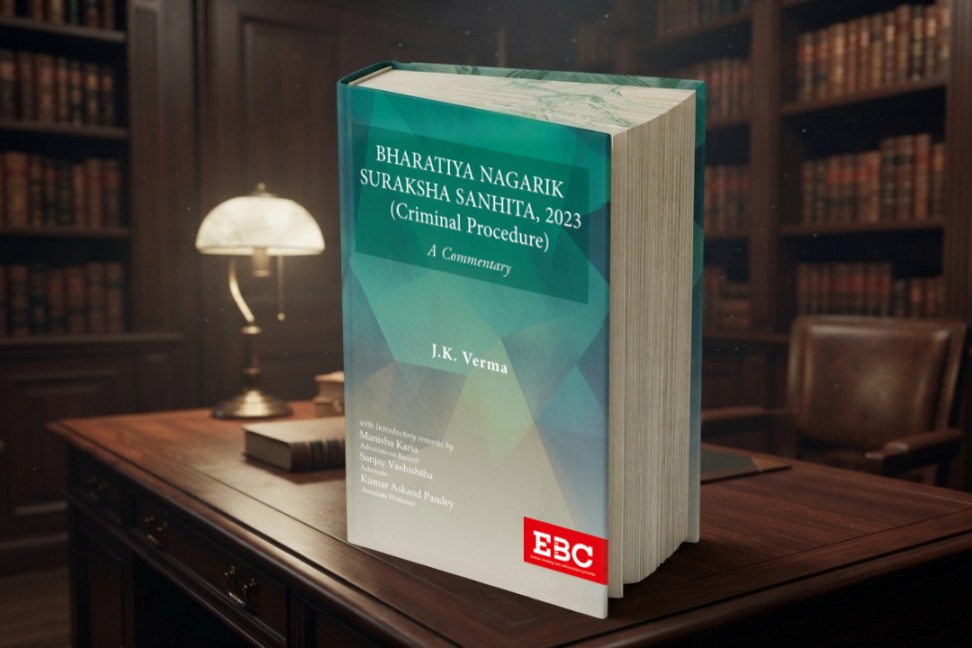
Want the deeper dive? Grab the reference book.