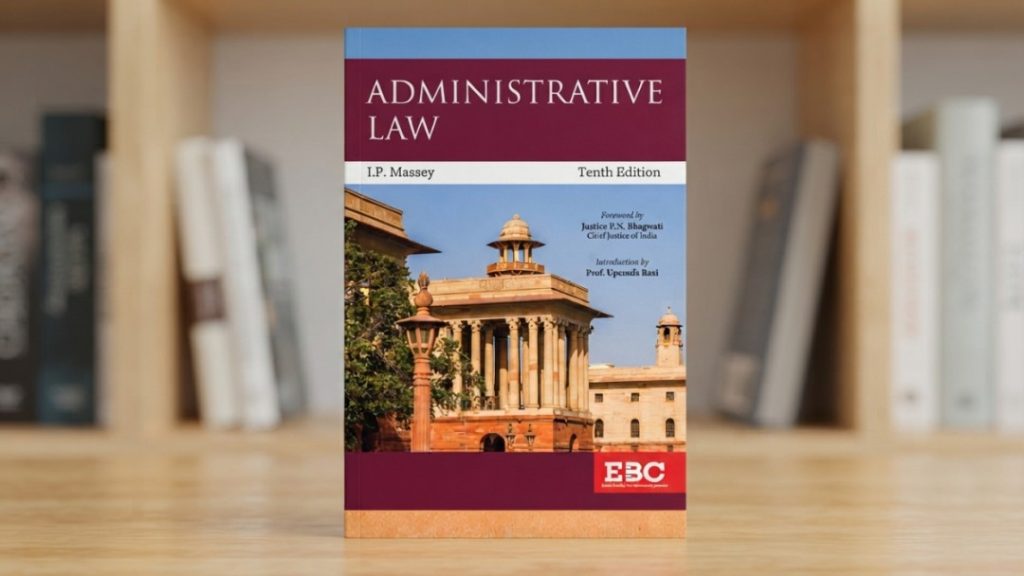
Not every dispute in India goes to a traditional court. A large number of disputes, from tax assessments to consumer complaints to competition law violations, are decided by administrative authorities exercising judicial-like functions. This is known as administrative adjudication in India, and understanding it is essential for law students, civil service aspirants, and professionals dealing with regulatory bodies.
Who This Article Is For
This is a fairly technical area of administrative law, so the primary audience is law students, UPSC and judiciary aspirants, and professionals who interact with regulatory tribunals such as company secretaries, tax consultants, and compliance officers. The explanation below keeps legal terms simple while retaining the necessary depth.
What Is Administrative Adjudication
Administrative adjudication refers to the power given to administrative authorities, rather than regular courts, to decide disputes, impose penalties, or determine rights and liabilities. These authorities are not full-fledged courts but perform functions similar to courts, which is why they are called quasi-judicial bodies. The term “quasi-judicial” means judicial in nature but not exercised by a traditional court of law.
Why Administrative Adjudication Exists
Regular courts are often slow and lack technical expertise in specialized fields like taxation, securities, or competition law. Administrative adjudication allows specialized officers with subject-matter expertise to resolve disputes faster, while still following principles of fairness.
Constitutional Basis
Articles 323A and 323B of the Constitution of India empower Parliament and state legislatures to create administrative tribunals for adjudicating disputes relating to service matters, taxation, land reforms, industrial disputes, and other specified subjects. These provisions were inserted by the 42nd Constitutional Amendment to reduce the burden on regular courts.
Key Statutory Frameworks
Several sector-specific laws create adjudicating authorities:
- Administrative Tribunals Act, 1985: Establishes the Central Administrative Tribunal (CAT) to adjudicate disputes related to recruitment and service conditions of government employees.
- Income Tax Act, 1961: Assessing officers and Commissioners exercise adjudicatory powers in tax assessment and penalty proceedings.
- Securities and Exchange Board of India Act, 1992: SEBI adjudicating officers decide penalties for violations of securities regulations.
- Competition Act, 2002: The Competition Commission of India adjudicates anti-competitive practices and abuse of dominant position.
- Consumer Protection Act, 2019: Consumer Disputes Redressal Commissions at district, state, and national levels adjudicate consumer grievances.
Quasi-Judicial Powers: What They Include
Administrative authorities with adjudicatory powers can typically:
- Summon and examine witnesses
- Call for and inspect documents
- Pass binding orders and impose penalties
- Grant interim relief in appropriate cases
However, unlike courts, these bodies are not bound by the strict rules of the Bharatiya Sakshya Adhiniyam, 2023 (the current evidence law) in the same rigid manner, though they must still act fairly and reasonably.
Rules of Natural Justice in Adjudication
Even though administrative authorities are not courts, they must follow natural justice, meaning basic fairness in procedure. This includes:
- Giving the affected party a fair hearing before an adverse order (audi alteram partem)
- Ensuring the deciding authority has no personal bias in the matter
- Providing reasons for the decision
Failure to follow these principles can render an administrative order invalid, even if the authority had the power to pass it.
Comparison Table: Court vs Administrative Adjudicating Authority
| Aspect | Regular Court | Administrative Adjudicating Authority |
|---|---|---|
| Governing Procedure | CPC/BNSS | Sector-specific statute and regulations |
| Expertise | General legal training | Technical/subject-matter expertise |
| Speed | Often slower | Generally faster |
| Evidence Rules | Strict application of BSA | Flexible, but fairness required |
| Appeal | Higher courts | Appellate Tribunal or High Court under Article 226/227 |
Judicial Review of Adjudicatory Orders
Orders passed by administrative authorities are not beyond challenge. High Courts can review them under Articles 226 and 227 of the Constitution, ensuring that adjudicating authorities do not exceed their jurisdiction or violate natural justice.
Frequently Asked Questions
It means an authority performs functions similar to a court, such as deciding disputes, without being a formal court.
Yes, courts have consistently required administrative authorities to follow fair procedure even without an explicit statutory mandate.
Yes, most statutes provide an appellate mechanism to a tribunal or higher authority.
No, they generally have flexibility, but must still act fairly and reasonably.
Adjudication decides specific disputes between parties, while rule-making creates general regulations for the future.
Want the deeper dive? Grab the reference book.