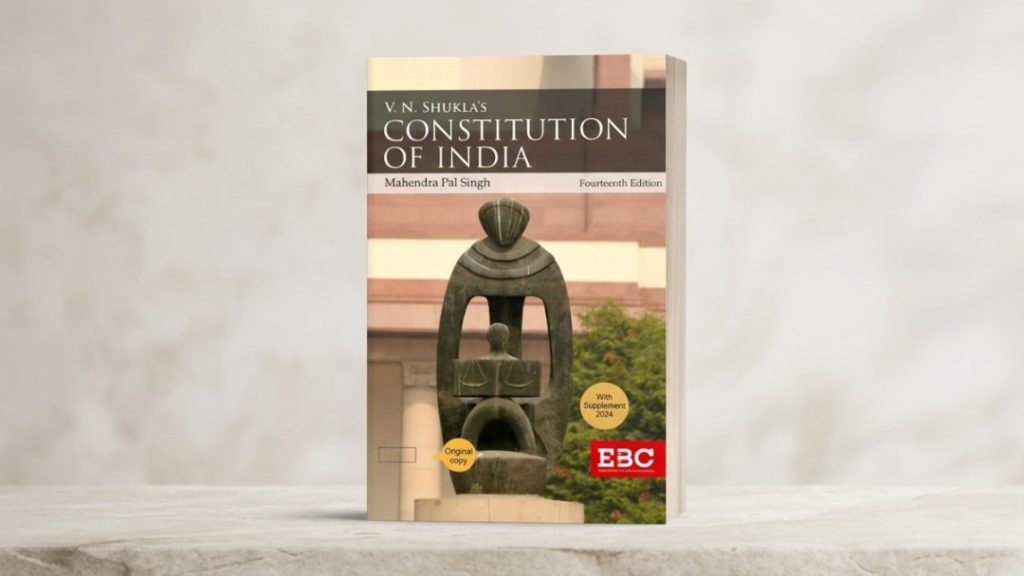
The Constitution of India is the supreme law of the country. It lays down the framework for governance, defines the powers of various institutions, and guarantees fundamental rights to citizens. However, society, technology, governance, and public needs continue to evolve over time. To accommodate these changes, the Constitution must be capable of adapting to new circumstances.
This is where constitutional amendments play an important role. The amendment process allows the Constitution to be modified while preserving its core principles and democratic character. Through amendments, India has been able to address emerging challenges, strengthen institutions, and refine its constitutional framework.
This article explains the meaning, procedure, importance, and types of constitutional amendments in India in a simple and easy-to-understand manner.
What Is a Constitutional Amendment?
A constitutional amendment refers to a formal change made to the Constitution. It may involve:
- Adding new provisions,
- Modifying existing provisions,
- Deleting obsolete provisions, or
- Clarifying constitutional arrangements.
Unlike ordinary laws, constitutional amendments affect the foundational legal document of the country and therefore follow a special procedure.
The amendment process ensures that the Constitution remains dynamic while maintaining legal stability and continuity.
Why Does the Constitution Need Amendments?
No constitution can foresee every future development. As society changes, constitutional provisions may need adjustment to address new realities.
Constitutional amendments help in:
Adapting to Social Change
Changing social conditions may require constitutional reforms to better serve the needs of citizens.
Improving Governance
Administrative structures and governance mechanisms may need modification to improve efficiency and accountability.
Addressing Legal Gaps
Amendments can clarify ambiguities or address issues not adequately covered by existing provisions.
Strengthening Democratic Institutions
Constitutional reforms can help improve the functioning of democratic institutions and public administration.
Responding to Economic and Technological Developments
Modern challenges often require constitutional and legal adaptation.
The Procedure for Constitutional Amendments in India
The amendment process is more rigorous than the process for passing ordinary legislation.
Step 1: Introduction of the Amendment Bill
A Constitutional Amendment Bill may be introduced in either House of Parliament:
- Lok Sabha, or
- Rajya Sabha.
The bill may be introduced by:
- A Minister, or
- A Private Member.
Unlike certain financial legislation, prior permission from the President is generally not required for introducing a constitutional amendment bill.
Step 2: Parliamentary Approval
The bill must be passed by each House of Parliament separately.
For most constitutional amendments, the bill must receive:
- A majority of the total membership of the House, and
- A two-thirds majority of members present and voting.
This requirement is known as a special majority.
If one House rejects the bill, the amendment cannot proceed.
Unlike ordinary legislation, there is no provision for a joint sitting to resolve disagreements regarding constitutional amendment bills.
Step 3: Ratification by States (Where Required)
Certain constitutional amendments affect the federal structure of the Constitution.
In such cases, the amendment must also be approved by at least one-half of the State Legislatures.
State ratification is generally required for matters relating to:
- Election of the President,
- Distribution of legislative powers,
- Representation of States in Parliament,
- Judicial structure,
- Federal relations between the Union and the States.
This requirement helps preserve India’s federal balance.
Step 4: Presidential Assent
Once the amendment bill has completed the required legislative process, it is presented to the President for assent.
After receiving Presidential assent, the bill becomes a constitutional amendment and forms part of the Constitution.
Types of Constitutional Amendments in India
The Constitution provides different levels of amendment depending on the nature of the provision being modified.
Amendments by Simple Majority
Certain provisions can be changed through a simple majority in Parliament.
These are technically not treated as amendments under Article 368.
Examples may include changes relating to:
- Formation of new States,
- Alteration of State boundaries,
- Certain administrative matters.
Amendments by Special Majority
Most constitutional provisions require:
- Majority of the total membership of each House, and
- Two-thirds majority of members present and voting.
This is the most common amendment procedure.
Why Is the Amendment Procedure Considered Unique?
The Indian Constitution is often described as a blend of rigidity and flexibility.
Flexible Features
Some provisions can be amended relatively easily.
Rigid Features
Important constitutional provisions require special procedures and broad political consensus.
This balance helps ensure:
- Stability,
- Continuity,
- Democratic adaptability,
- Institutional protection.
Frequently Asked Questions (FAQs)
A constitutional amendment is a formal change made to the Constitution by following the procedure prescribed under the Constitution itself.
Article 368 of the Constitution of India provides the procedure and framework for constitutional amendments.
Certain provisions may be altered by a simple majority, but most constitutional amendments require a special majority under Article 368.
No. State ratification is required only for amendments affecting specific federal provisions and constitutional arrangements.
Parliament has broad amendment powers, but constitutional law recognizes limitations through the Basic Structure Doctrine.
Want to dive deeper? Check out this resource for more insights.