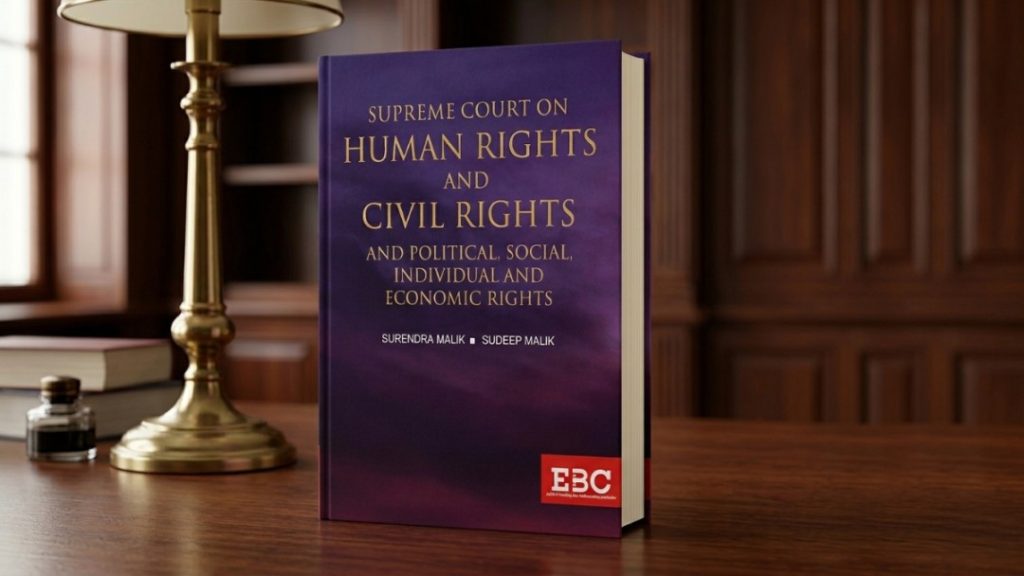
The terms Human Rights, Civil Rights and Fundamental Rights are often used interchangeably. Although they are closely related, they are not the same. Each of these rights has a different origin, legal status and scope of protection.
Understanding the difference between Human Rights, Civil Rights and Fundamental Rights is important for law students, competitive exam aspirants and anyone interested in constitutional law and democracy.
In simple terms:
- Human Rights belong to every person by virtue of being human.
- Civil Rights protect individuals within a state or society.
- Fundamental Rights are constitutionally guaranteed rights enforceable against the state.
Let us understand these concepts in a clear and practical way.
What Are Human Rights?
Human Rights are universal rights that belong to every individual regardless of nationality, religion, race, gender or citizenship.
These rights are based on the idea that all human beings deserve dignity, equality and freedom.
Human Rights include:
- Right to life
- Right to freedom
- Right to equality
- Right to education
- Freedom from torture
- Freedom of expression
Human Rights are recognized internationally through documents such as:
- Universal Declaration of Human Rights (UDHR), 1948
- International Covenant on Civil and Political Rights (ICCPR)
- International Covenant on Economic, Social and Cultural Rights (ICESCR)
Key Features of Human Rights
- Universal in nature
- Available to all humans
- Based on dignity and humanity
- Protected through international law
- Broader than constitutional rights
Human Rights are not limited to any one country. They apply globally.
What Are Civil Rights?
Civil Rights are rights given to individuals by a state to ensure equal participation in civil and political life.
These rights protect people against discrimination and unfair treatment within society.
Civil Rights generally include:
- Equality before law
- Voting rights
- Freedom of speech
- Right against discrimination
- Equal access to public facilities
Civil Rights are usually protected by:
- national laws,
- constitutions,
- and statutory frameworks.
Key Features of Civil Rights
- Protected within a country
- Concern equality and liberty
- Prevent discrimination
- Closely connected with citizenship
- Enforced through domestic laws
Civil Rights focus mainly on ensuring fair treatment within a political and social system.
What Are Fundamental Rights?
Fundamental Rights are rights specifically guaranteed by the Constitution of a country and enforceable against the state.
In India, Fundamental Rights are contained in Part III of the Constitution of India.
These rights include:
- Right to Equality
- Right to Freedom
- Right against Exploitation
- Right to Freedom of Religion
- Cultural and Educational Rights
- Right to Constitutional Remedies
Fundamental Rights are considered essential for democracy because they limit arbitrary state power.
Key Features of Fundamental Rights
- Constitutionally guaranteed
- Legally enforceable in courts
- Protect individual liberty
- Binding on the state
- Can be restricted under certain conditions
In India, citizens can directly approach the courts if Fundamental Rights are violated.
Main Difference Between Human Rights, Civil Rights and Fundamental Rights
Although all three categories aim to protect individuals, their legal source and scope differ significantly.
Human Rights
Human Rights arise from the idea of basic human dignity and are recognized internationally.
Civil Rights
Civil Rights are granted by states to ensure equality and participation within society.
Fundamental Rights
Fundamental Rights are constitutionally protected rights enforceable through courts.
Scope of Protection
Human Rights
Human Rights have the widest scope because they apply to all people globally.
Civil Rights
Civil Rights apply mainly within a country’s legal and political framework.
Fundamental Rights
Fundamental Rights apply according to constitutional provisions and legal limitations.
Enforceability of Rights
One major difference lies in legal enforceability.
Human Rights
Human Rights are recognized internationally, but enforcement may depend on national governments and international institutions.
Civil Rights
Civil Rights are enforceable through domestic legal systems.
Fundamental Rights
Fundamental Rights are directly enforceable through constitutional remedies and judicial protection.
Relationship Between These Rights
Human Rights, Civil Rights and Fundamental Rights are interconnected.
For example:
- Human Rights provide the broader moral foundation.
- Civil Rights translate equality into practical legal protections.
- Fundamental Rights provide constitutional guarantees against state abuse.
In many democracies, Fundamental Rights are inspired by international Human Rights principles.
Importance of These Rights in a Democracy
Rights are essential for maintaining democracy, liberty and rule of law.
They help:
- protect individual freedom,
- prevent misuse of power,
- ensure equality,
- safeguard minority interests,
- and maintain constitutional governance.
Without rights protections, democratic systems can become arbitrary and oppressive.
Frequently Asked Questions (FAQs)
Human Rights are universal rights available to all individuals globally, while Fundamental Rights are constitutional rights guaranteed within a specific country.
Human Rights are recognized under international law, but their enforcement often depends on national legal systems and international institutions.
No. Civil Rights generally protect equality and participation within society, while Fundamental Rights are constitutionally guaranteed rights enforceable against the state.
Some Fundamental Rights are available to all persons, while certain rights are restricted only to citizens.
For further reading and detailed analysis, refer to this resource.