The internet is no longer just a space for communication, business and entertainment. It has become a battlefield.
From attacks on government systems and financial institutions to disruptions of power grids and military infrastructure, cyber warfare has emerged as one of the biggest global security concerns of the 21st century. Unlike traditional wars, cyber attacks can be launched anonymously, across borders and within seconds — making regulation and accountability extremely difficult.
As nations rapidly strengthen their cyber capabilities, international cybersecurity law is struggling to keep pace with modern technological threats.
What Is Cyber Warfare?
Cyber warfare refers to the use of digital attacks by states or organized groups to damage, disrupt or gain unauthorized access to another nation’s computer systems, networks or infrastructure.
These attacks may target:
- Government databases
- Defence systems
- Banking infrastructure
- Communication networks
- Healthcare systems
- Energy and power grids
- Transportation systems
Cyber warfare is often used for espionage, surveillance, political influence, economic disruption or military advantage.
Why Cyber Warfare Is Different from Traditional Warfare
Unlike conventional armed conflict, cyber warfare creates several legal and practical complications.
Attribution Problem
One of the biggest challenges is identifying who actually carried out the attack. Cyber attacks can be routed through multiple countries, fake servers and anonymous networks.
This makes it difficult to:
- Prove state involvement
- Hold attackers accountable
- Respond lawfully under international law
No Physical Borders
Cyber attacks can affect multiple countries simultaneously without crossing physical territory. A single malware attack may spread globally within minutes.
Civilian Infrastructure Is Often Targeted
Hospitals, banks, schools and public utilities are increasingly vulnerable to cyber attacks. This raises serious concerns regarding human rights, privacy and public safety.
International Cybersecurity Law: Current Legal Framework
There is currently no single comprehensive international treaty exclusively governing cyber warfare. Instead, countries rely on existing principles of international law.
United Nations Charter
The UN Charter prohibits the use of force against the sovereignty and territorial integrity of states. However, debate continues on whether major cyber attacks qualify as “use of force” under international law.
International Humanitarian Law (IHL)
Also known as the law of armed conflict, IHL applies during armed conflicts and seeks to protect civilians and civilian infrastructure.
In cyber warfare, important questions arise:
- Can a cyber attack amount to an armed attack?
- Can states retaliate with military force?
- How should civilian systems be protected?
Tallinn Manual
The Tallinn Manual is one of the most influential academic studies on how international law applies to cyber warfare.
Although not legally binding, it provides guidance on:
- State responsibility
- Sovereignty in cyberspace
- Cyber attacks during armed conflict
- Rules of proportionality and necessity
Major Challenges in International Cybersecurity Law
Lack of Uniform Global Rules
Different countries have different approaches to cybersecurity regulation, digital surveillance and cyber defence.
For example:
- Some states support strong internet freedom.
- Others emphasize digital sovereignty and state control.
This creates legal inconsistency at the international level.
Difficulty in Enforcement
Even when cyber attacks violate international law, enforcement remains weak because:
- attackers may remain unidentified,
- evidence is difficult to collect,
- states may deny involvement.
Rapid Technological Development
Technology evolves faster than lawmaking. Artificial intelligence, ransomware and autonomous cyber tools are creating new risks that existing laws were not designed to address.
Cyber Warfare and Human Rights
Cyber attacks can directly affect fundamental rights such as:
- Right to privacy
- Freedom of expression
- Access to information
- Right to healthcare
- Right to security
Mass surveillance programs, internet shutdowns and attacks on public infrastructure have intensified global debates on balancing cybersecurity with civil liberties.
Role of States in Preventing Cyber Attacks
Countries are increasingly adopting:
- National cybersecurity policies
- Data protection laws
- Cybercrime legislation
- Digital defence strategies
International cooperation is also becoming essential because cyber threats are transnational in nature.
Organizations such as:
- the United Nations,
- INTERPOL,
- NATO,
- and regional cybersecurity alliances
play an important role in cyber threat intelligence and coordinated response mechanisms.
The Future of International Cybersecurity Law
The future of cybersecurity law will likely focus on:
- stronger international cooperation,
- protection of critical infrastructure,
- cyber norms between states,
- regulation of AI-driven cyber attacks,
- and digital human rights protections.
Many experts argue that the world now needs a dedicated international cyber warfare treaty to establish clear rules regarding cyber attacks, state responsibility and civilian protection.
Frequently Asked Questions (FAQs)
International cybersecurity law refers to the legal principles, treaties and international rules governing state conduct, cyber attacks, digital security and cyber warfare in cyberspace.
Cyber warfare is not completely unregulated. Existing international law, including the UN Charter and international humanitarian law, may apply to cyber attacks depending on their scale and impact.
The biggest challenge is attribution — identifying who actually carried out the cyber attack.
In certain situations, large-scale cyber attacks causing significant damage may be treated as acts of war under international law.
The Tallinn Manual is a non-binding academic framework explaining how international law may apply to cyber warfare and cyber operations.
Cybersecurity protects critical infrastructure, government systems, financial institutions and sensitive data from digital attacks that may threaten national stability and public safety.
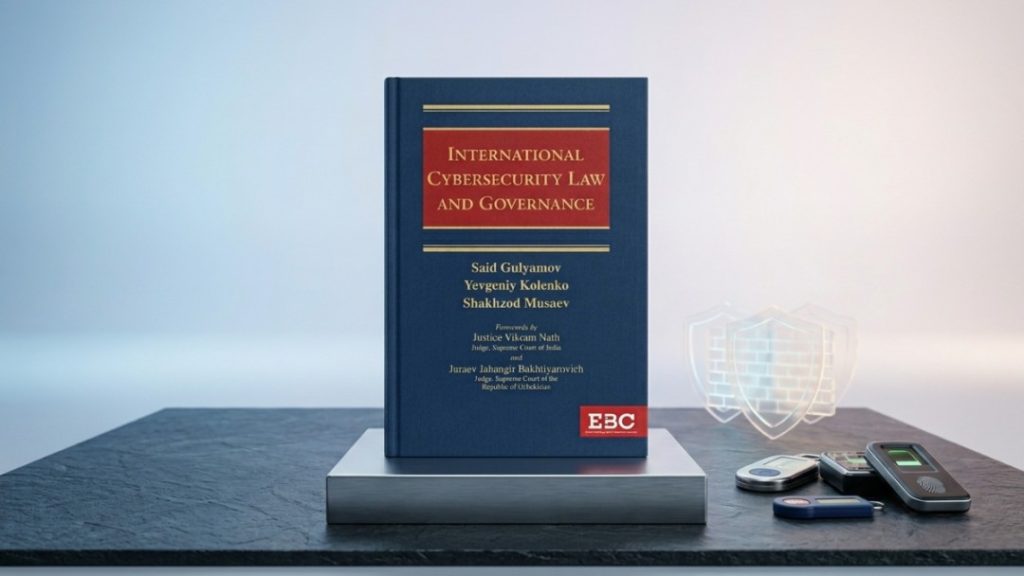
For further reading and detailed analysis, refer to this resource.