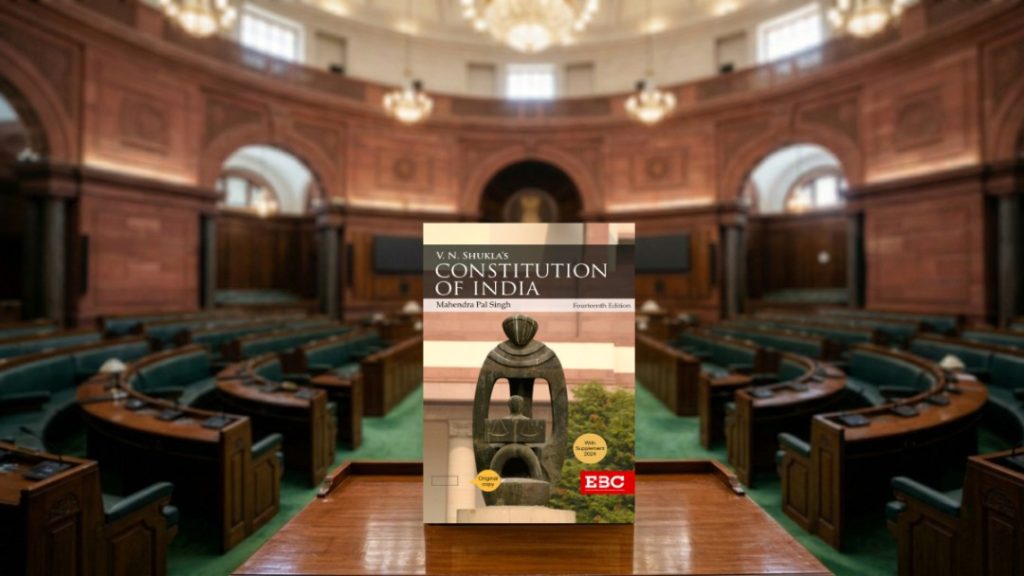
In India’s parliamentary democracy, political stability is crucial. However, frequent party-switching by elected representatives once led to instability in governments. To address this issue, the Anti-Defection Law was introduced. But can MPs and MLAs really be disqualified for switching parties? The answer is yes—and here’s how it works.
What is the Anti-Defection Law?
The Anti-Defection Law is contained in the Tenth Schedule of the Indian Constitution, added by the 52nd Constitutional Amendment Act, 1985.
Its main objective is to:
- Prevent political defections
- Ensure stability in government
- Maintain party discipline
When Can MPs and MLAs Be Disqualified?
Members of Parliament (MPs) and Members of Legislative Assembly (MLAs) can be disqualified under the following situations:
1. Voluntarily Giving Up Party Membership
- Not limited to formal resignation
- Even conduct indicating disloyalty can count
Example: Publicly supporting another party
2. Voting Against Party Whip
- If a member votes or abstains against party directions without permission
- Party whip ensures uniform voting
3. Independent Members Joining a Party
If an independent candidate joins a political party after election → disqualified
4. Nominated Members Joining a Party
- Allowed within 6 months of nomination
- After that, joining a party leads to disqualification
Exceptions to Disqualification
The law also provides certain exceptions:
1. Merger of Political Parties
- If 2/3rd members of a party agree to merge with another party
- No disqualification applies
2. Presiding Officer Exception (Removed Earlier)
- Earlier, splits were allowed (1/3rd rule), but this was removed by the 91st Amendment (2003)
Who Decides Disqualification?
The decision is made by:
- Speaker of Lok Sabha (for MPs)
- Speaker/Chairman of State Legislature (for MLAs)
Criticism of the Anti-Defection Law
While the law aims to ensure stability, it has certain drawbacks:
- Limits freedom of speech of legislators
- Strengthens party high command control
- Delays in decisions by Speaker
- Sometimes used for political advantage
Frequently Asked Questions (FAQs)
1. Can an MP or MLA switch parties without disqualification?
Only if it is part of a valid merger (2/3rd members). Otherwise, disqualification applies.
2. What is a party whip?
It is a direction issued by a political party to its members on how to vote in the legislature.
3. Can the Speaker’s decision be challenged?
Yes, it can be challenged in court (judicial review allowed).
4. Does resignation avoid disqualification?
Not always. Courts examine intent—resignation to defect may still attract consequences.
5. Why was the Anti-Defection Law introduced?
To prevent political instability caused by frequent party switching.
For a deeper understanding, you can refer to this resource.