If you’ve ever wondered who makes sure your medicines are safe, effective, and not fake, the answer isn’t just one authority—it’s an entire regulatory ecosystem working behind the scenes. Think of it like a relay race: different agencies handle different stages, but all aim for one finish line, public safety.
Let’s break it down in a simple, engaging way.
The Big Boss: Central Government Oversight
At the top sits the Ministry of Health and Family Welfare, which frames national health policy and supervises drug regulation. It doesn’t inspect every medicine itself, but it sets the rules of the game that everyone else must follow.
Under it operates the main national regulator:
Central Drug Authority
The Central Drugs Standard Control Organization (CDSCO) is India’s primary drug regulatory body. It is responsible for:
- Approving new drugs before they can be sold
- Regulating clinical trials
- Setting quality standards
- Approving vaccines, biologics, and medical devices
- Granting import licenses
In simple terms: No new drug can enter the Indian market without CDSCO approval.
The Key Decision Maker: Drug Controller General
Within CDSCO works the Drug Controller General of India (DCGI) — the official who signs off on major approvals.
The DCGI’s role is similar to a final examiner who checks:
- safety data
- clinical trial results
- manufacturing quality
Only after passing this scrutiny can a medicine be legally sold nationwide.
State Governments: The On-Ground Enforcers
While the central authorities approve drugs, state regulators enforce the rules locally.
Each state has its own Drug Control Department, often called the State Drug Control Departments, which:
- Issue manufacturing licenses
- Inspect factories and pharmacies
- test drug samples
- investigate complaints
- seize illegal or substandard medicines
If CDSCO is the architect, state regulators are the building inspectors, ensuring everything is constructed correctly.
Price Watchdog: Keeping Medicines Affordable
Another key player is the National Pharmaceutical Pricing Authority (NPPA). This body doesn’t approve drugs but controls their prices.
Its job:
- fix ceiling prices for essential medicines
- prevent companies from overcharging
- monitor price violations
So while one agency checks safety, NPPA checks affordability.
How the Whole System Works Together (Step-by-Step)
1. Research & Testing → Pharmaceutical company develops a drug
2. Approval Stage → CDSCO + DCGI evaluate safety and efficacy
3. Manufacturing License → State authority approves factory
4. Market Entry → Drug sold legally
5. Price Monitoring → NPPA ensures fair pricing
6. Continuous Surveillance → State inspectors test samples
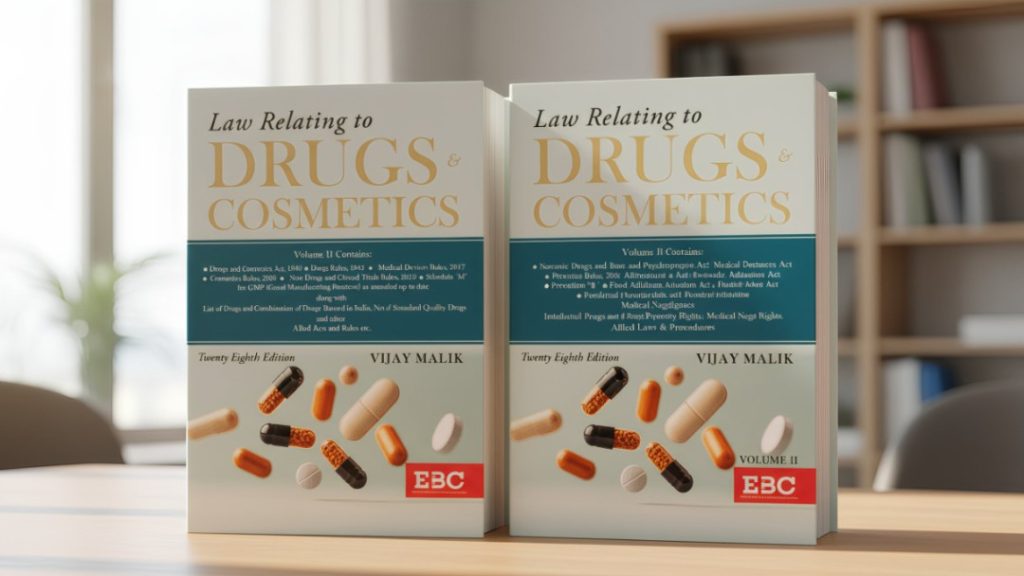
For a more comprehensive understanding, refer to: Law Relating to Drugs and Cosmetics (In 2 Volumes)