Starting a business is a dream for many young people today. With the rise of startups, digital businesses, and entrepreneurship, it has become more important than ever to understand how companies are formed and classified in India. If you are a student, aspiring entrepreneur, content creator, or simply someone curious about how businesses legally exist, this guide will help you understand company types in India in the easiest possible way. Let us begin from the very basics and gradually move toward what the current generation must know.
What Is a Company in Simple Terms
A company is a legal entity created to run a business. It exists separately from the people who own it. This means a company can own property, enter into contracts, open bank accounts, file cases, and be sued in its own name. In India, companies are governed by the Companies Act, 2013 and are registered with the Ministry of Corporate Affairs through the Registrar of Companies. This legal structure protects the owners and gives the business an official identity.
Main Types of Companies in India
Indian law recognizes several types of companies. Each type is meant for a different business goal and size.
Private Companies
A Private Limited Company (Pvt. Ltd.) is one of the most common forms of business entities in India.
Key Features:
- Minimum 2 members and maximum 200 members.
- Cannot freely transfer shares to the public.
- Requires a minimum paid-up capital as per statutory norms.
- Must include “Private Limited” at the end of its name.
Why Choose This:
Ideal for startups, family-owned businesses, and small enterprises looking for limited liability and easier compliance.
Public Companies
A Public Limited Company (Ltd.) can raise capital from the general public by issuing shares. These companies can issue shares to the public through stock exchanges like Bombay Stock Exchange and National Stock Exchange.
Key Features:
- Minimum 7 members, no upper limit on maximum members.
- Can issue shares through an IPO (Initial Public Offering).
- Subject to strict compliance and reporting requirements.
- Must include “Limited” at the end of its name.
Why Choose This:
Perfect for large-scale businesses aiming to raise funds from investors and expand rapidly.
One Person Company (OPC) (New Concept)
Introduced under the Companies Act, 2013, an OPC allows a single individual to operate as a company.
Key Features:
- Can be formed by just one person.
- Gives limited liability protection to the sole owner.
- Requires a nominee in case the sole owner becomes incapacitated.
- Cannot carry out non-banking financial investment activities.
Why Choose This:
Great for solopreneurs, freelancers, and professionals who want to enjoy the benefits of incorporation without needing multiple partners.
Limited Liability Partnership
A Limited Liability Partnership blends the features of a partnership firm and a company.
Key Features:
- It is a separate legal entity from its partners.
- Partners have limited liability, so personal assets are protected.
- It is governed by the Limited Liability Partnership Act, 2008.
- It requires fewer legal compliances compared to a company.
- It offers flexible internal management through an LLP Agreement.
- It allows easy admission and exit of partners.
- It combines the benefits of a partnership and a company.
Why Choose This:
It is best suited for professionals like lawyers, chartered accountants, architects, consultants, and small business partners.
Small Companies
The Companies Act, 2013 recognizes small companies separately to encourage entrepreneurship and simplify compliance.
Key Features:
- Paid-up capital does not exceed ₹4 crore.
- Turnover does not exceed ₹40 crore.
- Enjoys relaxed compliance requirements like fewer filings and lower fees.
Why Choose This:
Ideal for startups and small businesses looking for cost-effective compliance and legal recognition.
Producer Companies
A Producer Company is formed by farmers, producers, or individuals involved in primary production activities.
Key Features:
- Minimum 10 individuals or 2 institutions can form a producer company.
- Aimed at improving the standard of living of farmers and producers.
- Focused on production, procurement, processing, and marketing of agricultural goods.
Why Choose This:
Best suited for agriculture-based businesses, farmer cooperatives, and rural entrepreneurs.
Section 8 Companies (Non-Profit Organizations)
Section 8 companies are non-profit organizations formed for charitable purposes.
Key Features:
- Established to promote education, research, art, science, religion, charity, or social welfare.
- Profits are reinvested into the organization’s objectives.
- Enjoy tax benefits and government subsidies.
- Require a special license from the Central Government.
Why Choose This:
Perfect for NGOs, trusts, and foundations aiming to create social impact.
Difference Between a Company and Other Business Forms
Many beginners confuse a company with other business forms like sole proprietorship and partnership firm. The key difference lies in legal identity, liability, continuity, and growth potential. Let us understand this in a simple way.
A company is a separate legal entity registered under the Companies Act, 2013. This means the company is treated as a person in the eyes of law, separate from its owners. It can own property, enter into contracts, sue and be sued in its own name. Most importantly, the liability of its owners is limited, so their personal assets are protected if the business suffers losses.
On the other hand, a sole proprietorship has no separate legal identity. The owner and the business are the same in law. All profits belong to the owner, but so do all losses and liabilities. This means personal assets are fully at risk. Sole proprietorships are easy to start but risky for long-term growth.
A partnership firm is governed by the Indian Partnership Act, 1932. It is formed when two or more persons agree to run a business and share profits. Like proprietorship, a partnership firm also does not have a separate legal identity from its partners. Each partner is personally liable for the debts of the firm, even for the actions of other partners.
In simple words, the company is safest and most structured, while proprietorship and partnership are simpler but legally riskier.
What Is a Partnership Firm in Simple Terms
A partnership firm is a business started by two or more persons under a written agreement called a Partnership Deed. This deed defines profit sharing, roles, capital contribution, and responsibilities.
Key points:
- It is easy to form and operate
- It requires minimum legal compliance
- Partners have unlimited personal liability
- The firm’s existence depends on the partners
- It is suitable for small, trust-based businesses and professionals
However, because of unlimited liability and limited funding options, partnership firms are not ideal for large-scale growth.
How can a Company Become a Partner in a Partnership Firm
A company can legally become a partner in a partnership firm, subject to certain conditions. Since a company is a separate legal person, it can enter into contracts, including a partnership agreement. However, this is allowed only if
- The Memorandum of Association of the company permits it
- The partnership deed clearly mentions the company as a partner
- The decision is approved by the company’s board of directors
In such cases, the partnership is usually called a corporate partnership. The company’s liability as a partner depends on the terms of the partnership deed, but practically, courts treat it with caution because a traditional partnership is based on mutual trust between individuals. Also, a company cannot enter into a partnership that imposes unlimited liability on it unless clearly authorized, because that defeats the basic principle of limited liability.
A Quick Comparison of the Companies
| Type | Members | Liability | Fund Raising | Best For |
|---|---|---|---|---|
| Private Limited Company | 2 to 200 | Limited | Private investors | Startups, family and small businesses |
| Public Limited Company | Minimum 7 | Limited | Public through IPO | Large-scale companies and big expansion |
| One Person Company (OPC) | 1 member + nominee | Limited | Self-funded | Solopreneurs, freelancers |
| Limited Liability Partnership (LLP) | Minimum 2 partners | Limited | Partner contribution | Professionals and small partnerships |
| Small Company | As per Pvt. Ltd. | Limited | Private funding | Early-stage startups |
| Producer Company | 10 individuals or 2 institutions | Limited | Member-based | Farmers and agriculture businesses |
| Section 8 Company | Minimum 2 | Limited | Donations, grants | NGOs and social welfare work |
The Companies Act, 2013 has introduced flexibility and innovation in how businesses are structured in India. Whether you’re an entrepreneur, law student, or investor, understanding these company types is crucial for making informed decisions.
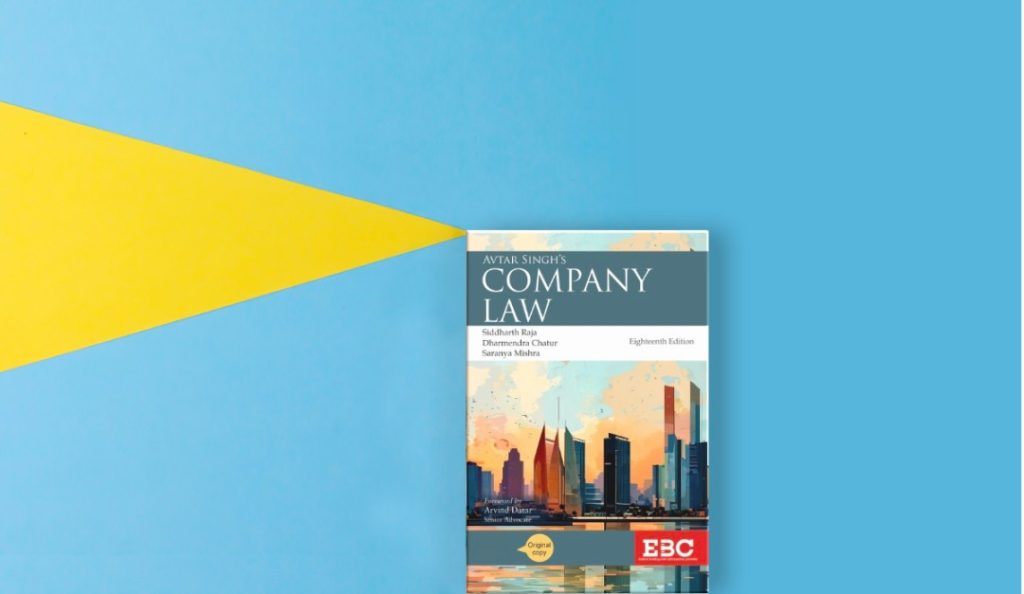
If you want to deeply understand these concepts with case laws, examples, and latest amendments, we recommend : Avtar Singh’s Company Law