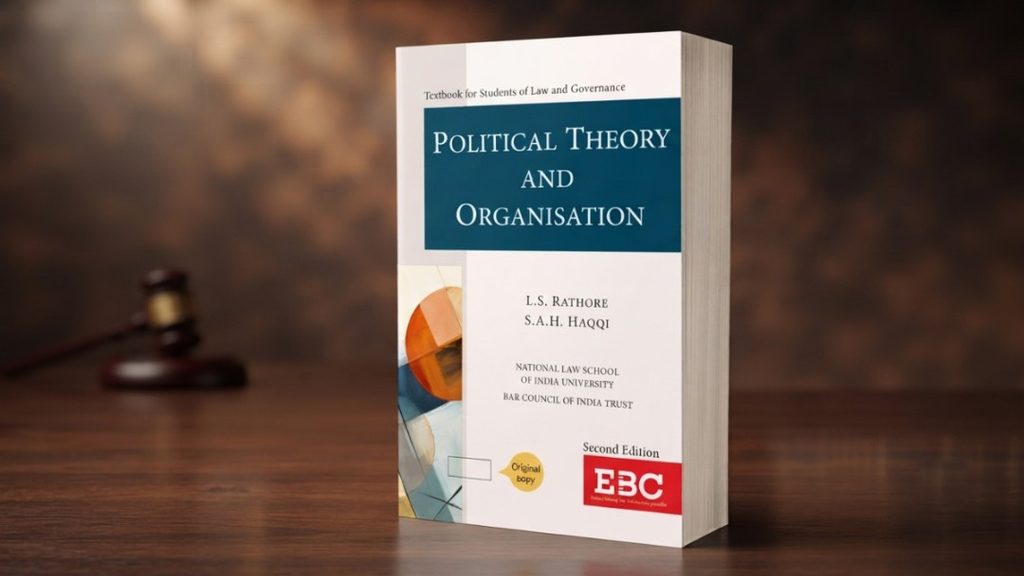
Sovereignty in Indian constitutional law is one of those ideas everyone assumes they understand until they are asked to define it precisely. It appears in the very first line of the Preamble, yet its meaning stretches across political theory, international law, and the day to day working of Parliament and the courts. This guide breaks down what sovereignty means in political theory, how it operates under the Indian Constitution, and which specific provisions give it legal shape.
What Sovereignty Means in Political Theory
In political theory, sovereignty is the supreme, final authority within a political system, the power that is not subordinate to any other power. Classical theorists like John Austin described legal sovereignty as an absolute, indivisible authority whose commands are law. Later theorists shifted toward popular sovereignty, the idea that ultimate authority rests with the people, who transfer limited power to their government through a constitution.
India’s constitutional design leans heavily on popular sovereignty. Power is not concentrated in one ruler or institution. Instead, it flows from the people and is distributed across elected bodies, the executive, and an independent judiciary.
Sovereignty in Indian Constitutional Law
The word “Sovereign” appears in the Preamble to the Constitution of India, declaring India a sovereign, socialist, secular, democratic republic. Sovereignty here has two dimensions:
Internal sovereignty refers to the state’s supreme authority to govern within its own territory, make laws, and enforce them without interference from any external power.
External sovereignty refers to India’s independence as a nation-state in the international community, free to conduct foreign relations, enter treaties, and defend its territorial integrity.
Key Constitutional Provisions Governing Sovereignty
Several provisions give practical effect to the abstract idea of sovereignty:
- Preamble: Declares India a sovereign nation, the foundational statement from which other provisions draw meaning.
- Article 1: States that India, that is Bharat, shall be a Union of States, establishing sovereignty over defined territory.
- Articles 245 and 246: Distribute legislative powers between Parliament and State Legislatures through the Union, State, and Concurrent Lists in the Seventh Schedule, showing internal sovereignty is shared, not absolute in one body.
- Articles 352 to 360: Emergency provisions letting the Union temporarily override the usual distribution of power during war, external aggression, armed rebellion, or financial instability.
- Article 51: Directs the state to promote international peace and respect for treaty obligations, linking external sovereignty to India’s conduct abroad.
- Article 253: Empowers Parliament to legislate on international agreements, even on subjects normally reserved for states.
- Citizenship Act, 1955: Regulates who qualifies as a citizen, a practical expression of sovereignty since only a sovereign state defines its own membership.
Political Theory vs Constitutional Application
| Concept | Political Theory View | Indian Constitutional Application |
|---|
| Legal Sovereignty (Austin) | Absolute, indivisible command of a sovereign | No single body holds unchecked power; power is divided between Union and States |
| Popular Sovereignty | Authority originates from the people | Preamble declares people as the source of authority through “We, the People” |
| Internal Sovereignty | Supreme control within territory | Shared between Union and States under Articles 245-246, subject to constitutional limits |
| External Sovereignty | Independence in international affairs | Exercised through treaty-making power and Articles 51 and 253 |
Limits and Exceptions
Sovereignty under Indian constitutional law is not unlimited. Fundamental Rights restrict what Parliament and state legislatures can do. Judicial review allows courts to examine whether laws conform to the Constitution. During emergencies under Articles 352 to 360, certain rights and federal arrangements can be suspended temporarily, but such measures are themselves governed by constitutional procedure and parliamentary approval, not unchecked executive will.
Frequently Asked Questions
Yes, subject only to the self-imposed limits of its own Constitution.
Not legally. Parliament retains the power to implement or decline treaty obligations under Article 253.
It can amend the Constitution, but any amendment must preserve its essential sovereign and democratic character.
Sovereignty is supreme authority as a nation; federalism is how that authority is divided between Union and States.
No. States derive their powers from the Constitution and hold no independent sovereignty.
Curious for more? The reference book has it.