Public corporations play a crucial role in modern governance. They are government-owned or government-controlled entities created to carry out commercial, industrial, or welfare functions, bridging the gap between public administration and business efficiency. In India, examples include entities like Life Insurance Corporation of India (LIC) and Food Corporation of India (FCI).
What Are Public Corporations?
A public corporation is a statutory body established by an Act of Parliament or State Legislature. It has:
- A separate legal identity
- Financial autonomy
- The ability to sue and be sued
- A mix of government control + operational flexibility
Think of them as “government-backed companies with public responsibilities.”
Role of Administrative Law
Administrative law governs how these corporations exercise power. Even though they may function like private companies, they are still “State” under Article 12 of the Indian Constitution (as clarified in cases like Ajay Hasia v. Khalid Mujib Sehravardi).
This means:
- They must follow constitutional principles
- Their actions are subject to judicial review
- They cannot act arbitrarily
Key Principles Governing Public Corporations
1. Rule of Law
Public corporations must act within legal boundaries, no arbitrary decisions.
2. Natural Justice
They must follow fairness principles:
- Right to be heard (audi alteram partem)
- No bias (nemo judex in causa sua)
3. Transparency and Accountability
Since they use public funds, they must be accountable to:
- Parliament/Legislature
- Courts
- Public authorities like CAG
Governance Structure
Public corporations are typically governed by:
- A Board of Directors
- Government-appointed officials
- Internal regulatory mechanisms
However, government control exists through:
- Policy directions
- Financial oversight
- Appointment/removal of key personnel
This creates a balance between autonomy and control.
Judicial Control and Accountability
Courts play a vital role in ensuring accountability. Public corporations can be challenged through:
- Writ petitions (Article 32 & 226)
- Judicial review of administrative actions
Example:
In R.D. Shetty v. International Airport Authority of India, the Supreme Court held that public authorities must act fairly even in contractual matters.
Recent Trends and Reforms
Public corporations in India are undergoing transformation:
Disinvestment & Privatization
Government is reducing stakes in some PSUs.
Corporate Governance Norms
Stronger compliance with SEBI and transparency standards.
Digital Accountability
Use of technology for audits, transparency, and service delivery.
Performance-Based Evaluation
Focus on efficiency and profitability.
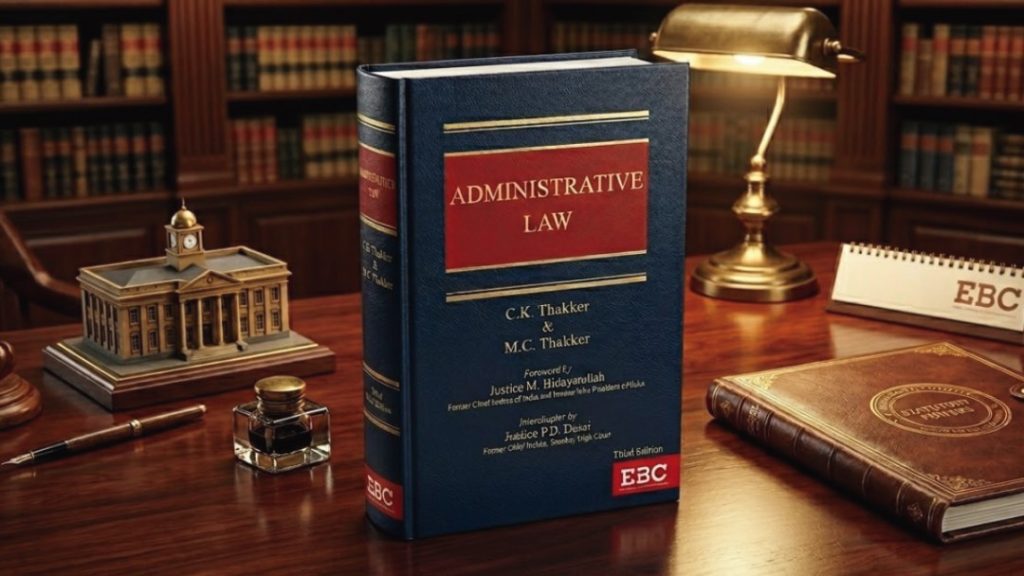
To learn more about the topic, you may consult this book.