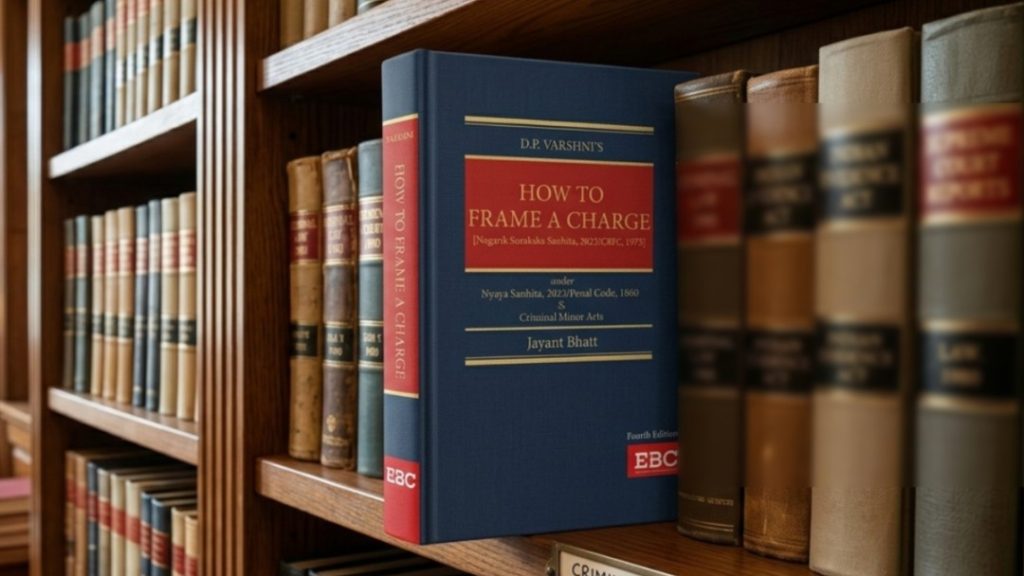
In the evolving landscape of Indian law, the intersection between procedural criminal law and substantive statutory frameworks has become increasingly significant. A resource that combines charge framing principles with a broad compendium of Central Acts serves not only as a reference tool but as a practical guide for legal professionals navigating complex litigation. This integrated approach reflects the growing need for precision in criminal trials, where procedural accuracy directly impacts the administration of justice.
Understanding the Theory Behind Charge Framing
Charge framing is not merely a procedural requirement; it is the foundation upon which a criminal trial rests. It defines:
- The nature and scope of accusations
- The admissibility and direction of evidence
- The rights and safeguards available to the accused
A properly framed charge ensures adherence to natural justice, while any defect can potentially invalidate proceedings.
From Concept to Courtroom Reality
While legal theory provides structure, courtroom application introduces complexity. The transition from conceptual understanding to practical execution requires:
- Judicial discretion
- Contextual interpretation of facts
- Procedural compliance at every stage
This is where many practitioners encounter challenges, making clarity in this area essential.
Joinder, Misjoinder and Clubbing of Charges
The principles governing joinder and misjoinder of charges are central to maintaining procedural integrity.
Key considerations include:
- When multiple offences may be tried together
- Situations leading to procedural irregularity
- Judicial approaches to clubbing of cases
Errors at this stage can significantly affect the validity of a trial.
Charges Before Magistrates and Sessions Courts
The procedural framework differs across forums:
- Magistrates’ Courts deal with a wide range of offences with relatively streamlined procedures
- Courts of Session handle more serious offences, requiring stricter scrutiny at the stage of charge
Understanding these distinctions is critical for both litigation strategy and judicial decision-making.
The Crucial Steps in Charge Framing
A structured approach to framing charges typically involves:
- Examination of police reports and accompanying material
- Identification of prima facie offences
- Application of judicial reasoning
- Drafting clear and legally sustainable charges
Each step requires careful attention to avoid procedural lapses.
Model Charges and Drafting Precision
Drafting remains one of the most practical challenges in criminal procedure. Standardized model charges:
- Provide clarity and consistency
- Reduce ambiguity
- Help ensure statutory compliance
They serve as valuable tools, particularly in complex or multi-offence cases.
Integration with Key Central Acts
Modern criminal litigation often extends beyond traditional penal provisions into special and regulatory statutes. These include:
- Economic and financial laws
- Environmental regulations
- Social welfare and protective legislation
- Technology and cyber-related offences
A comprehensive understanding of how charges operate across diverse statutes is increasingly necessary, especially in cases involving overlapping legal regimes.
A Multi-Dimensional Legal Resource
The convergence of:
- Procedural law (charge framing)
- Substantive offences
- Special statutes
creates a need for resources that are both analytical and practical.
Such an approach supports:
- Efficient case preparation
- Better judicial outcomes
- Reduced procedural errors
For those looking to explore this subject in greater depth, particularly the practical nuances of framing charges under the Penal Code, the Bharatiya Nyaya Sanhita, 2023, and various criminal minor acts—a detailed treatment is available in *How to Frame a Charge under Penal Code, 1860, Nyaya Sanhita, 2023 and Criminal Minor Acts*, which examines both the theoretical foundations and courtroom application of the subject.