India possesses one of the world’s richest biodiversity profiles, ranging from Himalayan alpine ecosystems to tropical rainforests and mangroves. Protecting this ecological wealth requires a complex legal framework that regulates forests, wildlife, land use, and environmental governance. Below is a structured, clear explanation of the major laws, how they function, and the real-world challenges they face.
I. Constitutional Foundation
Environmental protection in India is not just policy—it has constitutional backing.
- Article 48A directs the State to protect forests and wildlife.
- Article 51A(g) makes environmental protection a fundamental duty of citizens.
- The Supreme Court of India has interpreted the right to life (Article 21) to include the right to a healthy environment.
This constitutional grounding empowers courts to intervene when ecological harm occurs.
II. Key Forest and Wildlife Laws
1. Wildlife (Protection) Act, 1972
India’s principal wildlife statute:
- Creates protected areas (national parks, sanctuaries, conservation reserves)
- Lists species in schedules with graded protection levels
- Prohibits hunting of protected species
- Establishes wildlife crime penalties and enforcement authorities
Amendments have strengthened penalties and expanded species protection lists.
2. Forest Conservation Act, 1980
Controls deforestation by requiring central government approval before forest land can be diverted for non-forest use such as mining, infrastructure, or industry.
3. Environment (Protection) Act, 1986
An umbrella statute that empowers the central government to:
- set environmental standards
- regulate industrial activity
- issue closure orders
- create rules for pollution and conservation
Most environmental regulations in India derive authority from this Act.
4. Biological Diversity Act, 2002
Focuses on conservation, sustainable use, and fair benefit sharing from biological resources. It created:
- National Biodiversity Authority
- State Biodiversity Boards
- Local Biodiversity Management Committees
5. Bharatiya Nyaya Sanhita
While primarily a criminal law statute, it includes offences relating to environmental harm and illegal activities affecting forests and wildlife, complementing special environmental statutes.
III. Legal Mechanisms Used for Protection
Protected Area Network
India has a legally recognised system of:
- National Parks
- Wildlife Sanctuaries
- Biosphere Reserves
- Tiger Reserves
These zones restrict development and human activity to protect ecosystems.
Licensing and Clearances
Projects affecting forests or wildlife require:
- environmental clearance
- forest clearance
- wildlife clearance
Failure to obtain approvals can lead to project cancellation or penalties.
Judicial Remedies
Courts actively enforce environmental law through:
- Public Interest Litigations (PILs)
- National Green Tribunal cases
- Monitoring committees
Judicial activism has played a decisive role in halting illegal mining, deforestation, and poaching networks.
Criminal Enforcement
Violations such as poaching, illegal timber trade, or habitat destruction can result in:
- imprisonment
- fines
- confiscation of equipment or vehicles
Special wildlife crime control bureaus assist enforcement agencies.
IV. Major Implementation Challenges
1. Illegal Wildlife Trade
India is both a source and transit country for trafficking of:
- tiger parts
- ivory
- exotic birds
- reptiles
Organized networks make enforcement difficult.
2. Development vs Conservation Conflict
Infrastructure projects—highways, dams, railways, mining—often intersect with forest areas. Balancing economic growth with ecological preservation is a persistent policy dilemma.
3. Human–Wildlife Conflict
Expansion of settlements near forest edges leads to:
- crop damage
- livestock predation
- human casualties
Legal frameworks struggle to reconcile conservation with community livelihoods.
4. Enforcement Limitations
Ground-level protection faces:
- understaffed forest departments
- inadequate equipment
- slow prosecutions
- limited funding
Strong laws can fail without institutional capacity.
5. Climate Change Pressures
Changing rainfall, rising temperatures, and habitat shifts are stressing ecosystems faster than regulatory systems can adapt.
V. Emerging Legal Trends
Recent policy directions suggest evolving strategies:
- technology-driven monitoring (drones, camera traps, GIS mapping)
- community-based conservation programs
- stricter penalties for wildlife crimes
- landscape-level conservation planning
These indicate a shift from reactive enforcement to proactive ecological governance.
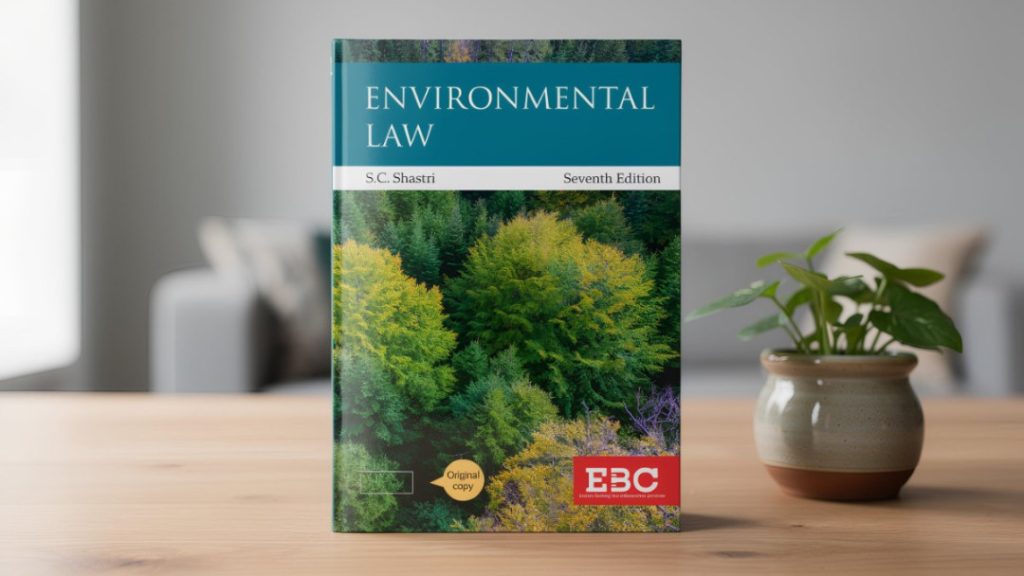
To know more about the topic, you may check out this book.