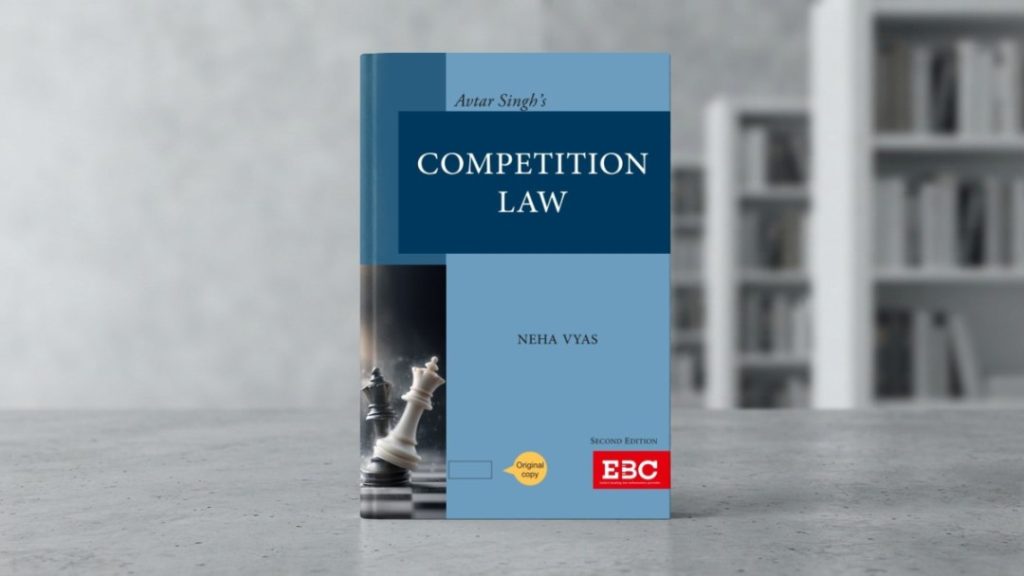
Every regulatory body needs money to function, and it needs to be answerable for how that money is spent. The finance and audit provisions of the Competition Commission of India address exactly this. Found in Chapter VIII of the Competition Act, 2002, these provisions explain how the Commission is funded, how its accounts are maintained, and who checks that its spending stays within lawful and reasonable limits. This article walks through each provision in plain language, so you understand not just what the law says, but why it matters.
Why Financial Provisions Matter for a Regulator
The Competition Commission of India, often called the CCI, is a statutory body responsible for preventing anti-competitive practices, regulating mergers and acquisitions, and promoting fair markets in India. Since it exercises significant power over businesses, including the ability to impose heavy penalties, it is equally important that the Commission itself operates transparently and remains financially accountable to Parliament and the public.
Key Statutory Provisions
The finance and audit framework of the Competition Commission of India is laid out in Sections 50 to 53 of the Competition Act, 2002, under Chapter VIII titled “Finance, Accounts and Audit.”
Section 50: Grants by Central Government
This section allows the Central Government to provide financial grants to the Commission, after Parliament approves the relevant allocation through the usual budgetary process. This is the primary source of funding that keeps the Commission operational, covering salaries, infrastructure, and day to day expenses.
Section 51: Constitution of Fund
Section 51 establishes what is called the Competition Fund. All money received by the Commission, whether through government grants, fees, or other permitted sources, is credited to this Fund. The Fund is then used to meet the Commission’s expenses, including salaries and allowances of the Chairperson and Members, staff costs, and other administrative expenditure. This structure ensures that all inflows and outflows of the Commission pass through a single, traceable account rather than being scattered across informal channels.
Section 52: Accounts and Audit
This is the core accountability provision. Under Section 52, the Commission is required to maintain proper accounts and other relevant records in a form that is prescribed in consultation with the Comptroller and Auditor General of India (CAG), the constitutional authority responsible for auditing government bodies in India. The CAG audits the Commission’s accounts every year, and the audited accounts, along with the audit report, are then submitted to the Central Government, which places them before both Houses of Parliament.
Section 53: Furnishing of Returns to Central Government
Section 53 requires the Commission to furnish the Central Government with returns, statements, and other particulars relating to its functions, as and when required. This gives the government a continuous, real time channel of oversight beyond just the annual audit cycle.
How the Process Works: A Simple Flow
Central Government Grants (Section 50)
        |
        v
Competition Fund (Section 51)
        |
        v
Commission's Expenditure (salaries, operations, admin costs)
        |
        v
Accounts Maintained per CAG-prescribed format (Section 52)
        |
        v
Annual Audit by CAG
        |
        v
Audit Report submitted to Central Government
        |
        v
Report placed before Parliament
Comparison Table: Roles Under the Finance and Audit Framework
| Provision | Responsible Authority | Core Function |
|---|---|---|
| Section 50 | Central Government | Provides financial grants to the Commission |
| Section 51 | Competition Commission of India | Maintains the Competition Fund for all receipts and expenses |
| Section 52 | Comptroller and Auditor General of India | Prescribes accounting format and audits the Commission annually |
| Section 53 | Competition Commission of India | Furnishes periodic returns and reports to the Central Government |
Obligations and Safeguards
- The Commission cannot spend funds arbitrarily. All expenditure must be recorded in the manner prescribed for the Competition Fund.
- Annual audited accounts must be shared with the Central Government and tabled in Parliament, ensuring public and legislative scrutiny.
- The CAG’s role acts as an independent external check, separate from the Commission’s own internal administration.
- Regular furnishing of returns under Section 53 prevents financial or administrative issues from remaining hidden until the annual audit.
Frequently Asked Questions
The Commission is primarily funded through grants provided by the Central Government under Section 50 of the Competition Act, 2002, following parliamentary budget approval.
It is a dedicated fund constituted under Section 51 into which all money received by the Commission is credited, and from which its expenses are met.
The Comptroller and Auditor General of India audits the Commission’s accounts annually under Section 52.
Yes. The audited accounts and audit report are submitted to the Central Government and subsequently placed before both Houses of Parliament.
Under Section 53, the Commission must provide returns, statements, and particulars relating to its functions as required by the Central Government.
No. All expenditure must be made through the Competition Fund and recorded in the prescribed accounting format.
The 2023 amendment focused mainly on substantive and procedural areas such as combinations and settlement mechanisms, while the finance and audit framework under Sections 50 to 53 has remained substantially the same.
It provides an independent, external check on the Commission’s financial conduct, reinforcing public trust in a body that itself enforces financial and market discipline on others.
Ready to go beyond this? Reference book, right here.