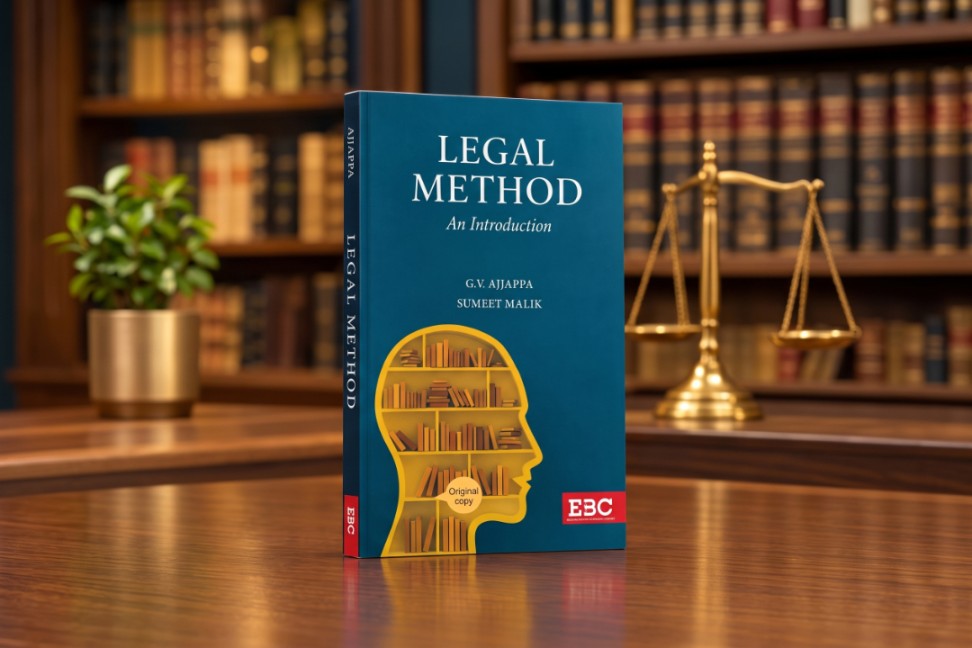
For every newly admitted law student entering an LL.B. or integrated law program, the term legal method in India represents the core foundation of legal education. Unlike basic subjects that focus on specific statutes, legal method provides the structural, analytical, and practical framework required to read, understand, and apply the law. It serves as the primary bridge between raw statutory text and practical judicial reasoning.
Understanding legal method in India requires examining how laws are created, categorized, and interpreted across the country’s vast legal machinery. This introductory guide breaks down the essential components, statutory sources, and legal techniques that form the backbone of the Indian legal system.
The Core Concept: What is Legal Method?
Legal method is the study of legal techniques, reasoning, and research methods used by lawyers, judges, and academics. It encompasses the techniques required to locate legal authorities, read statutes, analyze judicial precedent, and apply general principles of jurisprudence to specific factual disputes.
While foreign jurisdictions often rely on textbooks built strictly around their own legal traditions, the Indian legal system operates on a unique blend of imported common law traditions, enacted legislation, and diverse personal laws. Consequently, mastering Indian legal methodology requires a thorough understanding of domestic legal sources and structural classifications.
Primary Sources of Law in India
The Indian legal machinery relies on a defined hierarchy of authoritative sources. Every rule of law must derive its validity from one of these recognized statutory or traditional avenues:
- The Constitution of India: The supreme law of the land. Under Article 13, any law that violates the Fundamental Rights contained in Part III is void to the extent of such inconsistency.
- Statutes and Legislation: Enactments passed by the Parliament of India or State Legislatures.
- Delegated Legislation: Rules, regulations, notifications, and bye-laws issued by executive bodies under authority granted by a primary statute.
- Judicial Precedent: Under Article 141 of the Constitution, the law declared by the Supreme Court of India is binding on all courts within the territory of India.
- Customs and Usage: Practices that have been continuous, ancient, reasonable, and uniform can hold the force of law, provided they do not conflict with express statutory enactments.
Fundamental Statutory Enactments and Rules
Several key acts govern the interpretation and administrative application of law in India:
- The General Clauses Act, 1897: The universal rulebook for statutory interpretation in India. It defines standard terms, establishes rules for statutory enforcement, and provides guidance on how repealed legislation impacts ongoing rights and obligations.
- The High Courts Act and Civil Procedure Provisions: Frameworks governing how procedural law is enforced across various court hierarchies.
- Statutory Rules on Legislative Drafting: Constitutional provisions, specifically Article 107 through Article 111, set out the mandatory procedure for introducing, passing, and granting assent to legislative Bills in Parliament.
Major Classifications of Law in India
To navigate the legal landscape effectively, legal scholars classify laws based on their function, subject matter, and jurisdictional scope:
| Classification Basis | Primary Category | Secondary Category | Key Distinction |
| Enforcement Scope | Public Law | Private Law | Public law governs state-citizen relations; private law governs citizen-citizen interactions. |
| Legal Nature | Substantive Law | Procedural (Adjective) Law | Substantive law defines rights and liabilities; procedural law sets the machinery for enforcement. |
| Jurisdictional Origin | Municipal (Domestic) Law | International Law | Municipal law applies within a nation state; international law governs relations between sovereign nations. |
| Legal Subject | Civil Law | Criminal Law | Civil law focuses on compensation and dispute resolution; criminal law focuses on deterrence and state punishment. |
Rights, Obligations, and Legal Research Techniques
A essential component of studying legal method involves learning how to navigate a law library and conduct legal research. Law students must build proficiency in:
- Statutory Reading: Understanding the enacting formula, preamble, short title, definitions clause, proviso, and schedules within a Bare Act.
- Case Law Analysis: Locating the ratio decidendi (the rationale or principle of the decision) and distinguishing it from obiter dicta (remarks made by the judge in passing that carry persuasive value but not binding precedent).
- Using Legal Citation Systems: Navigating legal digests, standard law reports, and recognized online legal research databases to cite authority correctly.
Frequently Asked Questions
Legal method teaches students how to think like a lawyer by covering legal research, statutory interpretation, case analysis, and the structural foundation of the Indian legal system.
Foreign texts focus primarily on the legal systems of the United Kingdom, United States, or civil law countries. They do not cover Indian constitutional supremacy, personal law structures, local customs, or specific Indian statutory rules.
Substantive law establishes actual legal rights, duties, and liabilities (such as contract terms or criminal offenses). Procedural law sets out the rules and processes used to enforce those rights in court.
The doctrine of precedent mandates that lower courts are bound by the decisions of higher courts. Under Article 141 of the Indian Constitution, Supreme Court rulings bind all subordinate courts in India.
Custom serves as a recognized source of law if it is ancient, uniform, reasonable, continuous, and not opposed to public policy or explicit statutory provisions. Customary norms often modify general family law rules.
Want the deeper dive? Grab the reference book.