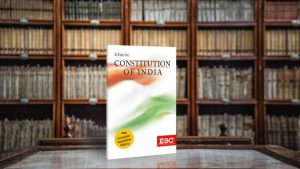
Technology is changing how power is exercised, from the algorithms that shortlist job applicants to the digital systems that decide who receives a pension or a licence. But however the tools change, the basic questions of public law remain the same: who holds power, how is it controlled, and what remedy does an individual have when it is used unfairly? In this Q&A, Shivam Mishra, co-author of Comparative Public Law and Systems of Governance, answers five questions on AI liability, algorithmic management in the workplace, environmental emergencies, data privacy and the one idea India could borrow from other legal systems. Drawing on comparisons with the EU, UK and US, he argues that innovation must never come at the cost of accountability.
1. AI Liability
If AI causes real-world harm, who should be liable, and how does India compare with the EU, UK and US?
I think the first thing we need to understand is that AI cannot become an excuse for avoiding human responsibility. If an AI system causes harm, saying that “the algorithm did it” should not end the legal enquiry. The real question should be who designed the system, who deployed it, who had control over it, and who was in the best position to prevent the harm. Liability may therefore differ from case to case. A developer may be responsible for a defective system, a company may be responsible for deploying it carelessly, and in some situations the professional using the AI may also have a duty to exercise independent judgment. What matters is that there should always be an identifiable human or legal entity against whom the affected person can seek a remedy.
This is where the comparison becomes interesting. The European Union has taken a more structured approach. Its AI Act regulates systems according to risk, while its revised Product Liability Directive expressly brings software and AI systems within modern product-liability rules. The UK, by comparison, continues largely to apply existing principles of negligence, product liability, professional responsibility and sector-specific regulation to AI-related harm. The United States also remains comparatively fragmented, relying heavily on existing tort, consumer-protection, civil-rights and sectoral laws.
India presently does not have one comprehensive AI liability law. That does not mean there is a legal vacuum. Constitutional principles, consumer law, contract, tort, data-protection law and sector-specific regulation can all become relevant. But as AI systems become more autonomous, India will need greater clarity about the responsibility of developers, deployers and users.
One of the arguments running through our book is that technology may change the way power is exercised, but it should not weaken accountability. In my view, the basic principle should remain very simple. The more control and benefit an institution derives from an AI system, the harder it should be for that institution to disclaim responsibility when the system causes foreseeable harm.
2. AI at Work
As AI enters hiring, monitoring and performance reviews, how protected are Indian employees compared with employees in other countries?
This is an area where AI can quietly affect a person’s life without the person even knowing that an algorithm has judged them. Today, an AI system may shortlist a CV, analyse an interview, monitor productivity or recommend whether an employee deserves promotion. That makes workplace AI not merely a question of efficiency but also a question of equality, privacy and fairness.
The European Union has recognised this quite clearly. Under the EU AI Act, certain AI systems used for recruitment, promotion, dismissal, allocation of work and monitoring of employees are treated as high-risk systems. The idea is important because employment decisions affect a person’s livelihood and dignity. The regulatory focus therefore moves towards transparency, risk management and meaningful human oversight.
The United States takes a different route. It does not have one general AI employment law at the federal level, but existing anti-discrimination laws continue to apply when AI is used in employment. The Equal Employment Opportunity Commission, for example, has specifically warned that algorithmic hiring tools can unlawfully disadvantage persons with disabilities. The UK also combines existing employment, equality and data-protection protections with an evolving policy framework. Interestingly, the UK Government is presently examining stronger rules concerning workplace monitoring technologies, including questions of transparency and worker participation.
India has constitutional values of equality, dignity and privacy, as well as labour and data-protection laws, but we still lack a specific legal framework dealing with algorithmic management of workers. This creates a practical problem. If an employee is rejected or downgraded by an AI system, how does that person know why the decision was made?
For me, the most important protection is therefore not simply a right against AI. It is a right against unexplained and unfair automated decisions. Employees should know when AI substantially influences a decision about them, and important decisions affecting employment should remain open to human review.
3. Environmental Emergencies
When climate or environmental emergencies strike, how does India’s response compare with other countries in balancing State power, rights, and environmental protection?
Environmental emergencies create one of the hardest problems in public law because the State sometimes needs extraordinary power precisely when constitutional safeguards are most important. A flood, extreme heat event, severe pollution episode, or another ecological disaster may require evacuation, restrictions, emergency expenditure, and rapid administrative decisions. But urgency cannot mean that legality disappears.
India has developed a strong environmental jurisprudence, particularly through Article 21. Environmental emergencies create one of the hardest problems in public law because the State sometimes needs extraordinary power precisely when constitutional safeguards are most important. A flood, extreme heat event, severe pollution episode, or another ecological disaster may require evacuation, restrictions, emergency expenditure, and rapid administrative decisions. But urgency cannot mean that legality disappears.
India has developed a strong environmental jurisprudence, particularly through Article 21. Our courts have gradually connected the right to life with a clean and healthy environment. The larger constitutional framework also brings in Directive Principles, fundamental duties, and principles such as sustainable development, precaution, and polluter pays. This is something we discuss extensively in the book because environmental protection in India has increasingly moved from being merely an administrative policy to becoming a constitutional concern.
Comparative experience shows other approaches. South Africa expressly guarantees environmental rights in Section 24 of its Constitution, while the Netherlands has seen courts directly hold the State accountable for insufficient climate action through the Urgenda case. The United Kingdom relies more strongly on legislation, administrative law and judicial review rather than an expressly written constitutional environmental right.
For me, the real lesson is that environmental emergencies should not be seen as a choice between strong government and individual rights. Good constitutional governance requires both. The State must be capable of acting quickly, but its measures should still be lawful, proportionate, scientifically justified, and open to review.
There is also an intergenerational dimension. Environmental constitutionalism asks us to remember that constitutional governance is not only about protecting citizens living today. Decisions taken today may determine the quality of life available to people who are not yet born. That makes environmental responsibility a question of justice as much as administration.
4. Data & Privacy
When governments and private companies collect our data, how does India’s approach to privacy and data protection compare with other countries, and where does India stand in protecting citizens in the digital age?
Privacy today is no longer simply about someone entering our home or reading a private letter. A very detailed picture of a person can now be created from location data, financial transactions, browsing behaviour, health information and everyday digital activity. So, in the digital age, privacy is really connected with autonomy. It concerns how much control an individual has over his or her own information.
India’s constitutional position changed significantly with Justice K.S. Puttaswamy v. Union of India, where the Supreme Court recognised privacy as a fundamental right under the Constitution. That gave data protection a constitutional foundation rather than leaving it simply as a question of information technology regulation. The book treats Puttaswamy as an important point in India’s transition towards digital constitutionalism.
India has since enacted the Digital Personal Data Protection Act, 2023, followed by the Digital Personal Data Protection Rules, 2025, although different parts of the framework have staggered commencement dates. This is a major institutional development.
Comparatively, however, the European Union still represents a more rights-intensive model through the GDPR. It places strong emphasis on lawful processing, transparency, purpose limitation, data minimisation and rights available to the individual. The United States traditionally follows a more sector-specific model rather than one comprehensive federal privacy code. The UK has its own detailed data-protection framework and has continued to regulate automated decision-making through legislation.
India, therefore, has travelled a considerable distance, but the next question is about implementation. A privacy right becomes meaningful only when a citizen can understand what data is being collected, why it is being collected, how long it will remain, with whom it will be shared and what remedy is available if it is misused.
The deeper point we make in the book is that digital governance should not require citizens to surrender constitutional values in exchange for convenience. Technology should make governance smarter, but it should also make power more accountable.
5. One Idea to Borrow
Is there one approach from another country’s legal or governance system that India could learn from, and why?
If I had to choose only one idea, I would not borrow an entire constitutional model from another country. India is far too distinctive for that. I would instead borrow a stronger culture of reasoned and procedurally accountable administrative decision-making, something we see particularly clearly in systems such as the United States through its administrative-procedure framework.
The reason is quite practical. Most citizens do not experience the Constitution through a constitutional case before the Supreme Court. They experience the State through an officer, a licence, a pension application, a tax notice, a regulatory decision, a welfare benefit or increasingly, an automated digital system.
The United States Administrative Procedure Act developed a structured framework around administrative rule-making, public participation, procedural fairness and judicial review. India has developed very strong principles of natural justice and judicial review through constitutional jurisprudence, but many administrative safeguards remain spread across different statutes, rules and judgments. Our book therefore discusses the value of codifying administrative fairness standards, including reasoned decisions, public consultation and clearer procedural duties.
I believe India could benefit from a general Administrative Procedure Code adapted to Indian conditions. It need not copy the American statute. It could draw from Indian constitutional jurisprudence itself, particularly Article 14, natural justice, proportionality and the duty to give reasons.
To me, this captures the real purpose of comparative public law. The purpose is not to ask, “Which country’s system is better?” The better question is, “What has another legal system learnt from its own experience that may help us improve ours?”
That, in many ways, is also the central idea behind Comparative Public Law and Systems of Governance. Different countries organise power differently, but every constitutional democracy eventually confronts the same basic questions: Who exercises power, how is that power controlled, and what remedy does an individual have when that power is used unfairly?
Curious for more? This book has it.