Background and Purpose of the Act
The Act was passed in 1940 based on recommendations of the Chopra Committee, which was formed in 1930 to study the state of drug regulation in colonial India. At the time, there was no unified framework to check the quality, safety, and efficacy of drugs being sold. The Act was designed to fix this gap, and its related enforcement rules, the Drugs Rules, 1945, followed five years later.
The core purpose of the Act is to ensure that drugs and cosmetics sold in India are safe, effective, and conform to prescribed quality standards.
Structure of the Act
The Drugs and Cosmetics Act, 1940 is divided into chapters covering different aspects of regulation:
- Chapter I: Short title and definitions, including what qualifies as a “drug” or “cosmetic.”
- Chapter II: Establishes advisory bodies like the Drugs Technical Advisory Board and Central Drugs Laboratory.
- Chapter III: Deals with import of drugs and cosmetics, including prohibitions on misbranded, adulterated, or spurious products.
- Chapter IV: Covers manufacture, sale, and distribution of drugs and cosmetics within India.
- Chapter IV-A: Regulates Ayurvedic, Siddha, and Unani drugs, added through a 1964 amendment.
- Chapter V: Contains penalties and procedures for offences.
Key Regulatory Authorities
Drug regulation in India works on a dual structure involving both the Centre and the States.
- Central Drugs Standard Control Organisation (CDSCO): Functions under the Directorate General of Health Services and handles approval of new drugs, clinical trials, and setting standards.
- State Drug Control Authorities: Handle licensing for manufacture and sale of drugs within their respective states.
- Drugs Technical Advisory Board (DTAB) and Drugs Consultative Committee (DCC): Advise the Central and State governments on technical matters.
Key Definitions Under the Act
Understanding a few basic terms helps in reading the Act correctly:
- Drug: Includes medicines for internal or external use, substances for diagnosis, and even certain medical devices notified under the Act.
- Cosmetic: Any article meant to be applied to the human body for cleansing or beautifying, excluding soap.
- Misbranded drug: A drug that carries false or misleading claims on its label.
- Spurious drug: A drug that is manufactured to imitate another drug without proper authority.
- Adulterated drug: A drug mixed with any substance that lowers its quality or purity.
Licensing and Compliance Requirements
Anyone wishing to manufacture, sell, or distribute drugs must obtain a valid licence from the appropriate authority. Broadly, the requirements include:
- A licence to manufacture for sale, issued by the State Licensing Authority.
- A licence to sell, stock, or exhibit drugs, required for retail and wholesale chemists.
- Compliance with Good Manufacturing Practices as prescribed under Schedule M of the Drugs Rules, 1945.
- Periodic inspection by drug inspectors appointed under the Act.
Comparison Table: Key Provisions at a Glance
| Aspect | Provision | Governing Chapter/Section |
|---|---|---|
| Definition of drug and cosmetic | Section 3 | Chapter I |
| Import regulation | Sections 9 to 13 | Chapter III |
| Manufacture and sale | Sections 18 to 33 | Chapter IV |
| Ayurvedic, Siddha, Unani drugs | Sections 33A to 33O | Chapter IV-A |
| Penalties for offences | Sections 27 to 32B | Chapter V |
Frequently Asked Questions
To regulate the import, manufacture, distribution, and sale of drugs and cosmetics so that they remain safe and effective for use.
Both central authorities like CDSCO and state drug control departments share enforcement responsibility.
Yes, Chapter IV-A specifically covers Ayurvedic, Siddha, and Unani drugs.
A spurious drug falsely imitates another product, while an adulterated drug is genuine but has been mixed with substances that reduce its quality.
Yes, the Jan Vishwas (Amendment of Provisions) Act, 2023 introduced changes to penalty provisions, effective from 31 December 2024.
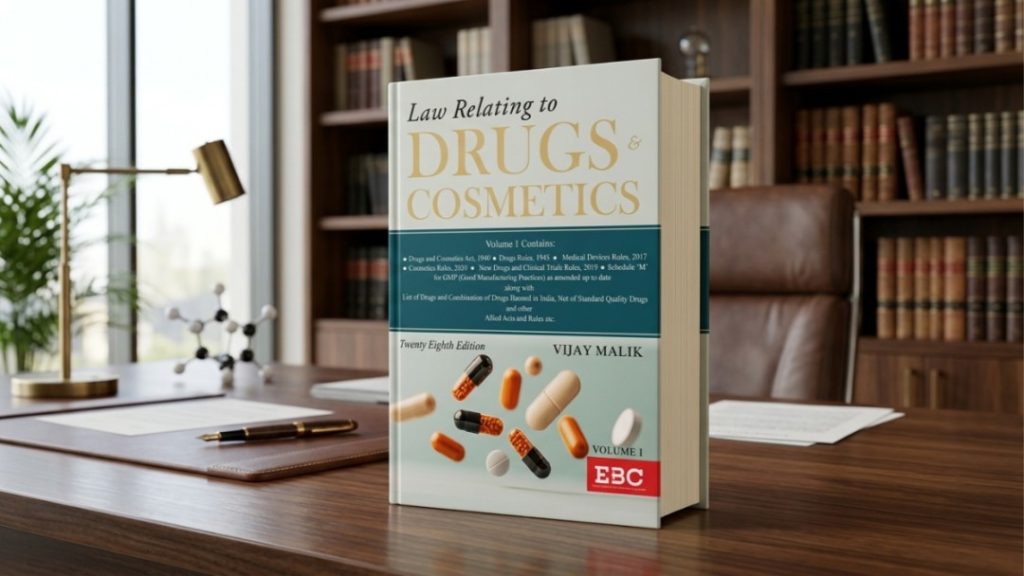
Want the deeper dive? Grab the reference book.