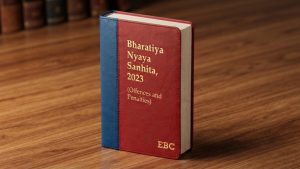
The Bharatiya Nyaya Sanhita, 2023 (BNS) (Indian Justice Code, 2023, IJC) is the official criminal code of India. It came into effect on 01 July 2024, after being passed by
The Bharatiya Nagarik Suraksha Sanhita, 2023 (BNSS) (IAST: Bhāratīya Nāgarik Surakśa Saṃhitā; lit. 'Indian Citizen Safety Code, 2023 (ICSC) '), is the main legislation on procedure for administration of substantive criminal
Is sedition still a crime in India under the new laws? This is one of the most searched legal questions in India today, and the honest answer is: not exactly,
Why Criminal Law Struggles With Machines Indian criminal law rests on two pillars. The first is actus reus, meaning the physical act or omission that constitutes an offence. The second
The rollout of the Bharatiya Nyaya Sanhita, 2023 (BNS) replaced the colonial-era Indian Penal Code, 1860, introducing structured definitions for offenses that previously lacked explicit statutory recognition. Among these structural
In today's digital world, a single social media post, review, or public statement can reach thousands of people within minutes. While freedom of speech is a fundamental right in India,
What Counts as Forgery In simple terms, forgery means creating a false document (or electronic record) with the intent to deceive, cause harm, or gain something unlawfully. It is not
Where These Offences Are Defined Offences relating to documents and property marks were originally codified in Chapter XVIII of the Indian Penal Code, 1860 (IPC), covering Sections 463 to 489E.
The removal of Section 377 under the Bharatiya Nyaya Sanhita left an important question unanswered: how the law protects male victims of sexual assault. Dr Rufi Khan, Assistant Professor of
The terms homicide and murder are often used interchangeably in everyday conversations, crime reports, and even popular media. However, under Indian criminal law, they do not mean the same thing.