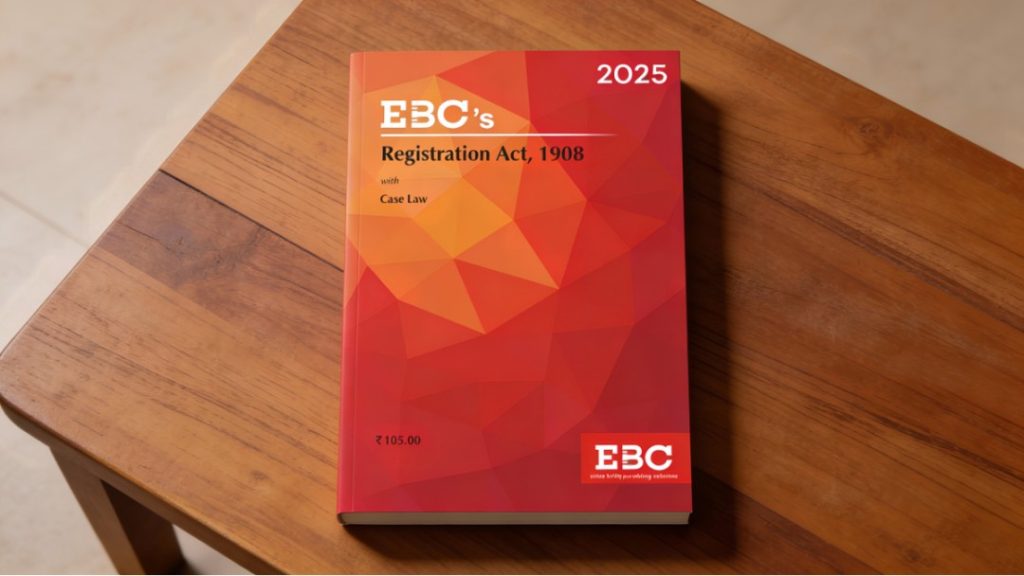
Buying property in India is a major financial and legal decision. While finding the right property and negotiating the price are important, registering the property in your name is what gives you legal ownership. Property registration is governed primarily by the Registration Act, 1908, along with relevant provisions of the Transfer of Property Act, 1882 and applicable state laws.
This guide explains the property registration process in India step by step, including required documents, fees, and practical tips.
What Is Property Registration?
Property registration is the official recording of a property transaction in government records. Once registered, the transaction becomes:
- Legally valid and enforceable
- A public record
- Proof of ownership
Without registration, a sale deed has no legal effect, even if full payment has been made.
Laws Governing Property Registration
- Registration Act, 1908
- Transfer of Property Act, 1882
- Indian Stamp Act, 1899 (and state amendments)
- State-specific rules on stamp duty and registration fees
Step-by-Step Property Registration Process
Step 1: Verify the Property Title
Before proceeding, ensure that:
- The seller has a clear and marketable title
- The property is free from encumbrances
- Necessary approvals (local authority, development authority, building plan) are in place
You may obtain an Encumbrance Certificate (EC) from the Sub-Registrar’s Office to check past transactions.
Step 2: Draft the Sale Deed
A sale deed is the primary document transferring ownership. It should include:
- Details of buyer and seller
- Property description
- Sale consideration and payment terms
- Date of possession
- Rights and obligations of both parties
It is advisable to have the deed drafted or vetted by a lawyer.
Step 3: Calculate Stamp Duty and Registration Fees
Stamp duty and registration charges vary by state. They are generally calculated as a percentage of:
- The transaction value, or
- The government circle rate (whichever is higher)
These must be paid before or at the time of registration.
Step 4: Pay Stamp Duty
Stamp duty can be paid through:
- E-stamping
- Challan at designated banks
- Treasury payment
Proof of stamp duty payment must be attached to the sale deed.
Step 5: Fix an Appointment with the Sub-Registrar
Both buyer and seller must visit the Sub-Registrar’s Office within whose jurisdiction the property is located. Many states provide online appointment booking.
Step 6: Execution of the Sale Deed
At the Sub-Registrar’s Office:
- Buyer and seller sign the sale deed
- Two witnesses sign the document
- Biometric verification and photographs are taken
Step 7: Registration of the Document
The Sub-Registrar:
- Verifies identities and documents
- Collects registration fees
- Endorses and records the document
Once registered, the sale deed is assigned a registration number and stored in official records.
Step 8: Collect the Registered Sale Deed
A certified copy of the registered sale deed can be collected or downloaded (in states with online services). This document is your legal proof of ownership.
Documents Required for Property Registration
- Original sale deed
- Identity proof of buyer and seller (Aadhaar, PAN, Passport, etc.)
- Address proof
- Passport-size photographs
- Encumbrance Certificate
- Previous title deeds
- Property tax receipts
- Approved building plan (if applicable)
- Power of Attorney (if applicable)
Mutation of Property After Registration
After registration, the buyer should apply for mutation at the local municipal or revenue office. Mutation updates land and tax records in the buyer’s name. While mutation does not create ownership, it is essential for:
- Paying property taxes
- Utility connections
- Future transactions