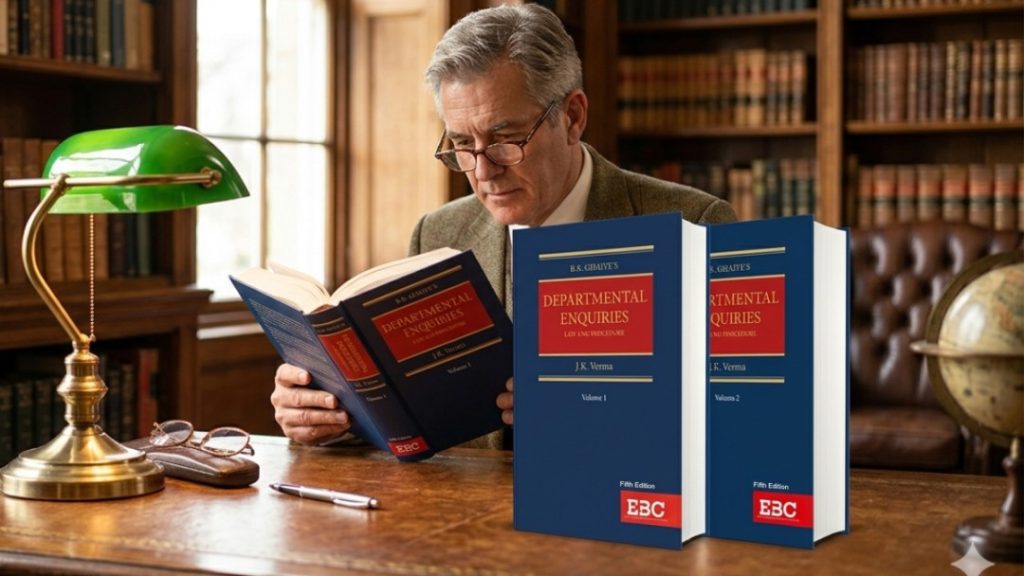
In any organisation, maintaining discipline is essential for smooth functioning. But what happens when an employee is accused of misconduct? Employers cannot simply terminate or punish someone arbitrarily. Indian labour law requires a fair process; this is where the law of domestic enquiry and disciplinary proceedings comes into play. This blog explains the concept in a clear and engaging way, helping both employers and employees understand their rights and responsibilities.
What is a Domestic Enquiry?
A domestic enquiry is an internal investigation conducted by an employer to examine allegations of misconduct against an employee.
Think of it as a mini-trial within the organisation, but without courts, where facts are examined before taking disciplinary action.
Why is it Important?
A domestic enquiry ensures that:
- The employee gets a fair chance to defend themselves
- The employer follows due process
- Any disciplinary action stands strong if challenged in court
Without a proper enquiry, even a genuine dismissal can be declared illegal.
Legal Basis in India
Domestic enquiries are not governed by a single statute but derive their authority from:
- Principles of Natural Justice
- Industrial laws like the Industrial Employment (Standing Orders) Act
- Judicial decisions of courts and tribunals
Principles of Natural Justice
1. Audi Alteram Partem (Hear the Other Side)
No employee should be punished without being given a chance to explain.
2. Nemo Judex in Causa Sua (No Bias Rule)
The enquiry officer must be impartial, no personal interest in the case.
Step-by-Step Process of a Domestic Enquiry
1. Issue of Charge Sheet
The process begins with a charge sheet, clearly stating:
- Allegations
- Relevant facts
- Rules violated
The employee is asked to respond within a specified time.
2. Appointment of Enquiry Officer
An impartial person (internal or external) is appointed to conduct the enquiry.
3. Conduct of Enquiry
This stage resembles a structured hearing:
- Employer presents evidence and witnesses
- Employee gets a chance to cross-examine
- Employee can present their own evidence
4. Recording of Proceedings
Everything must be properly documented to ensure transparency.
5. Enquiry Report
The enquiry officer submits findings:
- Whether charges are proved or not
- Based only on evidence presented
6. Show Cause Notice (if required)
If misconduct is proved, the employer may ask why punishment should not be imposed.
7. Final Decision
The disciplinary authority decides the punishment, which may include:
- Warning
- Suspension
- Dismissal
Rights of the Employee
During the enquiry, an employee has the right to:
- Know the charges clearly
- Access relevant documents
- Cross-examine witnesses
- Be represented (in some cases)
- Present evidence
Common Mistakes Employers Make
Many enquiries fail in courts due to:
- Biased enquiry officer
- Lack of proper documentation
- Denial of fair opportunity
- Pre-decided outcomes
What Happens if the enquiry is Defective?
If the enquiry is found unfair:
- Courts may order reinstatement
- Employer may have to prove misconduct again before a tribunal
If you’d like to explore this topic in greater depth, this insightful book is a great place to start.