Becoming a judge in India is one of the most respected and challenging legal career paths. Judges play a crucial role in upholding the Constitution, interpreting laws, and delivering justice. This guide explains the different types of judges in India, eligibility requirements, exams, career path, and promotion process in a simple and structured manner.
Understanding the Judicial Structure in India
Before discussing the process, it’s important to understand India’s court hierarchy:
- District Courts (Subordinate Judiciary)
- High Courts
- Supreme Court of India
Each level has a different appointment process and eligibility criteria.
How to Become a Judge in District Court (Judicial Services Exam Route)
This is the most common path.
Step 1: Obtain a Law Degree
You must complete:
- 3-year LL.B. (after graduation), or
- 5-year integrated LL.B. (after 12th)
The degree must be from a recognized university.
Step 2: Clear the Judicial Services Examination (PCS-J)
Each state conducts its own Judicial Services Examination through the State Public Service Commission or High Court.
This exam is commonly known as:
- PCS-J (Provincial Civil Services – Judicial)
- Judicial Magistrate Exam
- Civil Judge Exam
Exam Stages:
- Preliminary Examination – Objective type
- Mains Examination – Written descriptive papers
- Interview (Viva Voce)
Subjects usually include:
- Indian Penal Code (IPC)
- Criminal Procedure Code (CrPC)
- Civil Procedure Code (CPC)
- Indian Evidence Act
- Constitutional Law
- Local state laws
Step 3: Appointment as Civil Judge (Junior Division)
After clearing the exam, you are appointed as:
- Civil Judge (Junior Division)
- Judicial Magistrate
With experience and promotions, you may become:
- Senior Civil Judge
- District Judge
How to Become a District Judge (Direct Entry)
There are two routes:
A. Promotion from Civil Judge
After several years of service and departmental exams.
B. Direct Recruitment (Higher Judicial Services)
Eligibility:
- Minimum 7 years of practice as an advocate
- Age limit varies by state
Selection involves:
- Written examination
- Interview
How to Become a High Court Judge
Judges of High Courts are appointed under Article 217 of the Constitution.
An appointment is made by the President of India after consultation with the Chief Justice of India and the Governor of the concerned state.
Eligibility:
A person must:
- Be a citizen of India
- Have at least 10 years of judicial office experience, OR
- Have practiced as an advocate in a High Court for at least 10 years
High Court judges are appointed through the Collegium system.
How to Become a Supreme Court Judge
Judges of the Supreme Court of India are appointed under Article 124 of the Constitution.
Eligibility:
A person must:
- Be a citizen of India
- Have been a High Court judge for at least 5 years, OR
- Have been an advocate in a High Court for at least 10 years, OR
- Be a distinguished jurist (rare in practice)
An appointment is made by the President based on recommendations of the Supreme Court Collegium.
Age Limits
For Judicial Services Exam:
- Minimum: 21–23 years (varies by state)
- Maximum: 32–35 years (relaxation for reserved categories)
For Higher Judicial Services:
- Usually below 45 years (varies by state)
Skills Required to Become a Judge
- Strong legal knowledge
- Analytical reasoning
- Ethical integrity
- Writing and drafting skills
- Impartial decision-making
- Patience and discipline
Frequently Asked Questions (FAQs)
1. What qualification is required to become a judge in India?
To become a judge in India, you must have an LL.B. degree from a recognized university. For entry into the subordinate judiciary, you must clear the Judicial Services Examination conducted by the respective state.
2. Can I become a judge directly after completing LL.B.?
Yes. You can become a Civil Judge (Junior Division) by clearing the Judicial Services Examination after completing your LL.B. degree. No prior practice as an advocate is required for most states at the entry level.
3. What is the age limit to become a judge in India?
For the Judicial Services Examination, the minimum age is usually 21–23 years, and the maximum age ranges from 32–35 years (varies by state). Age relaxation applies for reserved categories.
4. How many years of practice are required to become a High Court judge?
To become a High Court judge, a person must have at least 10 years of experience as an advocate in a High Court or 10 years of judicial service.
5. How are Supreme Court judges appointed in India?
Judges of the Supreme Court of India are appointed by the President of India based on recommendations of the Supreme Court Collegium. Eligibility includes at least 5 years as a High Court judge or 10 years as a High Court advocate.
6. Is the Judicial Services Examination difficult?
Yes. The Judicial Services Examination is considered highly competitive. It requires strong knowledge of constitutional law, criminal law, civil law, and procedural laws, along with good writing and analytical skills.
7. Can an advocate directly become a District Judge?
Yes. Through the Higher Judicial Services Examination, advocates with a minimum of 7 years of practice can apply for direct recruitment as District Judges (subject to state rules).
8. What is the salary of a judge in India?
Salaries vary by position. A Civil Judge earns approximately ₹70,000–₹1,00,000 per month, while High Court and Supreme Court judges earn ₹2,25,000 and ₹2,50,000 per month respectively, as per current pay structures.
9. Is prior court experience mandatory to become a Civil Judge?
In most states, prior court practice is not mandatory for entry-level judicial services. However, experience may be required for higher judicial positions.
10. How long does it take to become a judge in India?
Becoming a Civil Judge can take 4–6 years (including law degree and exam preparation). Reaching higher courts may take 15–25 years of judicial service or legal practice.
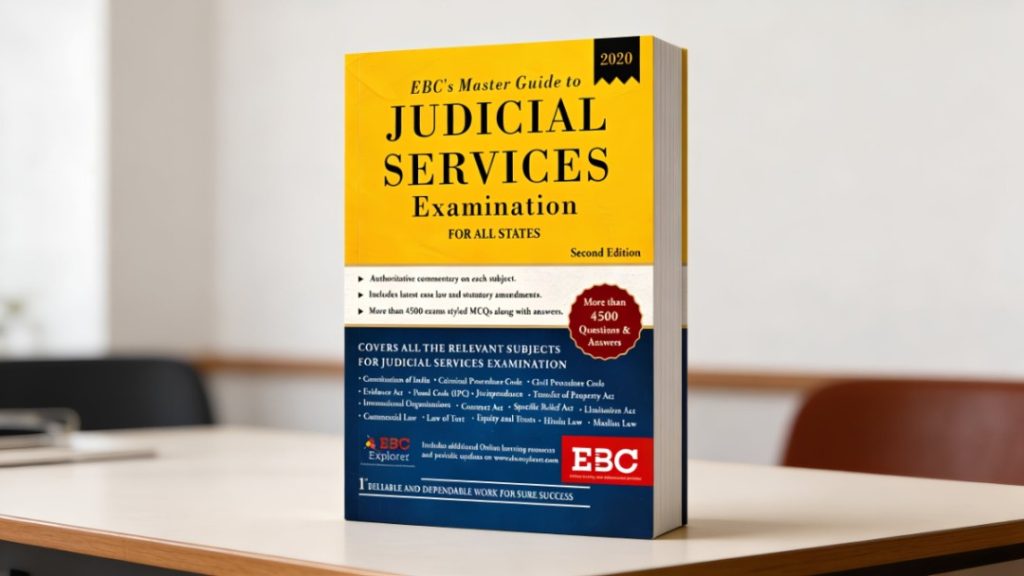
To know about the topic in a much detailed manner, you may check out this resource.