In modern India, possessing certain legal documents is essential for identity verification, financial transactions, travel, education, employment, and access to government services. These documents function as legal proof of identity, citizenship, residence, and financial compliance.
Many public and private institutions require documentation as part of Know Your Customer (KYC) norms mandated under the Prevention of Money Laundering Act and related regulations.
This guide explains the most important legal documents every Indian citizen should maintain, why they matter legally, and the authorities responsible for issuing them.
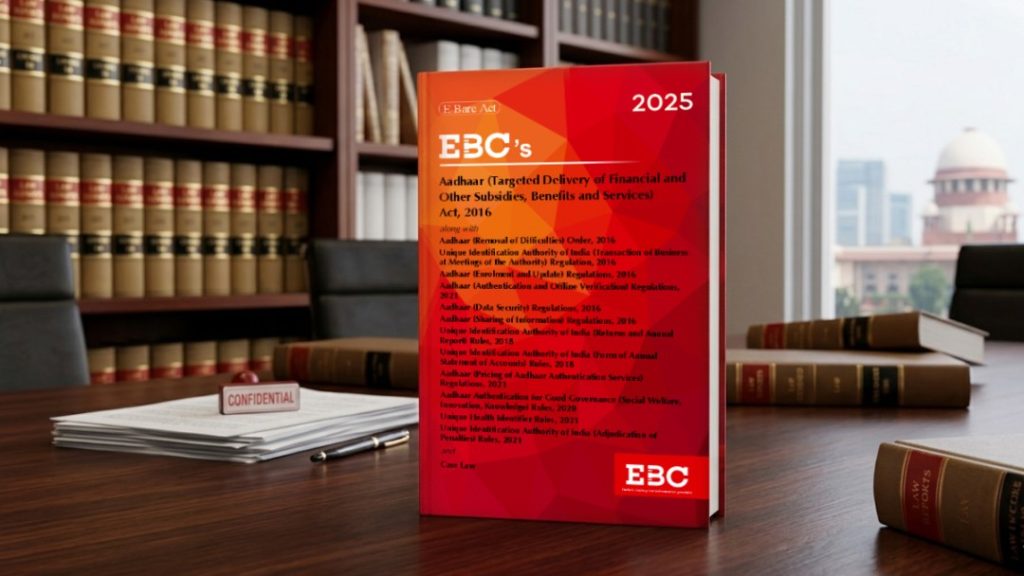
1. Aadhaar Card – Universal Identity Document
The Aadhaar Card is a 12-digit unique identity number issued by the Unique Identification Authority of India.
Legal significance
Aadhaar serves as a widely accepted proof of identity and residence across India.
The constitutional validity of the Aadhaar system was examined by the Justice K.S. Puttaswamy v. Union of India, where the Supreme Court held that Aadhaar is constitutional but its mandatory use must be limited to specific purposes.
Common uses
- Opening bank accounts
- Receiving government subsidies
- SIM card verification
- Accessing welfare schemes
- Identity verification in public services
While Aadhaar is not mandatory for every activity, it has become the most widely used identification document in India.know more
2. PAN Card – Financial and Tax Identity
The Permanent Account Number (PAN) is issued by the Income Tax Department of India.
Legal significance
PAN is essential for financial transparency and taxation compliance under the Income-tax Act, 1961.
Situations where PAN is required
- Filing income tax returns
- Opening bank or demat accounts
- Purchasing property or vehicles
- High-value financial transactions
- Investments in securities and mutual funds
Failure to quote PAN in certain financial transactions may attract penalties under the Income-tax Act.
3. Passport – Proof of Identity and Citizenship
The Indian Passport is issued by the Ministry of External Affairs (India) under the Passports Act, 1967.
Legal significance
A passport is the primary document proving Indian citizenship for international travel.
Common uses
- International travel and visa applications
- Identity verification
- Address proof for banking and financial services
Among all documents issued in India, the passport is considered one of the most reliable identity documents because it undergoes strict police verification.
4. Voter ID Card – Electoral Identity
The Voter ID Card, also called the Elector Photo Identity Card (EPIC), is issued by the Election Commission of India.
Legal significance
It allows citizens to participate in democratic governance by voting in elections conducted under the Representation of the People Act, 1950.
Uses
- Voting in parliamentary, state, and local elections
- Identity verification
- Address proof in some institutions
Possessing a voter ID ensures that a citizen can exercise their constitutional right to vote.
5. Driving Licence – Legal Authorization to Drive
A Driving Licence is issued by the regional transport authorities under the Motor Vehicles Act, 1988.
Legal significance
Driving a motor vehicle on public roads without a valid licence is a punishable offense.
Uses
- Legal authorization to drive
- Identity proof
- Vehicle-related transactions
Traffic authorities can impose fines or penalties for driving without a valid licence.
6. Birth Certificate – Foundational Civil Document
The Birth Certificate records the birth of an individual and is issued by local municipal authorities.
Legal basis
Birth registration is governed by the Registration of Births and Deaths Act, 1969.
Importance
This document establishes:
- Date of birth
- Place of birth
- Parentage
It is often required for:
- School admissions
- Passport applications
- government benefits
- legal identification
7. Digital Storage of Legal Documents
India has introduced digital platforms that allow citizens to store official documents securely.
One widely used service is DigiLocker, developed under the Digital India initiative.
Benefits
- Secure digital storage
- Legally valid electronic documents
- Easy sharing for verification
Digital document management reduces the risk of loss, damage, or forgery.
To know more about these documents, you may check out this resource.