Starting With the Basics: What Is a Constitution?
A Constitution is the highest and most important law of a country.
It works like a big instruction book that tells:
- how the government should run,
- what powers each part of the government has, and
- what rights every citizen enjoys.
It makes sure no one, not even the government, can act above the law.
What Is the Constitution of India?
The Constitution of India is the supreme law of our country.
It came into effect on 26 January 1950 (celebrated as Republic Day).
It contains:
- Fundamental Rights (like equality, freedom of speech, right to life)
- Fundamental Duties (like protecting public property, respecting the Constitution)
- Directive Principles (guidelines for government policies)
- Rules on how Parliament, State Governments, Courts, and Elections work
It is one of the longest Constitutions in the world, showing India’s size, diversity, and complexity.
Who Made the Constitution of India
The Constitution of India was written by a group called the Constituent Assembly.
This body was formed in 1946, before independence, and had 299 members after the partition.
The key contributors include:
Dr. B. R. Ambedkar — Chairman of the Drafting Committee
He is known as the “Father of the Indian Constitution.” He guided the drafting, ensured protection of rights, and shaped India’s democratic structure.
Dr. Rajendra Prasad — President of the Constituent Assembly
He supervised the entire process and later became India’s first President.
Jawaharlal Nehru
Moved the “Objectives Resolution,” which laid the foundation for the Constitution’s values.
Sardar Vallabhbhai Patel
Worked on integrating states and shaping federal features.
Alladi Krishnaswamy Iyer, K. M. Munshi, Gopalaswami Ayyangar, Hansa Mehta, Sarojini Naidu, and others
They contributed to fundamental rights, minority protection, gender equality, and judicial structure.
How long did it take?
It took 2 years, 11 months, and 18 days to finish the Constitution.
Why Was It Necessary to Make a Constitution?
1. India had just gained independence (1947)
After almost 200 years of British rule, India needed its own rules and structure to run the country.
2. To unite a very diverse nation
India had:
- different religions
- different languages
- many princely states
- varied cultures
A single Constitution helped create unity and stability.
3. To protect citizens’ rights
India wanted to guarantee:
- equality
- freedom
- dignity
- justice
A Constitution puts these rights in writing so they cannot be easily taken away.
4. To prevent misuse of power
Without a Constitution, anyone in power could rule unfairly.
The Constitution creates checks and balances to stop dictatorship or abuse.
5. To build a democratic government
India decided to follow democracy, where people elect their leaders.
The Constitution explains:
- how elections happen
- what powers leaders have
- how governments must behave
6. To remove colonial laws
British-era laws were outdated and sometimes discriminatory.
A new Constitution helped India move towards:
- justice
- equality
- development
- self-rule
What Are Constitutional Laws?
Constitutional laws are laws that arise directly from the Constitution.
They include:
- rules written in the Constitution itself
- changes or amendments made to it
- laws made by Parliament to implement Constitutional ideas
- Supreme Court judgments that interpret the Constitution
In simple words, any law that protects or shapes the Constitution is a constitutional law.
Examples of Constitutional Laws in India
Here are a few everyday examples to make it easy:
- Right to Education (Article 21A)
- Right to Equality (Article 14)
- Abolition of Untouchability (Article 17)
- Reservation laws under Articles 15 and 16
- Emergency powers under Articles 352–360
- Amendments like GST (101st Amendment)
All these are directly linked to India’s constitutional framework.
How Is the Constitution Changed?
The Constitution can be changed through a process called a Constitutional Amendment.
An amendment requires:
- vote and approval in both houses of Parliament
- in some cases, approval from at least half of the State Legislatures
- final signature by the President of India
This ensures the Constitution stays flexible, but not too easy to change.
India has had 100+ constitutional amendments so far.
Recent Updates (as of 2024–2025)
Here are some important recent developments related to the Constitution in simple language:
1. Women’s Reservation Act (Nari Shakti Vandan Adhiniyam), 2023
- Provides 33% reservation for women in the Lok Sabha and State Assemblies.
- Will be implemented after the next Census and delimitation.
2. Revamping of Criminal Laws (2023–2024)
Three new laws replaced colonial-era laws like IPC, CrPC, and Evidence Act.
They aim to modernize justice, include digital evidence, and strengthen citizens’ rights.
3. Uniform Civil Code Discussions (State-Level)
- Some states, especially Uttarakhand, have discussed/introduced laws inspired by the idea of a UCC.
- National-level debate continues, though no national UCC has been enacted yet.
4. Jammu & Kashmir Developments
- After the abrogation of Article 370 in 2019, administrative and legal transitions continue.
- Supreme Court upheld the decision in 2023, reinforcing Parliament’s constitutional power.
5. Supreme Court Judgments on Fundamental Rights
- Continued strengthening of privacy rights, digital freedoms, and personal liberty.
- Regular scrutiny of laws through the lens of constitutional morality.
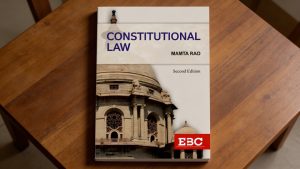
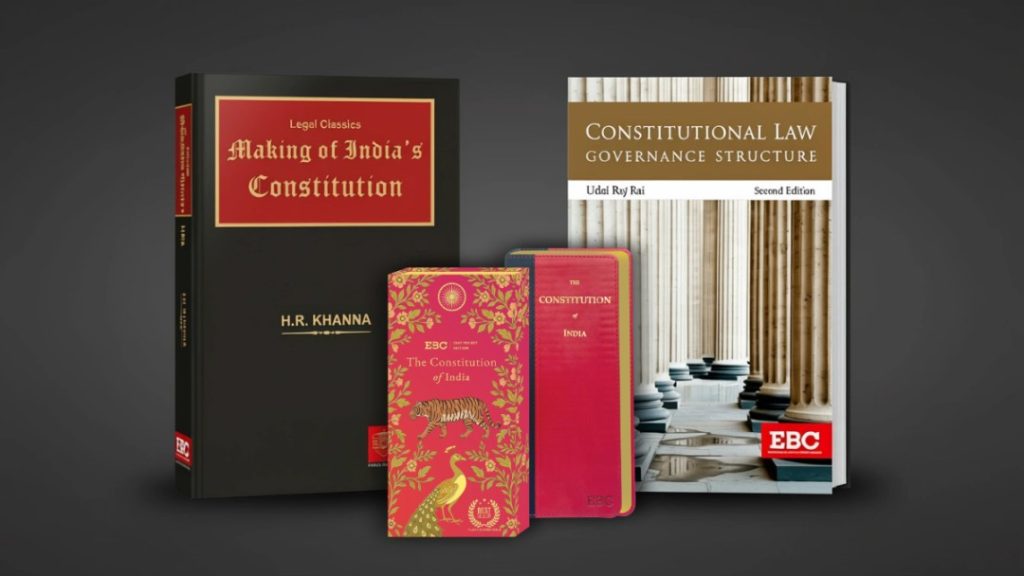
If you want to understand the Indian Constitution and how it was made in a clear and easy way, you should explore these three books: