Competition law enforcement in India determines how effectively markets stay fair, how cartels get punished, and how mergers are reviewed before they close. Unlike many other laws, competition law is enforced mainly by a specialized regulator rather than ordinary courts, which makes its procedure distinct from typical civil or criminal litigation. Understanding this enforcement machinery, and how it compares with the United States and the European Union, helps put India’s system in context.
The Legal Framework in India
The primary statute is the Competition Act, 2002, enacted to replace the older Monopolies and Restrictive Trade Practices Act. It received presidential assent in January 2003, though its substantive provisions on anti-competitive agreements (Section 3) and abuse of dominant position (Section 4) came into force only in 2009.
Key provisions include:
- Section 3: Prohibits anti-competitive agreements, including cartels among competitors that fix prices or limit supply.
- Section 4: Prohibits abuse of a dominant market position, such as unfair pricing or denial of market access.
- Sections 5 and 6: Govern combinations, meaning mergers, acquisitions, and amalgamations that require prior approval if they cross specified asset or turnover thresholds.
- Section 26: Lays out the investigation procedure once a complaint or reference is received.
- Section 27: Empowers the regulator to pass final orders and impose penalties.
The Competition (Amendment) Act, 2023, which came into force on September 10, 2024, introduced major changes.
Who Enforces Competition Law in India
The Competition Commission of India (CCI) is the principal enforcement body. It investigates complaints, conducts inquiries through its Director General, and passes binding orders. Appeals against CCI orders go to the National Company Law Appellate Tribunal (NCLAT), and further appeal lies with the Supreme Court.
The CCI Enforcement Process (Simplified)
- Complaint or reference filed, or CCI acts on its own knowledge
- CCI forms a prima facie opinion under Section 26(1)
- Director General investigates and submits a report
- Parties get an opportunity to respond
- CCI passes a final order under Section 27, which may include penalties, cease and desist directions, or structural remedies
- Appeal, if any, goes to NCLAT
Comparing Enforcement: US, EU, and India
| Aspect | United States | European Union | India |
|---|---|---|---|
| Primary regulator | FTC and Department of Justice | European Commission | Competition Commission of India |
| Core statute | Sherman Act, Clayton Act | Treaty on the Functioning of the EU (Articles 101, 102) | Competition Act, 2002 |
| Merger review | Pre-merger notification, HSR Act | Mandatory pre-notification | Mandatory, pre-closing, two phase |
| Merger timeline | Roughly 30 days initial review | Roughly 25 to 90 working days | 30 working days Phase I, up to 210 days total, now capped lower |
| Cartel penalties | Criminal prosecution possible, heavy fines | Fines up to 10 percent of global turnover | Up to three times profit or 10 percent turnover per year |
| Appeal body | Federal courts | EU General Court | NCLAT, then Supreme Court |
Frequently Asked Questions
The Competition Act, 2002, enforced by the Competition Commission of India.
Any person, consumer association, trade association, or the CCI itself can initiate proceedings.
Yes, if the transaction crosses the prescribed asset, turnover, or deal value thresholds, approval is mandatory before closing.
It attracts a penalty of up to 1 percent of total turnover or assets, whichever is higher.
Yes, the 2023 amendment introduced a settlement and commitment framework for non-cartel cases like abuse of dominance.
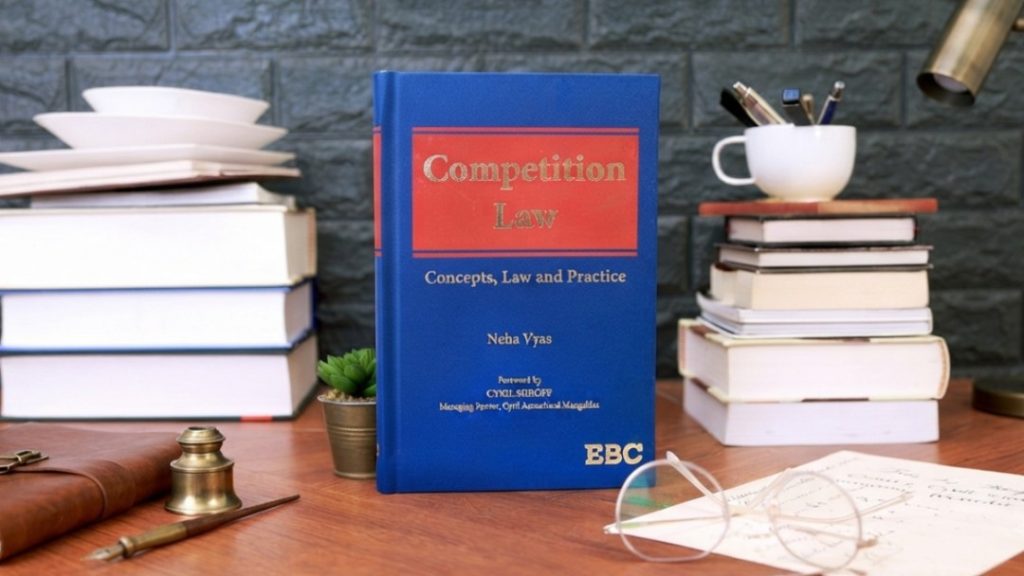
Curious for more? The reference book has it.