Drug-related offences in India are treated with strict seriousness under the Narcotic Drugs and Psychotropic Substances Act, 1985. Whether it involves possession, consumption, or trafficking, the law provides detailed procedures and severe penalties. Understanding what actually happens if someone is caught with drugs can help avoid misinformation and clarify legal rights.
Step 1: Search and Seizure by Authorities
When a person is suspected of possessing drugs, authorities such as police or narcotics officers may conduct a search.
Key Legal Safeguards:
- The accused has the right to be searched before a Magistrate or Gazetted Officer
- Proper documentation of seizure is mandatory
Failure to follow procedure can impact the case.
Step 2: Arrest and Grounds of Arrest
If drugs are found, the person may be arrested.
Important Rights:
- Right to know the grounds of arrest
- Right to inform a relative or friend
- Right to legal representation
The arrest must comply with procedural law and constitutional safeguards.
Step 3: Classification of Quantity
The law differentiates punishment based on the quantity of drugs:
- Small Quantity → Lesser punishment
- Intermediate Quantity → Moderate punishment
- Commercial Quantity → Severe punishment
This classification plays a critical role in sentencing and bail.
Step 4: Medical Examination (in Consumption Cases)
If a person is suspected of drug consumption:
- Medical tests may be conducted
- Refusal can have legal consequences
Step 5: Filing of FIR and Investigation
After arrest:
- An FIR is registered
- Investigation begins
- Evidence such as seized substances is sent for forensic testing
Authorities must follow strict timelines and procedures.
Step 6: Bail Under NDPS Act
Bail is not easily granted, especially in serious cases.
Key Point:
- For commercial quantity, bail is granted only if the court is satisfied that:
- The accused is not guilty
- The accused is unlikely to commit further offences
This makes NDPS cases stricter than many other criminal offences.
Step 7: Trial Process
The case is tried in a Special Court under the NDPS Act.
Process Includes:
- Examination of witnesses
- Forensic reports
- Arguments by prosecution and defense
Step 8: Punishment and Sentencing
Punishment depends on the offence and quantity:
- Small Quantity → Up to 1 year imprisonment or fine
- Intermediate Quantity → Up to 10 years imprisonment
- Commercial Quantity → 10 to 20 years imprisonment + heavy fines
Repeat offences may attract even harsher penalties.
Step 9: Rehabilitation (In Some Cases)
The law also recognizes addiction as a health issue.
Important Provision:
- Addicts volunteering for treatment may receive immunity from prosecution in certain cases
Being caught with drugs in India triggers a strict legal process under the Narcotic Drugs and Psychotropic Substances Act, 1985, involving arrest, investigation, and potentially severe punishment. Understanding your rights and the legal framework is essential, not just for legal professionals but for every citizen.
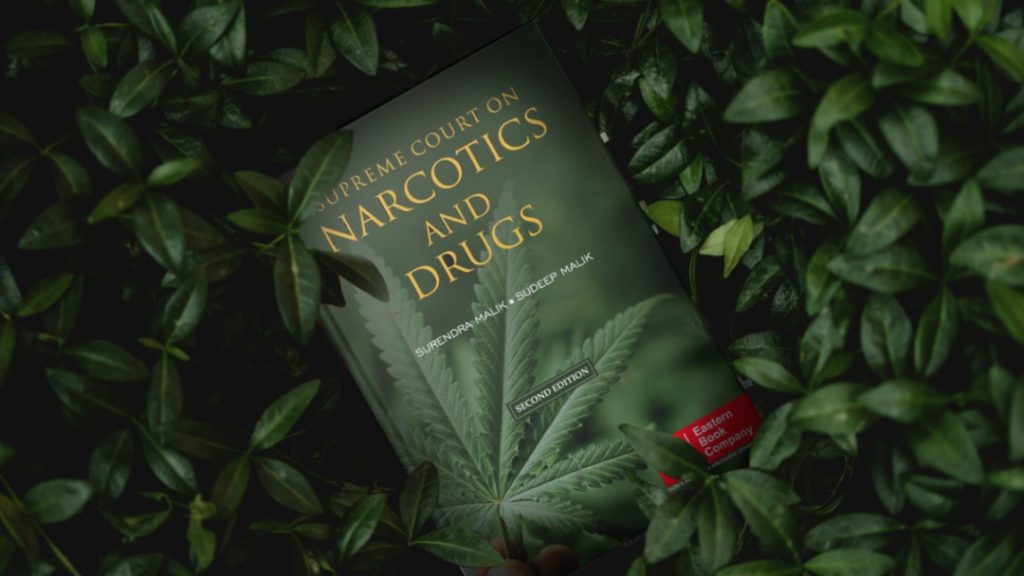
To know more about this topic, you may refer to this book.