O.P. Srivastava’s Principles of Criminal Law has, over the years, established itself as a trusted introductory text for students seeking to understand the foundational concepts of criminal law. The latest edition continues the author’s tradition of presenting the general principles of criminal law in a clear, systematic, and accessible manner, while incorporating contemporary judicial developments.
Comprehensive Coverage of Core Principles
The book focuses on the theoretical foundations of criminal liability and covers essential topics such as the fundamental elements of crime, stages in the commission of crime, common intention and common object, abetment, criminal conspiracy, punishment, and general exceptions. Rather than adopting a section-by-section commentary approach, the book explains criminal law through principles and concepts. This approach enables readers to understand not merely the statutory provisions but also the rationale and underlying principles governing criminal liability.
Clarity and Accessibility of Presentation
One of the principal strengths of the work is its clarity of exposition. Complex concepts such as mens rea, constructive liability, inchoate offences, and criminal participation are explained in a concise and comprehensible manner.
The discussion is supported by significant judicial decisions, enabling readers to connect doctrinal principles with their practical application. The inclusion of model questions, suggested readings, and a detailed subject index further enhances the book’s pedagogical value.
Contemporary Developments in Criminal Jurisprudence
The revised edition reflects important contemporary developments in criminal jurisprudence, including discussions influenced by recent Supreme Court decisions and the growing role of constitutional values in criminal law.
This contemporary perspective helps maintain the relevance of the book for undergraduate law students as well as aspirants preparing for judicial service and other competitive examinations.
A Balanced Approach to Theory and Case Law
A particularly commendable feature of the book is its balanced treatment of theory and case law. The author succeeds in introducing readers to the conceptual structure of criminal law without overwhelming them with excessive detail.
The text therefore serves as a useful bridge between elementary study and more advanced engagement with criminal law. Its systematic presentation allows students to develop a sound conceptual foundation before moving on to more specialised and detailed works.
A Useful Resource for Students and Academics
The book’s structured treatment of criminal law makes it particularly useful for readers who are approaching the subject for the first time. By bringing together fundamental principles, judicial decisions, and explanatory discussions in a coherent manner, it facilitates both conceptual understanding and revision. Its accessible style also makes it suitable for classroom teaching and independent study, while the emphasis on important legal principles provides a useful foundation for further academic research and engagement with contemporary issues in criminal law.
Scope for Further Enrichment
Given the rapid evolution of criminal jurisprudence, future editions may further enrich the discussion by incorporating expanded treatment of emerging areas such as cyber-enabled crimes, artificial intelligence, digital evidence, corporate criminal liability, and comparative developments in criminal law.
Such additions would complement the book’s existing foundation and could further broaden its relevance for advanced learners and researchers.
Practical and Academic Relevance
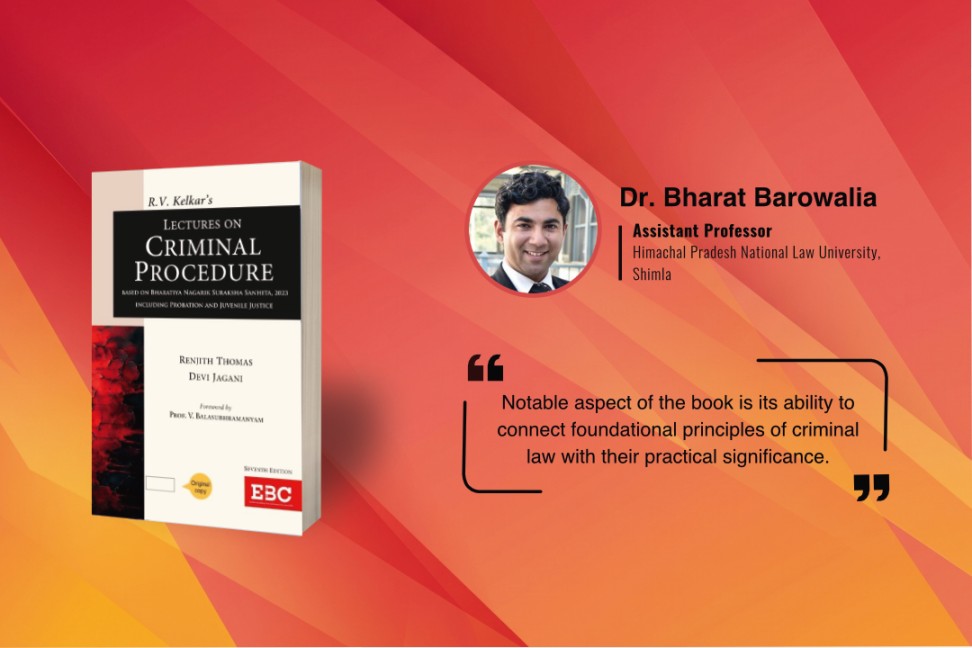
Another notable aspect of the book is its ability to connect foundational principles of criminal law with their practical significance. The discussion of important doctrines alongside relevant judicial pronouncements helps readers appreciate how legal principles are interpreted and applied in actual cases. This approach is particularly valuable for students who wish to develop analytical skills and understand the relationship between statutory provisions, judicial reasoning, and the broader objectives of criminal justice.
Supporting Deeper Understanding of Criminal Law
The book also provides a useful foundation for developing a deeper understanding of the principles governing criminal responsibility. Its systematic discussion encourages readers to examine the relationship between individual acts, intention, participation, and liability, while the accompanying case law demonstrates how these principles operate in practice. This combination of conceptual explanation and judicial interpretation makes the work valuable not only for examination preparation but also for classroom discussion and continued academic engagement with criminal law.
Key Academic and Practical Strengths
The book offers several features that make it useful for students, teachers, and readers seeking a structured understanding of criminal law. Some of its notable strengths may be highlighted as follows:
- Strong conceptual foundation: The book provides a systematic introduction to the fundamental principles underlying criminal liability. By explaining the relationship between act, intention, participation, and responsibility, it enables students to develop a sound conceptual framework before moving towards more specialised areas of criminal law.
- Helpful for examination preparation: The book can also serve as a useful reference for students preparing for university examinations, judicial service examinations, and other competitive examinations. Its emphasis on core principles, important doctrines, and significant judicial decisions enables students to revise essential concepts in a structured manner.
- Development of analytical understanding: Rather than limiting the discussion to the reproduction of statutory provisions, the book encourages readers to understand the reasoning behind criminal liability. This approach can assist students in developing analytical skills and in examining how legal principles operate when applied to different factual circumstances.
Overall, O.P. Srivastava’s Principles of Criminal Law remains a concise, reliable, and student- friendly exposition of the general principles of criminal law. Its conceptual clarity, practical orientation, and sustained relevance make it a valuable resource for understanding the fundamentals of the subject.
The book would be useful for law students, teachers, judicial service aspirants, and readers seeking a sound understanding of the foundational principles of criminal law