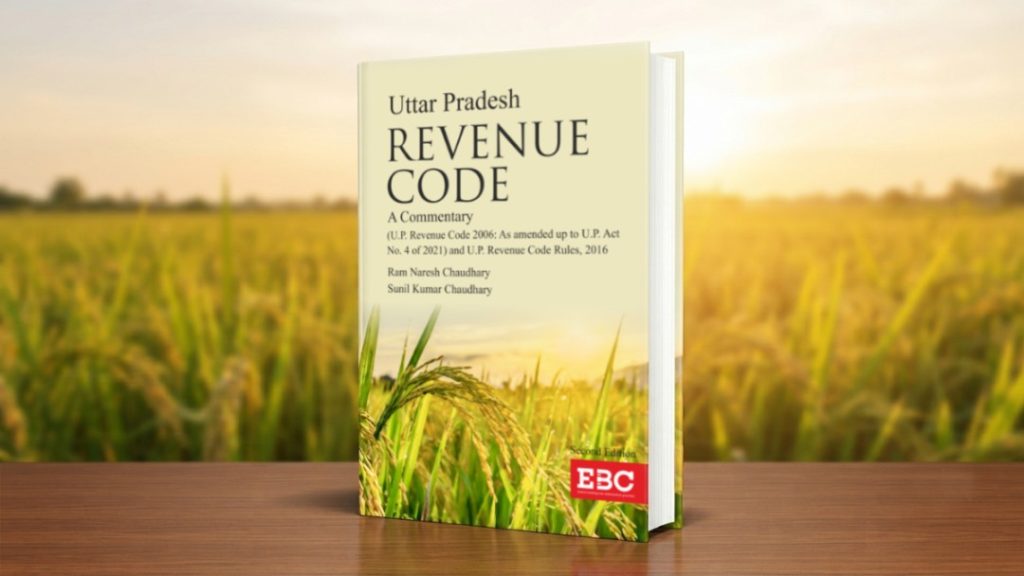
Land governance in Uttar Pradesh is governed by the Uttar Pradesh Revenue Code, 2006. This statute consolidated and simplified earlier regional land laws to establish unified administration across the state. Under Indian legal jurisprudence, sovereign ownership of all land rests with the State Government. Private individuals do not hold absolute title; instead, they hold land as tenure holders with defined rights, conditions, and liabilities. Achieving clarity regarding the ownership of land under UP Revenue Code requires examining these distinct tenure categories and their statutory limits.
Hierarchy of the Land Tenure System in Uttar Pradesh
Section 74 of the Code divides tenure holders into four primary legal categories. Below is the structural hierarchy of the land tenure system in Uttar Pradesh in descending order of legal rights and permanence:
Bhumidhar with Transferable Rights (Section 75): The highest class of tenure holder. Holds permanent, heritable, and transferable rights over the land, including the power to sell, gift, mortgage, or bequeath.
Bhumidhar with Non-Transferable Rights (Section 76): Holds permanent and heritable rights to cultivate the land but lacks the authority to sell or transfer it. Under Section 76(3), after five continuous years of holding this status, it automatically upgrades to transferable Bhumidhari rights.
Asami (Section 78): A temporary land occupier or tenant holding limited, non-transferable, and non-heritable possessory rights, typically over public utility lands exempted under Section 77.
Government Lessee: An individual holding land under a direct contractual lease executed by the State Government, bound strictly by lease terms.
Key Provisions Governing Ownership of Land Under UP Revenue Code
The Code balances private land usage with public regulation through several critical provisions:
- Exclusive Possession and Usage (Section 79): A transferable Bhumidhar enjoys exclusive possession and can use agricultural land for farming, horticulture, or allied activities.
- Conversion to Non-Agricultural Purpose (Section 80): Agricultural land cannot be used for commercial, industrial, or residential projects without formal permission. Obtaining a declaration under Section 80 UP Revenue Code from the Sub-Divisional Officer (SDO) changes the land status and alters applicable tax regimes.
- Land Holding Ceilings (Section 89): To prevent unequal accumulation of property, Section 89 restricts individuals and family units from acquiring land if their aggregate holding exceeds 5.0586 hectares (approximately 12.5 acres).
- Protection of Marginalized Communities (Sections 98 & 99): Members of Scheduled Castes (Section 98) or Scheduled Tribes (Section 99) cannot transfer land to non-SC or non-ST individuals without prior written sanction from the District Collector.
- Consequences of Illegal Transfers (Sections 104 & 105): Any transaction executed in violation of statutory rules is declared void under Section 104. Under Section 105, such property immediately forfeits to the State Government free from all encumbrances.
Procedures for Surrender and Abandonment
Tenure holders can voluntarily give up land rights under Section 118 by serving written notice to the Tahsildar prior to April 1st. Furthermore, under Section 122, if a Bhumidhar fails to pay land revenue and leaves the land uncultivated without valid justification for three consecutive years, the District Collector may declare the land abandoned, causing it to revert to the State. Understanding Bhumidhar rights in UP helps landowners protect their assets and prevents buyers from engaging in illegal transfers.
Frequently Asked Questions (FAQs)
No. Agricultural land must first undergo non-agricultural declaration under Section 80 from the SDO before residential or commercial construction begins.
Under Section 76(3), non-transferable Bhumidhari status automatically converts into transferable status after five continuous years of holding.
Under Sections 89 and 104, any transfer exceeding the statutory limit of 5.0586 hectares is void, and the excess portion vests in the State under Section 105.
Yes, but only after obtaining prior written permission from the District Collector under Section 98, subject to strict statutory conditions.
Section 77 covers public utility lands such as tanks, pastures, riverbeds, and pathways where Bhumidhari rights can never accrue.
Want the deeper dive? Grab the reference book.