


One of the most common points of confusion in Indian constitutional law is the difference between Article 32 vs Article 226, the two provisions that empower courts to issue writs. Both allow a person to seek judicial protection against violation of rights, yet they differ significantly in scope, the courts that exercise them, and the kind of rights they protect. This article breaks down these differences clearly, using only the constitutional text and settled principles, without relying on case law.
What Is a Writ?
A writ is a formal written order issued by a court directing a person, authority, or the state to do or refrain from doing a particular act. Indian courts can issue five types of writs: habeas corpus, mandamus, prohibition, certiorari, and quo warranto. These are extraordinary remedies, meant to provide quick and effective relief where fundamental or legal rights are violated.
Article 32: The Right to Constitutional Remedies
Article 32 is found in Part III of the Constitution, the part that contains fundamental rights. It gives every citizen the right to move the Supreme Court directly for the enforcement of fundamental rights. Because it is itself listed as a fundamental right, Article 32 cannot ordinarily be suspended, except during a proclamation of emergency under Article 359.
Article 32 is often described as the heart and soul of the Constitution, since it guarantees not just the rights themselves but also a direct and enforceable remedy if those rights are violated.
Key Features of Article 32
- Only available for enforcement of fundamental rights under Part III.
- Can be invoked only before the Supreme Court.
- Available to citizens, and in relation to certain rights, to all persons.
- Cannot ordinarily be suspended except through a valid emergency proclamation.
Article 226: Writ Jurisdiction of High Courts
Article 226 is found in Part V of the Constitution, dealing with the judiciary at the state level. It empowers every High Court to issue writs not only for enforcement of fundamental rights, but also for enforcement of any other legal right.
This makes Article 226 considerably wider in scope than Article 32, since it is not limited to fundamental rights alone. It can be used, for example, in service matters, contractual disputes involving public authorities, or challenges to administrative decisions, even when no fundamental right is directly involved.
Key Features of Article 226
- Available for enforcement of both fundamental rights and other legal rights.
- Can be invoked before the High Court having territorial jurisdiction.
- Broader remedial scope compared to Article 32.
- Subject to the High Court’s discretion, since writ jurisdiction under Article 226 is discretionary in nature.
Comparison Table: Article 32 vs Article 226
| Aspect | Article 32 | Article 226 |
|---|---|---|
| Constitutional Part | Part III (Fundamental Rights) | Part V (The Union and the States) |
| Court Exercising Jurisdiction | Supreme Court only | Respective High Courts |
| Scope of Rights Covered | Fundamental rights only | Fundamental rights and other legal rights |
| Nature of Right to Approach Court | Itself a fundamental right | Not a fundamental right, but a constitutional power |
| Territorial Reach | All of India | Limited to the territorial jurisdiction of the High Court |
| Discretion Involved | Considered largely obligatory once violation is shown | Discretionary remedy |
| Suspension During Emergency | Can be suspended under Article 359 | Not directly linked to Article 359 suspension |
Why Both Provisions Exist Together
At first glance, having two provisions with overlapping writ powers might seem redundant, but they serve different purposes:
- Article 32 ensures that a citizen always has direct access to the highest court for fundamental rights violations, regardless of where in India the violation occurred.
- Article 226 decentralizes writ jurisdiction, allowing people to seek remedies locally through their High Court, without needing to approach the Supreme Court for every legal or administrative grievance.
- Article 226’s wider scope, covering legal rights beyond fundamental rights, fills gaps that Article 32 does not address.
How the Process Works: A Simple Flow
Violation of a Right
        |
        v
Is it a Fundamental Right?
   |                    |
  YES                   NO
   |                    |
   v                    v
Can approach          Can only approach
Supreme Court          High Court under
(Article 32) or        Article 226
High Court
(Article 226)
Frequently Asked Questions
Generally, a person can choose either forum, but many prefer approaching the High Court first due to territorial convenience, since Article 226 also covers fundamental rights.
Yes, Article 226 covers both fundamental rights and other legal rights, making it broader in scope than Article 32.
Yes, it can be suspended during a proclamation of emergency under Article 359, though this is a rare and significant constitutional event.
No, it is discretionary, and the High Court can decline relief based on factors like delay, availability of alternative remedy, or nature of the dispute.
There is no strict rule, but approaching the High Court under Article 226 is often more practical due to proximity, while Article 32 remains available directly to the Supreme Court.
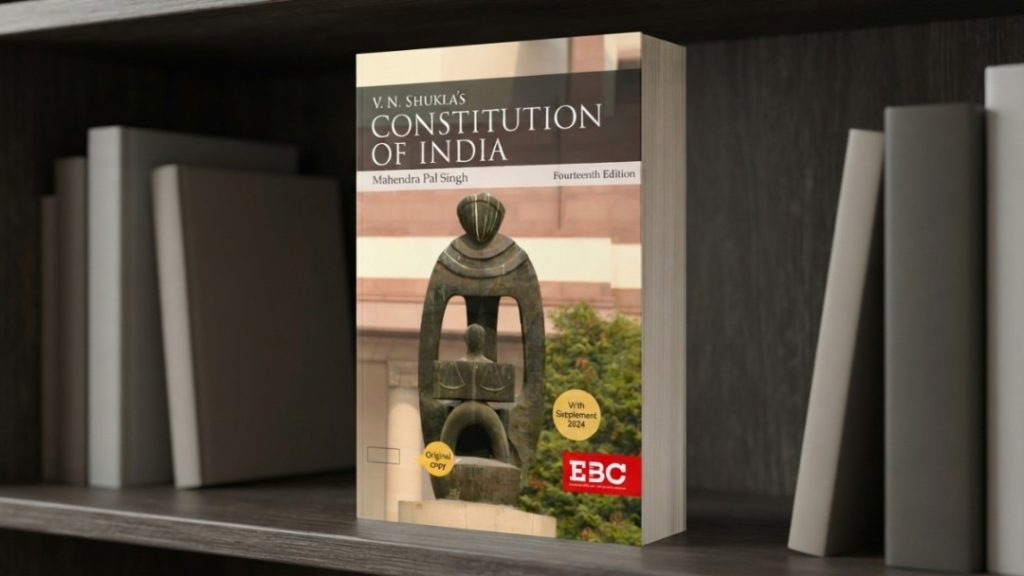
Want the deeper dive? Grab the reference book.



Everything To Know About Constitutional Law in India
[…] 6. Right to Constitutional Remedies (Article 32) […]