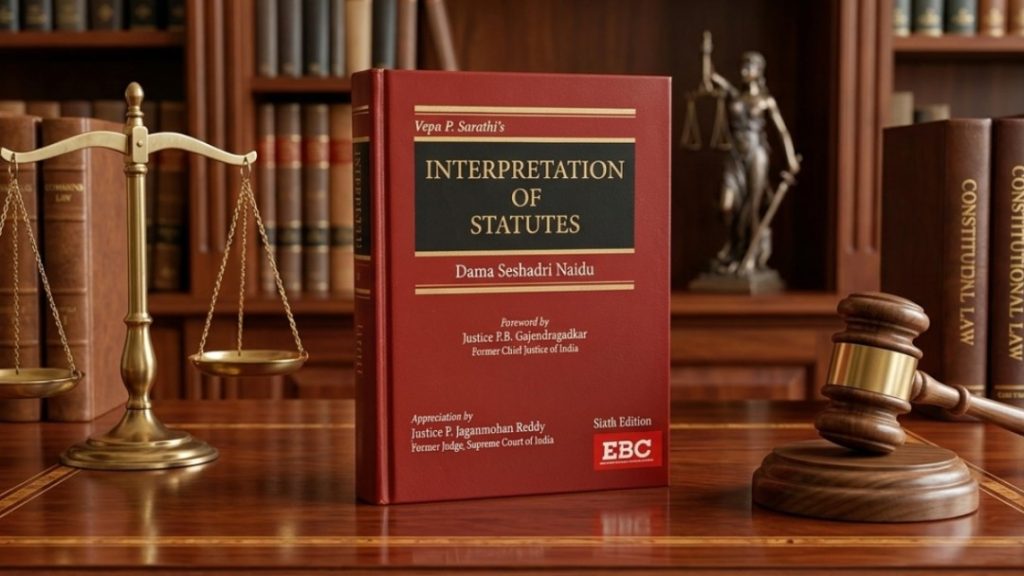
When courts interpret a law, their first task is to understand what the legislature intended. But what happens when the wording of a statute creates confusion?
This is where the Literal Rule of Interpretation becomes important. It is one of the oldest and most widely used principles of statutory interpretation. Under this rule, courts give words their plain, ordinary, and grammatical meaning, without adding or subtracting anything.
In simple terms: if the language of the law is clear, courts must apply it as it is written.
This blog explains the meaning of the literal rule, why it is used, examples, advantages, limitations, and how Indian courts apply it.
What is the Literal Rule of Interpretation?
The Literal Rule (also called the Plain Meaning Rule) means that courts must interpret statutory provisions according to the ordinary meaning of the words used in the legislation.
Judges cannot rewrite laws based on what they think the law should say. Their role is to interpret the law exactly as drafted by the legislature.
Definition:
Under the literal rule:
- Words are given their natural meaning
- Sentences are read grammatically
- Courts avoid inserting their own assumptions
- Legislative intent is derived from the exact wording of the statute
If the wording is clear and unambiguous, courts generally do not look beyond the text.
Why is the Literal Rule Important?
The literal rule helps maintain the balance between the legislature and judiciary.
It ensures:
Judges do not overstep their powers
Laws are interpreted consistently
Citizens can rely on the exact language of statutes
Courts respect parliamentary supremacy
For example, if a law clearly states that a penalty applies to people above a certain age, courts cannot extend that penalty to people outside that age bracket simply because it seems fair.
Key Features of the Literal Rule
1. Plain Meaning
Words must be understood in their ordinary dictionary meaning unless the statute defines them differently.
2. No Judicial Law-Making
Courts cannot create new meanings based on personal opinions.
3. Focus on Statutory Language
The actual wording of the Act remains the primary source of interpretation.
4. Applied When Language is Clear
The rule works best when there is no ambiguity in the provision.
Simple Example of Literal Rule
Imagine a law says:
“No vehicles are allowed in the public park.”
Under the literal rule:
- Cars are prohibited
- Bikes are prohibited
- Motorcycles are prohibited
But what about:
- Wheelchairs?
- Baby strollers?
- Emergency ambulances?
A strict literal interpretation may create practical issues. This shows why courts sometimes move beyond this rule when absurd results arise.’
Real-Life Legal Example
Suppose a tax statute says:
“A tax shall be imposed on imported electronic goods.”
A court applying the literal rule would examine:
- What qualifies as “electronic goods”?
- Whether the product falls under that exact definition
If the law does not mention a specific product category, courts may avoid expanding the law beyond its wording.
This principle is especially common in:
- Tax laws
- Criminal laws
- Regulatory statutes
When Do Courts Use the Literal Rule?
Courts generally apply this rule when:
- The statutory language is clear
- There is no ambiguity
- The provision does not create absurd outcomes
- Legislative wording is precise
It is often the starting point of statutory interpretation.
Frequently Asked Questions (FAQs)
1. What is the literal rule of interpretation?
It is a rule where courts interpret statutes according to the plain and ordinary meaning of the words used.
2. Why is it called the plain meaning rule?
Because judges focus on the ordinary meaning of statutory language.
3. When is the literal rule applied?
When statutory wording is clear and unambiguous.
4. What are the limitations of the literal rule?
It may sometimes lead to unfair or absurd outcomes.
5. Is the literal rule used in India?
Yes, Indian courts regularly apply it as a primary method of statutory interpretation.
Want to dive deeper? Check out this resource for more insights.