Road accidents are one of the leading causes of injury and death in India. Every year, thousands of families face sudden financial and emotional hardship because of accidents involving motor vehicles. To protect victims and their families, Indian law provides a structured legal framework that enables them to claim compensation for death, injury, disability, and property damage.
This article explains the legal framework governing road accidents in India, who can claim compensation, how claims are filed, and the rights available to victims.
Legal Framework Governing Road Accident Compensation
Compensation for road accidents in India is mainly governed by:
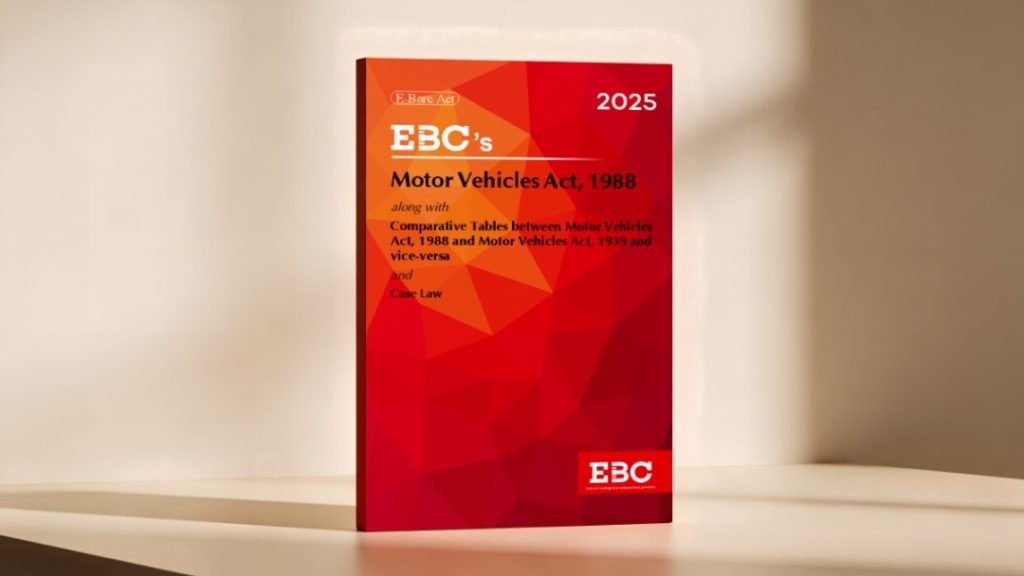
- Motor Vehicles Act, 1988
- Motor Vehicles (Amendment) Act, 2019
- Bharatiya Nyaya Sanhita, 2023 (for criminal liability)
- Bharatiya Nagarik Suraksha Sanhita, 2023 (criminal procedure)
- Bharatiya Sakshya Adhiniyam, 2023 (law of evidence)
- Employees’ Compensation Act, 1923 (in work-related accidents)
- Legal Services Authorities Act, 1987 (Lok Adalats and legal aid)
Among these, the Motor Vehicles Act is the primary statute for compensation claims.
What Is a Motor Accident Claim?
A motor accident claim is a legal application filed before the Motor Accident Claims Tribunal (MACT) seeking monetary compensation for loss suffered due to a road accident.
Claims may be filed for:
- Death of a person
- Permanent or temporary disability
- Bodily injuries
- Medical expenses
- Loss of income
- Damage to property
Who Can File a Claim?
A claim petition may be filed by:
- The injured person
- Legal heirs of the deceased
- Owner of damaged property
- Authorized agent or lawyer
The law adopts a welfare-oriented approach and allows dependents to seek relief even when the victim dies in the accident.
Types of Liability Under Motor Accident Law
1. Fault Liability
The claimant must prove that the accident occurred due to rash or negligent driving of the offending vehicle.
2. No-Fault Liability
Under this principle, compensation can be claimed without proving negligence. The law provides fixed compensation in certain situations, especially for death and permanent disability.
3. Hit-and-Run Cases
When the offending vehicle cannot be traced, victims or families are still entitled to compensation under government schemes.
Where to File a Claim
Claims are filed before the Motor Accident Claims Tribunal having jurisdiction over:
- Place of accident, or
- Place where claimant resides, or
- Place where vehicle owner resides
Time Limit for Filing Claims
There is no strict limitation period prescribed under the Motor Vehicles Act for filing MACT claims. However, claims should be filed as early as possible to avoid evidentiary difficulties.
How Compensation Is Calculated
Courts consider several factors, including:
- Age of the victim
- Income of the victim
- Future earning prospects
- Nature of injury or disability
- Medical expenses
- Loss of dependency
- Pain and suffering
In death cases, courts usually apply the multiplier method to compute compensation.
Role of Insurance Companies
Every motor vehicle must carry third-party insurance. In most cases, compensation is paid by the insurance company of the offending vehicle.
Insurers may contest claims only on limited statutory grounds, such as:
- Breach of policy conditions
- Invalid driving licence
- Unauthorized use of vehicle
Criminal Liability in Road Accidents
Apart from compensation proceedings, a road accident may also lead to criminal prosecution for offences such as:
- Causing death by negligence
- Rash and negligent driving
- Causing grievous hurt
These offences are governed by the Bharatiya Nyaya Sanhita, 2023 and prosecuted under criminal procedure law.
Settlement Through Lok Adalat and Mediation
Many motor accident cases are settled through:
- Lok Adalats
- Court-annexed mediation
This helps victims receive quicker compensation and reduces litigation.
Rights of Accident Victims
Victims have the right to:
- Receive free immediate medical treatment at government hospitals
- File police complaint and obtain FIR copy
- Seek compensation through MACT
- Receive copies of accident-related documents
For a deeper understanding of the legal framework related to road accidents and compensation, refer to this resource.