We live in a world where decisions are increasingly made by technology. From online fraud detection and digital surveillance to automated welfare systems and facial recognition, Artificial Intelligence (AI) and digital platforms now influence everyday life. In such a fast-moving digital age, a natural question arises:
Does Constitutional Law still matter when machines and algorithms run the system?
The simple answer is — it matters more than ever.
Understanding the Basics: What Is Constitutional Law?
The Constitution is the highest law of the land. Under Article 245 of the Indian Constitution, all law-making power of Parliament and State Legislatures comes from the Constitution itself.
Legal angle:
Every rule, policy, AI system, or digital platform used by the government must ultimately trace its authority to the Constitution. No technology can operate outside constitutional control.ogical.
Technology Has Power, But the Law Sets Its Limits
Most digital governance today happens through:
- IT Rules
- Online platform regulations
- Digital surveillance frameworks
These are made by the Executive under delegated legislation.
Legal angle:
Under the Doctrine of Delegated Legislation, the government can make rules only within the limits given by Parliament. It cannot use technology to create unlimited digital power without proper legal authority.
When Algorithms Act Like Government Authorities
When an algorithm:
- Rejects a benefit
- Flags a citizen
- Blocks digital access
- Profiles individuals
It performs a government function.
Legal angle:
Such actions are legally treated as “administrative action” and can be challenged under:
- Article 226 (High Courts)
- Article 32 (Supreme Court)
This means algorithmic decisions are subject to judicial review just like human decisions.
Equality Before Law Still Applies to Technology
The Constitution guarantees equality before the law under Article 14.
But AI systems can:
- Carry biased data
- Discriminate silently
- Wrongly exclude people
Legal angle:
If a digital system acts unfairly or discriminates, it can be challenged directly under Article 14 for being:
- Arbitrary
- Unreasonable
- Discriminatory
Technology cannot bypass the constitutional promise of equality.
Liberty and Privacy in the Digital Era
Surveillance, facial recognition, data tracking, and monitoring directly affect:
- Personal freedom
- Privacy
- Human dignity
Legal angle:
Under Article 21 (Right to Life and Personal Liberty):
- No one’s liberty can be restricted without fair legal procedure
- Privacy is now a fundamental right (as declared by the Supreme Court)
Under Article 19, digital restrictions must also be:
- Reasonable
- Lawfully justified
This means technology cannot invade privacy or freedom without strict legal safeguards.
Why Courts Still Control AI and Digital Power
Courts today examine:
- Surveillance technologies
- Online censorship
- Automated welfare exclusions
- Technology-based policing
Legal angle:
Under the Doctrine of Judicial Review, courts have the power to:
- Strike down unfair digital rules
- Stop misuse of surveillance technology
- Protect citizens from arbitrary digital actions
Even AI systems must pass constitutional scrutiny.
Technology Governs, but the Constitution Controls
In a digital State, it may appear that machines run the system. But in law:
- Governance must follow the Rule of Law
- Power must remain divided under the Doctrine of Separation of Powers
- The Executive cannot dominate simply because technology allows it
Legal angle:
The Constitution ensures that:
- Power remains accountable
- Human rights remain supreme
- Democracy is not replaced by digital authority
Simply put, code may run platforms—but the Constitution runs the country.
The Bottom Line
Technology will continue to grow. AI will become more powerful. Governance will become more digital.
But without constitutional control, technology can easily turn into:
- Unchecked surveillance
- Invisible discrimination
- Unaccountable automated power
That is why Constitutional Law remains the final shield of citizens in the digital age.
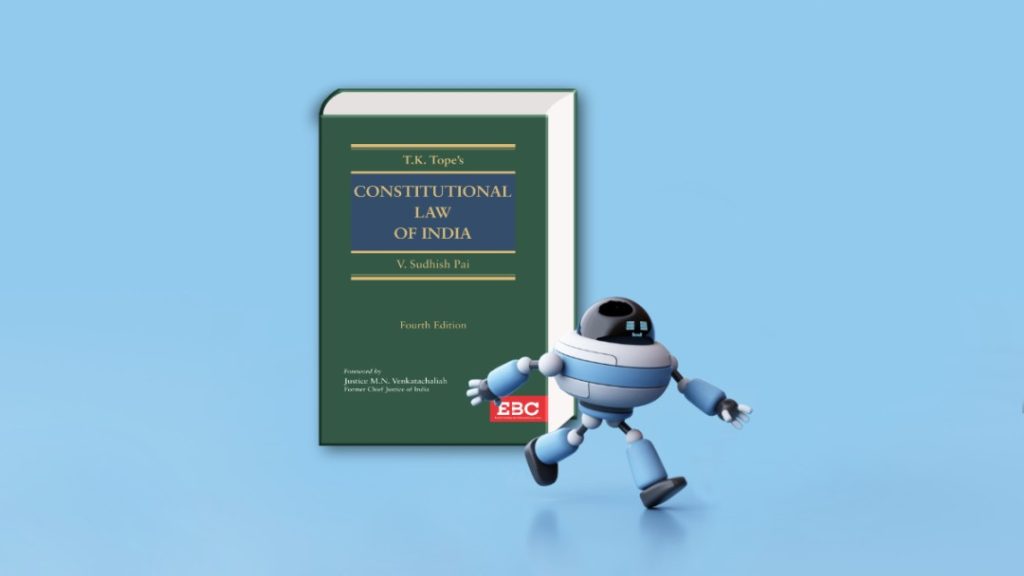
For anyone who is truly curious about how executive power, administrative decisions, equality, liberty, and judicial review continue to control even modern digital governance, a highly respected legal reference is: