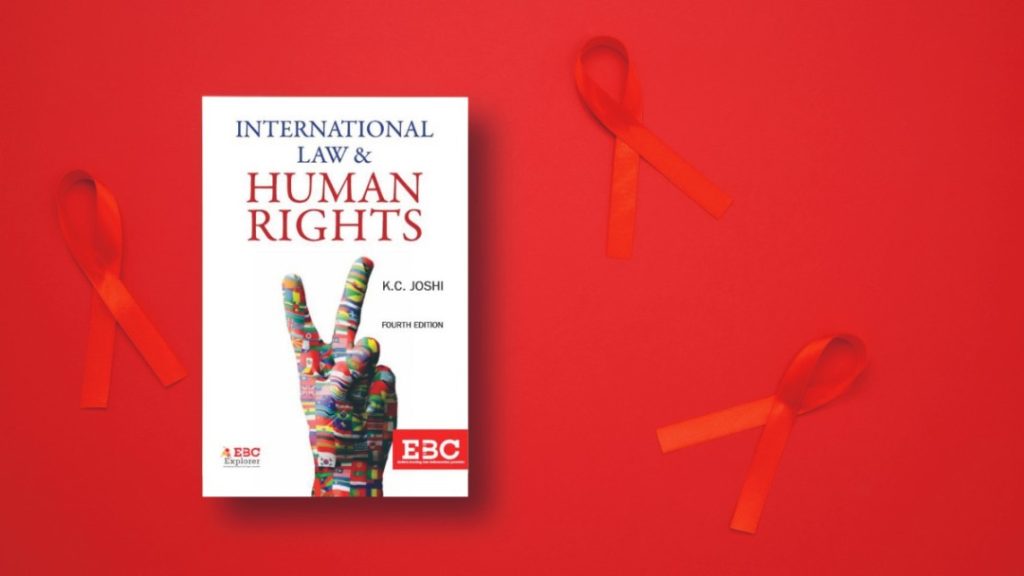
What Is AIDS
- AIDS stands for Acquired Immunodeficiency Syndrome
- It is the advanced stage of infection caused by the Human Immunodeficiency Virus (HIV)
- HIV attacks the immune system, making the body vulnerable to infections and cancers
- AIDS develops when HIV is untreated for a long time and the immune system becomes severely weak
- There is no cure for HIV, but antiretroviral therapy (ART) allows people to live long and healthy lives
Why AIDS Is a Global Legal Concern
- AIDS affects millions of people across all countries and social groups
- It creates issues of life, health, dignity, equality, and non-discrimination
- It involves cross-border movement, migration, and global inequality
- It raises questions of access to medicines, funding, patents, and healthcare justice
- The scale and impact of AIDS make it a matter of international legal responsibility, not just national policy
AIDS as a Global Legal Issue
- Around 40.8 million people live with HIV worldwide
- About 1.3 million new infections and nearly 630,000 deaths occur annually
- The epidemic cannot be controlled by one country alone
- International cooperation becomes legally necessary
- Issues of access, equality, data protection, and accountability bring AIDS under international law
Right to Health as the Legal Foundation
- The right to health is recognized under international human rights law
- States are legally bound to prevent and control epidemic diseases
- Governments must ensure access to HIV testing, treatment, and care
- Denial of healthcare based on HIV status amounts to a human rights violation
- The obligation applies without discrimination
Global Commitment to End AIDS by 2030
- The world has committed to ending AIDS as a public health threat by 2030
- This commitment shapes national laws and health policies
- It influences budget allocation and public health planning
- Though politically binding, it carries strong legal relevance
- Courts and civil society use it as a benchmark for state accountability
International Guidelines on HIV and Human Rights
- These guidelines connect human rights principles directly with HIV response
- They require confidentiality, voluntary testing, and informed consent
- They prohibit discrimination against people living with HIV
- They discourage excessive criminalization of HIV transmission
- They promote access to prevention tools and affordable treatment
Trade Law and Access to HIV Medicines
- Patent law once made HIV medicines unaffordable in poor countries
- International trade rules were reinterpreted to protect public health
- States gained the legal power to produce or import generic medicines
- Public health was given legal priority over patent profits
- This shift saved millions of lives worldwide
International Health Regulations and Disease Control
- International law requires countries to cooperate on disease control
- States must strengthen health systems and share health information
- Human rights must be respected even during disease control
- National borders cannot override global health responsibility
- This framework reinforces the global nature of the AIDS response
Global HIV Targets and Legal Accountability
- The 95-95-95 targets guide the global HIV response
- Most people diagnosed with HIV are now on treatment
- AIDS-related deaths have fallen significantly since 2010
- New infections remain high, showing prevention gaps
- These figures help assess whether states are fulfilling legal duties
Global Financing and International Cooperation
- The Global Fund is the largest international HIV financier
- Billions of dollars have been invested in prevention and treatment
- Many countries depend on international funding for HIV programs
- Recent aid cuts threaten progress
- International law recognizes financial assistance as part of global responsibility
Criminal Law and HIV
- Many countries criminalize HIV transmission or non-disclosure
- Over-criminalization increases stigma and discourages testing
- International law recommends criminal punishment only for intentional harm
- Public health protection works better through education and access to care
- Human rights must guide criminal law policy
Meaning of Global Responsibility in AIDS
- Healthcare is recognized as a legal entitlement, not charity
- Wealthier nations have greater responsibility to assist poorer nations
- Trade law must yield to public health in emergencies
- Political promises now operate as accountability standards
- Law has shifted the AIDS response from charity to legal duty
To explore the topic in greater depth, you may refer to this resource.