India follows a unique legal system where personal matters such as marriage, divorce, inheritance, adoption, and maintenance are governed by different laws for different communities. At the same time, the Constitution of India speaks about the idea of a Uniform Civil Code (UCC)—a single set of civil laws applicable to all citizens.
This has led to an ongoing debate:
Should India continue with personal laws, or move towards a Uniform Civil Code?
This article explains the key differences between the Uniform Civil Code and Personal Laws in a simple and balanced manner.
1. What is the Uniform Civil Code (UCC)?
Uniform Civil Code refers to a common set of civil laws that would apply equally to all citizens of India, irrespective of religion.
It would cover matters such as:
- Marriage and divorce
- Maintenance and alimony
- Inheritance and succession
- Adoption and guardianship
The idea is to have one law for everyone in these personal matters.
The Constitution places UCC under the Directive Principles of State Policy, meaning it is a goal for the State to work towards, but it is not mandatory.
2. What Are Personal Laws?
Personal laws are religion-based laws that govern personal matters of individuals.
In India, different communities are governed by different personal laws, such as:
- Hindu personal law
- Muslim personal law
- Christian personal law
- Parsi personal law
These laws are derived from religious texts, customs, and statutes.
3. Core Difference Between UCC and Personal Laws
| Basis | Uniform Civil Code (UCC) | Personal Laws |
|---|---|---|
| Applicability | Same law for all citizens | Different laws for different religions |
| Basis | Secular and uniform | Religion-based |
| Coverage | Marriage, divorce, inheritance, adoption, maintenance | Same subjects, but governed separately |
| Objective | Equality and uniformity | Protection of religious practices |
| Nature | Common civil law | Community-specific laws |
4. Difference in Approach
Uniform Civil Code
- Treats all citizens equally before law
- Focuses on individual rights
- Aims to remove discrimination
Personal Laws
- Treat communities differently
- Focus on religious identity
- Allow variations based on tradition
5. Marriage Laws: UCC vs Personal Laws
Under Personal Laws
Different rules exist regarding:
- Age of marriage
- Conditions for validity
- Divorce procedures
For example, grounds and procedures for divorce vary across religions.
Under UCC (Proposed)
- One uniform marriage law
- Same minimum age
- Same divorce grounds and procedure
This would create consistency and clarity.
6. Divorce and Maintenance
Personal Laws
- Different grounds for divorce
- Different maintenance rights
Some communities have more liberal divorce provisions, while others are restrictive.
UCC
- Same grounds for divorce for all
- Uniform rules for maintenance and alimony
This promotes equal treatment of spouses.
7. Inheritance and Succession
Personal Laws
Inheritance rules differ widely:
- Shares of heirs vary
- Gender-based differences exist in some systems
UCC
- Uniform inheritance rules
- Equal rights for men and women
This strengthens gender equality.
8. Adoption and Guardianship
Personal Laws
Not all communities recognize formal adoption in the same way.
UCC
- Common adoption law
- Same rights and obligations
Ensures clarity and child welfare.
9. Equality Before Law
Under UCC
All citizens are governed by the same civil law, promoting:
- Equality
- Non-discrimination
- National integration
Under Personal Laws
Citizens may be treated differently based on religion, which can lead to unequal outcomes.
10. Religious Freedom vs Uniformity
A major concern regarding UCC is its impact on religious freedom.
- Supporters argue UCC deals only with civil matters, not religious rituals.
- Opponents fear erosion of cultural and religious identity.
Thus, the debate centers on balancing:
Individual rights vs community autonomy.
11. Advantages of Uniform Civil Code
- Equal rights for all citizens
- Simplified legal system
- Gender justice
- Reduced legal complexity
12. Advantages of Personal Laws
Protection of religious traditions
Cultural diversity preserved
Community-specific needs addressed
13. Can UCC and Personal Laws Coexist?
Some experts suggest a gradual and optional approach, where:
- Uniform principles are introduced step by step
- Reforms continue within personal laws
This middle path may reduce resistance.
14. Present Position in India
Currently, India follows personal laws, while UCC remains a constitutional goal. No nationwide UCC has been implemented so far.
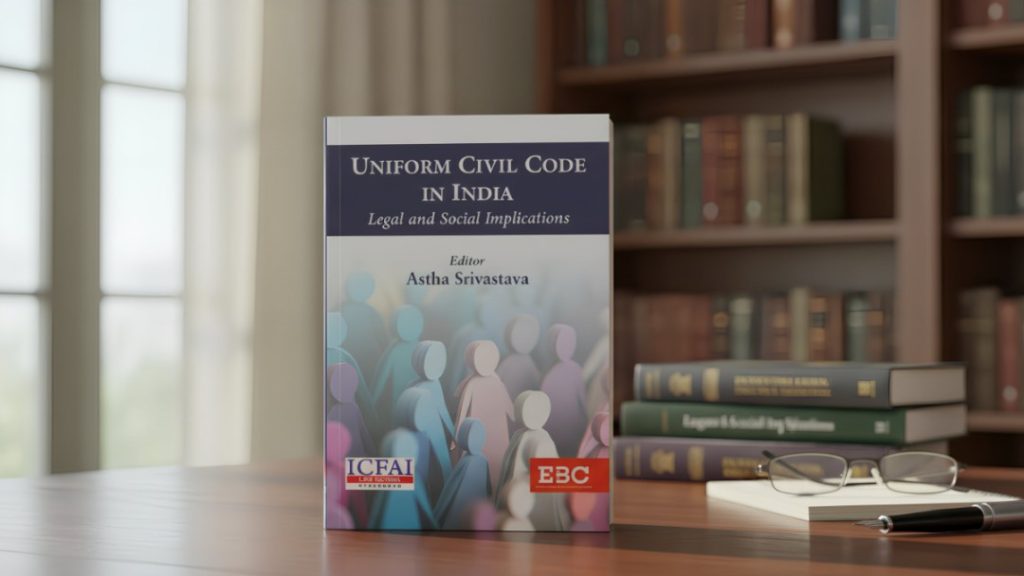
For more information on the Uniform Civil Code, you may refer to this book.