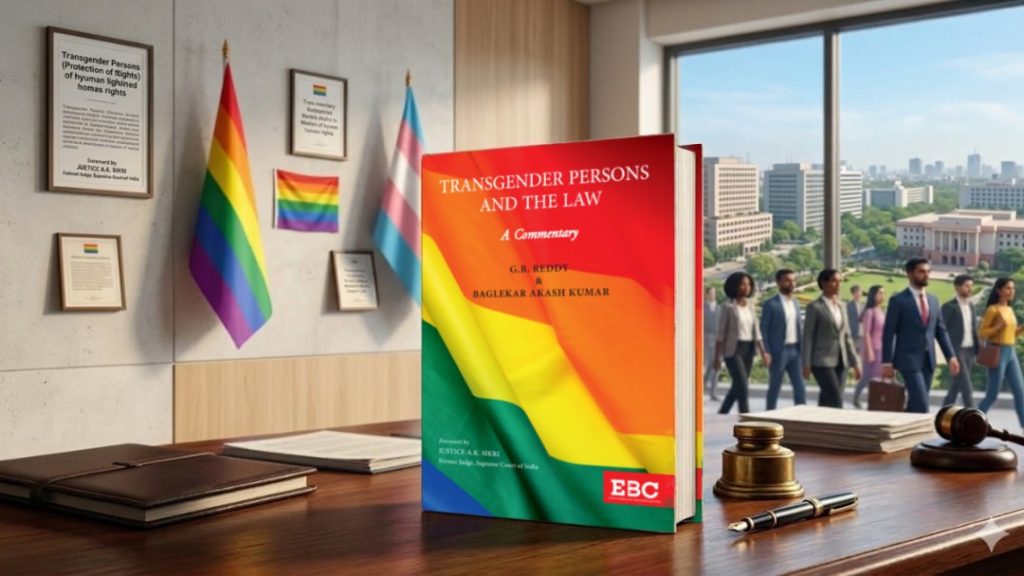
India’s legal framework on transgender rights has undergone a significant transformation over the past decade. What was once an invisible and marginalized identity within the law is now explicitly recognized, protected, and increasingly integrated into the broader constitutional vision of equality and dignity.
1. Constitutional Foundation
The rights of transgender persons in India are rooted in the Constitution, particularly:
- Article 14: Guarantees equality before the law and equal protection of the laws to all persons, including transgender individuals.
- Articles 15 & 16: Prohibit discrimination on grounds of sex. Judicial interpretation has expanded “sex” to include gender identity.
- Article 19(1)(a): Protects the right to freedom of expression, which includes the right to express one’s gender identity.
- Article 21: Ensures the right to life and personal liberty, encompassing dignity, privacy, and autonomy.
2. The NALSA Judgment (2014)
The watershed moment came with the Supreme Court’s decision in National Legal Services Authority v. Union of India (2014).
Key takeaways:
- Legal recognition of “third gender” status.
- Affirmation that gender identity is self-determined, not dependent on biological sex.
- Direction to governments to treat transgender persons as socially and educationally backward classes for reservation purposes.
- Recognition of fundamental rights violations faced by transgender communities.
This judgment laid the constitutional and moral foundation for subsequent legislation.
3. The Transgender Persons (Protection of Rights) Act, 2019
This statute is the primary legislation governing transgender rights in India.
Key Provisions:
a. Definition
Defines a transgender person as someone whose gender does not match the gender assigned at birth, including trans men, trans women, persons with intersex variations, genderqueer individuals, and others.
b. Prohibition of Discrimination
Prohibits discrimination in:
- Education
- Employment
- Healthcare
- Access to public services
- Housing
c. Right to Identity
- Individuals can apply for a certificate of identity as a transgender person.
- A revised certificate can be obtained after gender-affirming surgery (though this requirement has been widely debated).
d. Welfare Measures
Mandates governments to:
- Frame welfare schemes
- Ensure access to healthcare
- Promote vocational training and self-employment
e. Offences and Penalties
Criminalizes:
- Denial of access to public places
- Physical, sexual, verbal, or emotional abuse
However, penalties remain relatively low compared to other offences, which has attracted criticism.
4. The 2020 Rules
The Transgender Persons (Protection of Rights) Rules, 2020 operationalize the Act by:
- Laying down the procedure for obtaining identity certificates
- Removing the requirement of medical examination for initial identification
- Streamlining administrative processes
5. Judicial Developments Post-2019
Courts have continued to expand transgender rights:
- Recognition of self-identification without invasive medical requirements
- Protection against discrimination in employment and education
- Recognition of transgender persons’ rights in family law contexts (including marriage debates, though still evolving)
To know more about this topic, you may take reference from this resource.